
Analyst Warns Mecca Pact Should Not Be Turned into a Sunni Bloc Against Iran
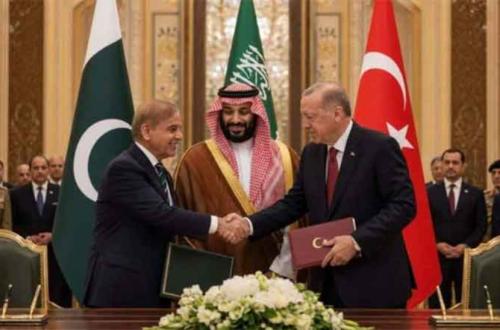
The signing of the Mecca Joint Defence Agreement by Saudi Arabia, Turkey, and Pakistan on 7 August 2026 is considered a potential turning point in the changing security architecture of the Middle East.
The agreement does not merely strengthen defence cooperation among three Muslim countries, but also signals the emergence of a drive towards regional strategic independence amid regional security uncertainty.
This view was expressed by Mansoor Qaisar, a communications specialist and freelance writer based in Islamabad, as quoted by Middle East Monitor on Tuesday (18/8/2026).
According to him, the pact agreed in Mecca has the potential to be remembered as more than just another defence agreement in a region already crowded with military partnerships.
Qaisar said the agreement could become the moment when three influential Muslim powers realised that the old security architecture in the Middle East is no longer adequate.
One of the most important provisions in the agreement is the principle that an armed attack against one signatory state is considered an attack against all members. Turkey has technically compared this principle to Article 5 of NATO, although the institutional structures of the two remain different.
Beyond the mutual defence commitment, the three countries have also begun building more concrete cooperation mechanisms, including regular coordination among foreign and defence ministers as well as military chiefs, joint exercises on land, sea and air, and cooperation on air defence, unmanned systems, electronic warfare, artificial intelligence, defence production and technology transfer. A permanent institutional structure is also projected to be established.
Qaisar assessed that the significance of the Mecca Pact lies precisely in the wartime situation that formed its backdrop.
He said the agreement was not born merely from general anxiety about Middle East instability, but from regional conflicts that have not been fully resolved.
In his view, these conditions have led regional countries to begin questioning their dependence on a security architecture that has long relied heavily on the United States.