
Analyst Urges Public Not to Be Provoked by Manipulative Social Media Content Ahead of August
Recently, many social media accounts have been recirculating old student demonstration videos with provocative narratives, such as “A protest this big isn’t covered by the media?”; “A chaotic demo like this, and local media are silent”; or “A massive protest outside, but no coverage in the mainstream media.” Not only that, a number of posts also highlight fears of large-scale demonstrations or riots in August. A social media analysis from Monash University found an organised pattern that would be almost impossible to spread manually.
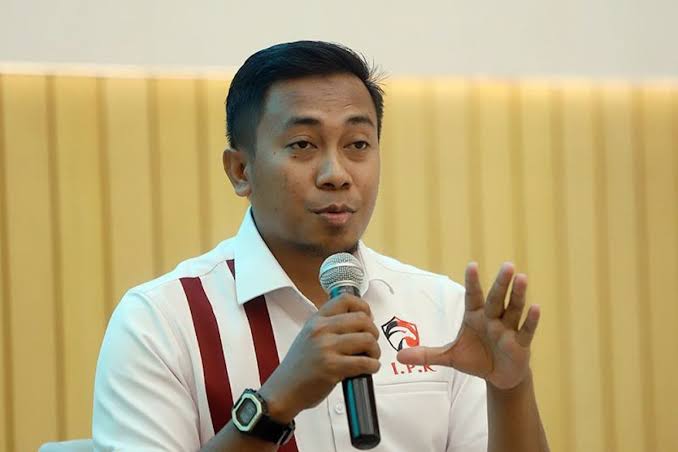
Responding to this, the Director of Indonesia Political Review, Iwan Setiawan, views this phenomenon as not merely isolated posts. According to him, when narratives with the same theme appear simultaneously across various platforms, using nearly identical perspectives, it is reasonable to suspect a systematic effort to build public opinion.
“The narrative pattern is also relatively similar, namely raising issues of inequality, poverty, and economic hardship, but then framing them manipulatively by mixing in disinformation, slander, or information taken out of context,” Iwan said on Wednesday (5/8).
Upon closer examination, Iwan said, the purpose of such content is not simply to convey criticism, but to provoke public anger, build frustration, and erode public trust in the government and state institutions. “When information is deliberately engineered to foster hatred, what occurs is no longer social control, but a propaganda operation that has the potential to disrupt social stability,” he added.
Iwan even assessed that some of the visible communication patterns bear similarities to the preconditions before the August 2025 riots, such as the massive spread of emotional narratives, the use of easily viral content, and the exploitation of issues that touch on public anxieties. However, he noted that it cannot be concluded that the current situation will definitely lead to, or is part of, the same scenario as the August 2025 events without strong evidence.
“What needs attention is that in various political and social dynamics, escalation often begins with a war of narratives in the digital space. The important lesson is that the digital space must not be allowed to become an arena for spreading unverified information to the point of triggering polarisation and conflict in the real world,” he explained.
Therefore, Iwan suggested that the government needs to respond quickly, transparently, and based on data. Every piece of misleading information must be immediately corrected through credible public communication. “Law enforcement against the spreaders of hoaxes, slander, or incitement that violates the law must also be carried out professionally and fairly in accordance with applicable regulations,” he stated.
Meanwhile, Iwan also urged the public not to be easily provoked by content deliberately designed to stir emotions. He stressed that everyone has a responsibility to keep the public sphere healthy. “The public needs to improve digital literacy. Before sharing any information, it is important to check the source, context, and truthfulness,” he concluded.