
Analyst: Strengthening chilli distribution supports purchasing power and protects farmers
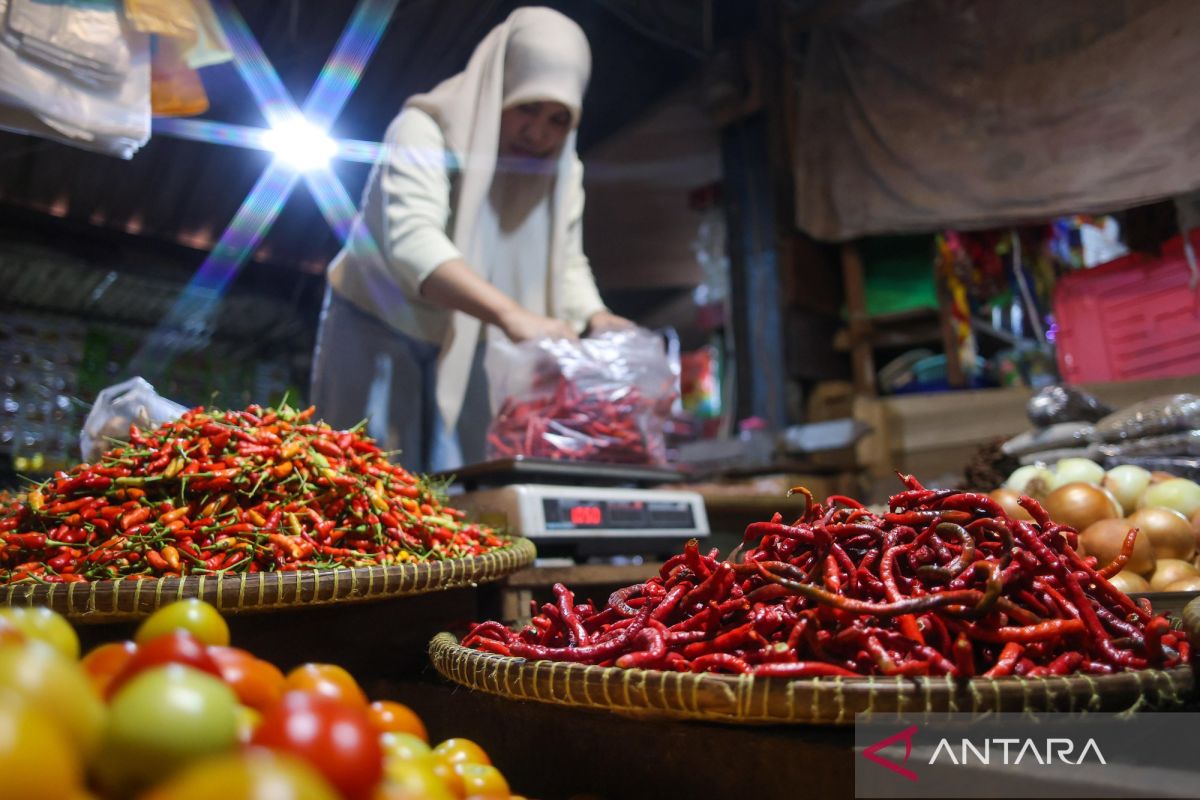
Jakarta (ANTARA) - Center of Reform on Economics (CORE) Indonesia researcher Eliza Mardian said stronger chilli distribution was needed to keep prices affordable for consumers while protecting farmers’ incomes.
She said the government needed to speed up distribution from surplus areas to regions facing shortages, strengthen price monitoring and ensure market interventions reached more people.
“Gerakan Pangan Murah (GPM), or the Affordable Food Movement, and distribution facilitation mainly ease symptoms in specific locations,” Eliza told ANTARA in Jakarta on Wednesday.
She said GPM helped people obtain food at more affordable prices, but its implementation in limited locations and for a limited time was not enough to address supply problems comprehensively.
Eliza explained that higher chilli prices were driven by production disruptions caused by weather, the concentration of farming centres, logistics costs and post-harvest losses.
For that reason, market operations should be accompanied by measures addressing the causes of price rises, particularly limited supplies at production centres and distribution obstacles to consumer regions.
Statistics Indonesia (BPS) recorded red chillies and bird’s eye chillies as the main contributors to inflation in October 2026, which stood at 0.22 per cent month on month.
Red chillies contributed 0.13 percentage points to inflation, while bird’s eye chillies contributed 0.05 percentage points.
Meanwhile, the National Strategic Food Price Information Centre (PIHPS), managed by Bank Indonesia, recorded average retail prices on Wednesday at 10.30 WIB of Rp86,900 per kilogramme (kg) for red bird’s eye chillies and Rp83,050 per kg for curly red chillies.
Those prices were above the government’s upper consumer-level Sales Reference Price (HAP), set at Rp57,000 per kg for red bird’s eye chillies and Rp55,000 per kg for curly red chillies.
As part of its price-control efforts, the National Food Agency (Bapanas) has expanded GPM and the Food Distribution Facilitation (FDP) programme to help move commodities from surplus areas to regions facing price pressures.
Bapanas recorded 1,595 GPM events across 38 provinces in October 2026. During the same period, FDP deliveries exceeded 22.2 tonnes of various commodities, including red bird’s eye chillies.
In response, Eliza said distribution facilitation needed to be accelerated by reducing transport costs and improving real-time information on prices and supplies between regions.
“Distribution facilitation helps connect surplus areas with deficit areas,” she said.
She said the government needed to distinguish between areas experiencing production shortages and those facing distribution obstacles, so that interventions could be tailored to each problem.
In addition to expanding GPM in areas with high prices, Eliza recommended increasing the volume of commodities distributed and monitoring the programme’s impact on prices in ordinary markets.
She said this was important because lower prices at GPM outlets did not necessarily lead immediately to lower prices in nearby markets.
Eliza also cautioned that price stabilisation should not focus solely on consumers at the expense of the incomes of farmers, who are the main suppliers.
“When supplies are short, retail prices soar,” she said.
Conversely, when harvests take place simultaneously, the prices received by farmers can fall sharply because chillies are perishable and have a limited shelf life.
She explained that high consumer prices did not necessarily mean farmers received equally favourable prices, given the role of intermediaries, distribution costs and differences in bargaining power across the marketing chain.
To address these problems, Eliza called for stronger farmer groups and village cooperatives so they could absorb harvests, build partnerships with wholesale markets and industry, and expand interregional marketing.
“Village cooperatives can play a major role in absorbing local produce and marketing it to other regions,” she said.
She also recommended developing chilli processing into products such as dried chillies and paste, improving storage facilities and managing planting schedules to reduce price volatility both when supplies fall and when harvests are abundant.
According to Eliza, stabilisation policies needed to balance affordable prices for consumers with decent incomes for farmers in order to sustain production.
“So both need to be balanced,” she said.
Source: jawawa.id (https://jawawa.id/newsitem/analyst-strengthening-chilli-distribution-supports-purchasing-power-and-protects-farmers-1793803978)
Originally published by Antara (Indonesian) (https://www.antaranews.com/berita/5832375/pengamat-penguatan-distribusi-cabai-jaga-daya-beli-lindungi-petani), translated from Indonesian