
Analyst says new Police Law has strengthened Kompolnas function
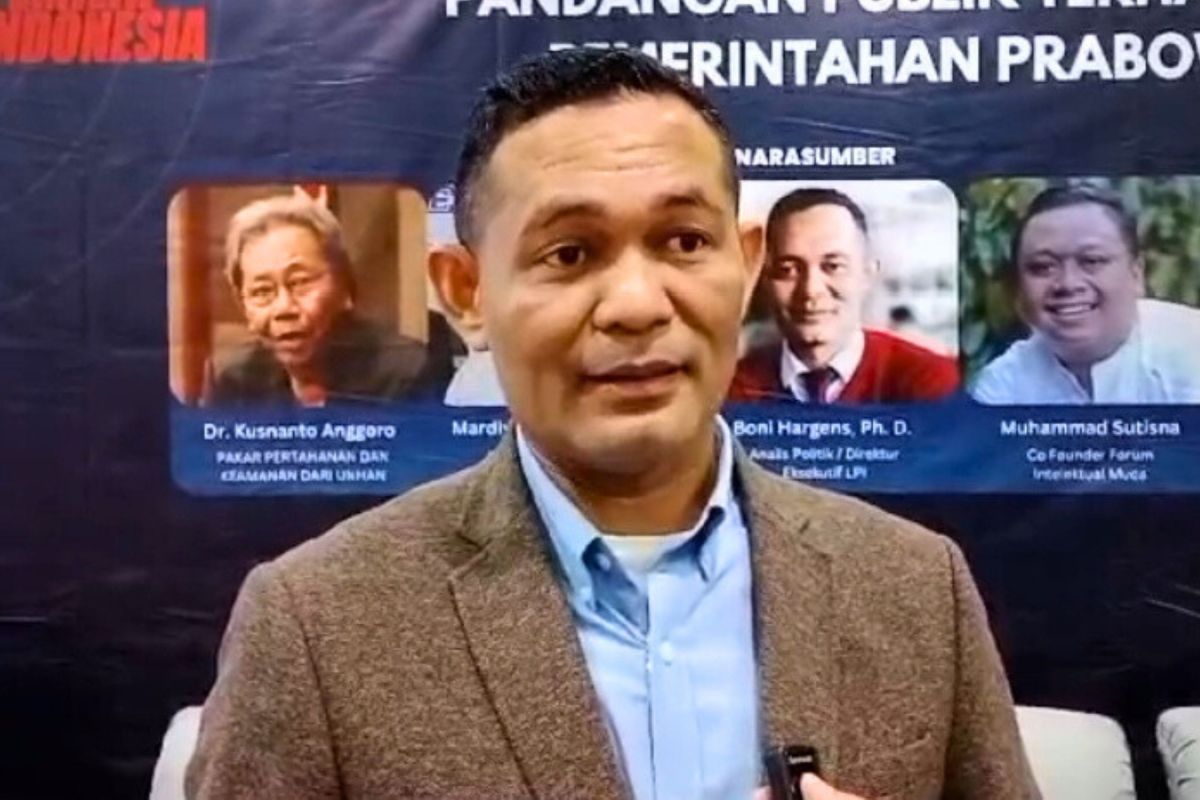
Political analyst Boni Hargens has assessed that the Law on the Third Amendment to Law Number 2 of 2002 concerning the Indonesian National Police (the new Police Law) has strengthened the National Police Commission (Kompolnas). He stated that within the regulation, Kompolnas’s function has been reinforced as a credible and empowered civilian oversight instrument. “The new Police Law is a strategic decision to strengthen the existence of the National Police to be more professional, clean, transparent, and adaptive, including Kompolnas,” Boni said in a statement received in Jakarta on Monday. Consequently, he believes it is no longer very relevant or urgent to form a new law related to Kompolnas because the strengthening of the institution has been accommodated in the new Police Law. He said integrating the strengthening of Kompolnas into the existing Police Law is far more effective legislatively and institutionally. Boni argued that creating a new law from scratch would take a very long time, open unproductive debate, and potentially create a temporary legal vacuum. Therefore, he said the strengthening of Kompolnas in the new Police Law has been able to answer urgent needs without shaking the existing legal foundation. “Moreover, strengthening Kompolnas is one of the pillars to reinforce the existence of the National Police,” he said. He mentioned that one of the three pillars of police strengthening is strong civilian oversight. Kompolnas has been given broader and tangible authority to oversee performance, recruitment, and promotions within the police force, ensuring accountability to the public. The second pillar, Boni noted, is law enforcement effectiveness. He said a strictly supervised police force will actually be more professional, clean, and effective in carrying out law enforcement duties in the field. The third pillar is maintaining security and order. He stated that the National Police’s primary mission as guardian of public security and order will become more robust with the support of a modern legal framework and strong legitimacy. Furthermore, he assessed that the new Police Law, including the strengthening of Kompolnas within it, will facilitate the realisation of a fundamental restoration within the police force, as championed by National Police Chief General Listyo Sigit Prabowo. He said the police currently need restoration, as is being carried out by the Chief, not merely reform. He explained that the intended restoration is fundamentally about returning the police to its true identity as a genuine servant and protector of the community, in order to strengthen Indonesian democracy and support efforts to welcome a golden era by 2045. Boni stated that the choice of the word ‘restoration’ is not just rhetoric but contains a deeper and more substantive meaning than ordinary reform. This means rebuilding public trust that may have been eroded, strengthening integrity from the lowest to the highest levels, and ensuring every police officer truly understands that their legitimacy comes from public trust. This step, he continued, is the basic spirit of the Precision paradigm built and implemented by the police under the Chief’s leadership. Additionally, Boni conveyed that restoration also means improvements must not only occur on the surface, whether in the form of uniform changes, new slogans, or mere structural reorganisation. “Restoration must touch the culture, mentality, and incentive system within the police force comprehensively,” he stated. The Indonesian House of Representatives (DPR) ratified the Police Bill into law during a Plenary Session at the Parliament Complex in Jakarta on Tuesday (9/6). The ratification was carried out after all factions expressed agreement in the meeting chaired by Deputy Speaker Sufmi Dasco Ahmad. Key points of change in the new Police Law include strengthening the direction of transparent and professional institutional transformation, reinforcing internal and external oversight functions based on information technology, affirming member neutrality, improving public service quality, regulating member assignments outside the institution, adjusting the retirement age limit, strengthening a human rights-based curriculum, and reinforcing the role of Kompolnas.