
Analyst Says Negative Issues Targeting Minister Dody Are a Counter-Attack
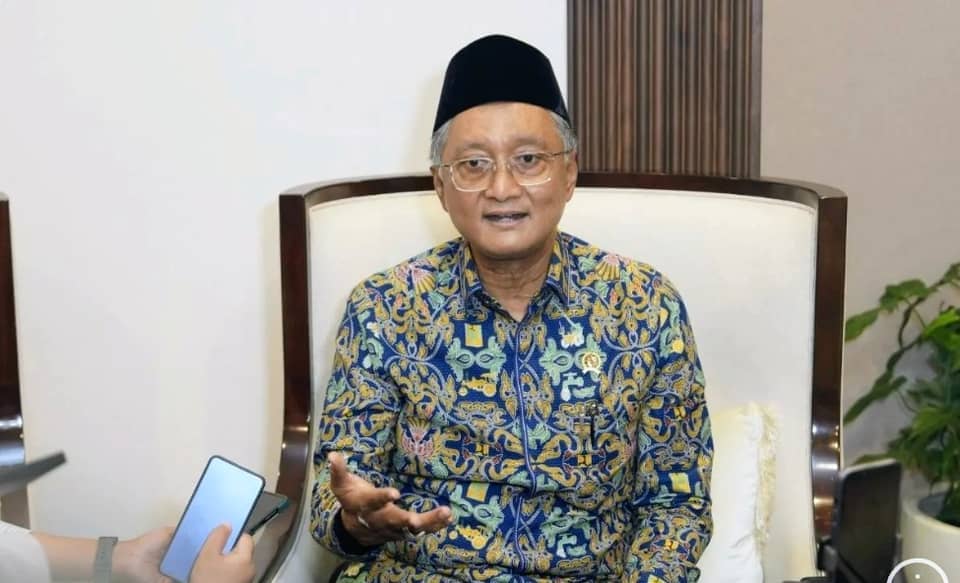
Public policy observer Trubus Rahardiansyah assesses that the series of negative issues surrounding Public Works Minister Dody Hanggodo is suspected to be a counterattack from groups whose interests have been disrupted.
Trubus observed that reporting about Dody has appeared massively and is partly mixed with unverified information. This condition, according to him, strengthens the suspicion of resistance against the reform policies at the Ministry of Public Works.
“If we look at the massive reporting, and there is also some disinformation mixed in, the indication of a counterattack is indeed very strong,” Trubus said in Jakarta on Wednesday (5/8).
A number of issues recently linked to Dody include plans for official overseas travel, the use of an aircraft described as a private jet, and staff transfers. Dody and the Ministry of Public Works have issued denials and clarifications regarding several of these allegations.
According to Trubus, the attack potentially comes from parties who have long enjoyed unrestricted profits from infrastructure projects. The room for manoeuvre of these groups is considered to have narrowed after Dody tightened oversight and rotated a number of officials.
“Because they have had great difficulty with Mr Dody, those who usually play in the realm of infrastructure projects cannot move freely,” he said.
Nevertheless, the suspicion of a counterattack still needs to be proven. There has been no official finding showing that all the issues against Dody were driven by the same network or group.
He linked the suspicion to Dody’s efforts to improve discipline and overhaul the composition of officials and staff.
One issue of concern is the indication of employee involvement in online gambling transactions based on data from the Financial Transaction Reports and Analysis Centre (PPATK).
“Because Mr Dody also received a report from PPATK, there are around 3,000 employees indicated to be involved in online gambling. That means there must be serious reform in this regard within the Ministry of Public Works, perhaps from echelon one down to the level of heads of agencies,” he stressed.
Trubus believes the overhaul needs to reach officials who have long occupied certain positions. Rotation is considered important to break the chain of interests that could potentially form due to someone holding a position or work area for too long.
“There are officials who have not been replaced for a long time. Previously, Mr Dody also had to deal with officials left over from the previous minister. So indeed, a kind of political war is occurring there,” he said.
“Yes, those long-serving employees must be transferred, must be rotated, and must also be replaced, at least replaced,” he added.
According to Trubus, officials who have not experienced rotation for years are the parties most likely to feel disadvantaged. This is especially true if the position is related to planning, budgeting, implementation, or supervision of infrastructure projects.
He cited the recent problems in the Jakarta-Cikampek II Elevated Toll Road project, also known as the MBZ Toll Road. Trubus believes that alleged irregularities in such infrastructure projects must be prevented from recurring under Dody’s leadership.
Trubus reminded that bureaucratic reform cannot rely solely on the minister’s authority. He believes Dody needs to form a special team to thoroughly examine alleged irregularities down to the lowest work units.
“Because he is a minister, he must certainly form a special team to uncover everything. Because it must be based on evidence,” Trubus explained.
The team is needed so that rotations and sanctions against employees are not based on mere suspicion. Every decision must be based on examination results, performance evaluations, and accountable evidence.
The formation of a special team can also be used to trace patterns of project procurement and implementation. The examination can target patterns of repeat tender winners, inter-company relationships, the use of subcontractors, changes in contract values, and the conformity of work quality.
Trubus believes infrastructure mafias usually do not work alone. They maintain influence through networks involving officials, contractors, consultants, project brokers, and political forces.
“They take shelter behind this. So these mafias are actually political mafias too, infrastructure mafias. Perhaps the same people or they have links with certain political parties,” he said.
According to Trubus, these networks can enter from the project planning stage. Indications can be seen from the quality of buildings that quickly deteriorate even though they have not been in use for long.
However, the existence of an infrastructure mafia must still be proven through examination of procurement documents, fund flows, inter-company relationships, and the involvement of officials with authority over projects.
Trubus believes that cleaning up the Ministry of Public Works can be carried out as long as there is strong political will.
“This depends on political will. If it is to be resolved, then it can be cleaned up. It just depends on how Mr Dody wants to resolve this,” he said.
He believes the support of President Prabowo Subianto is important so that the overhaul does not stop when facing pressure from interest groups. As an aide to the president, Dody is believed to have conveyed the internal problems of the Ministry of Public Works to Prabowo.
“The President should support that. A minister is an aide to the President. So he should have already received support. The question of whether it must be open is of course not necessary, because the President can simply entrust it to his minister,” Trubus said.