
Analyst Says MSCI Proposal Does Not Reflect Capital Market Realities
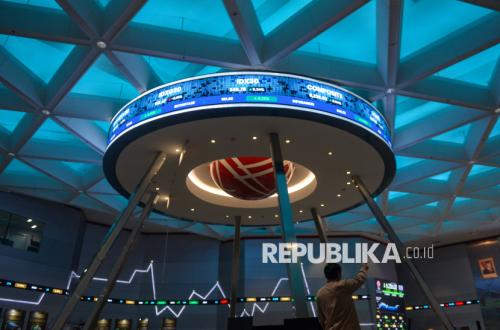
JAKARTA — Capital market analyst Hans Kwee says Morgan Stanley Capital International’s (MSCI) proposal to downgrade Indonesia’s capital market to Standalone Market contrasts with FTSE Russell’s assessment. The latter has retained Indonesia’s status as a Secondary Emerging Market.
“MSCI’s consultation announcement feels at odds with, and does not align with, the objective recognition given by other global index providers such as FTSE,” Hans said in a statement received in Jakarta on Friday (16 October 2026). His comments highlighted differences in opinion among global index providers.
According to Hans, FTSE Russell responded positively to capital market reforms carried out by the Financial Services Authority (OJK) together with self-regulatory organisations (SROs). Their strong co-operation was seen as having helped maintain international investor confidence.
In its annual review announced on 6 October 2026, FTSE Russell kept Indonesia in the Secondary Emerging Market category and did not place it on a watchlist for a possible classification change. The decision reflects the stability of the domestic financial market.
“We have seen for ourselves how positively FTSE Russell has responded to the reform measures implemented by the OJK and SROs,” he said. Improvements in governance have continued to earn recognition from the global financial community.
Hans said the MSCI proposal was not commensurate with the size, liquidity and depth of Indonesia’s capital market. Strong economic fundamentals, he said, were a key support for the resilience of the domestic exchange.
“In our view, concerns or proposals regarding Standalone Market status are unfounded and do not reflect the reality of our capital market,” he said. The domestic market, he added, remained highly attractive to investors.
He said Indonesia had nine shares meeting the criteria for the MSCI Standard Index, exceeding the minimum requirement of three shares used as one quantitative benchmark for Emerging Market classification. This showed that local shares had adequate liquidity.
However, the number of shares is not the sole basis for classification, as MSCI also assesses investor accessibility and market functioning. The comprehensive review covers a range of technical trading considerations.
Hans also said the strength of the domestic economy supported Indonesia’s eligibility to remain an emerging market, citing economic growth of more than 5 per cent. This macroeconomic performance bolsters market participants’ optimism.
Nevertheless, Hans explained that MSCI’s announcement was not a decision to downgrade Indonesia, but the launch of a public consultation following its June 2026 assessment. The process still leaves room for constructive dialogue.
MSCI is accepting feedback until 30 April 2027 and will announce its final decision no later than 30 June 2027. Until any classification change is made, Indonesia remains in the Emerging Market category.
In its official announcement, MSCI raised concerns about unclear share-ownership structures, suspected coordinated trading and insufficient evidence of meaningful enforcement of rules. These issues will form part of the evaluation for the exchange authorities.