
Analyst Says Cabinet Secretary Teddy's Performance Overshadows Senior Politicians' Dominance
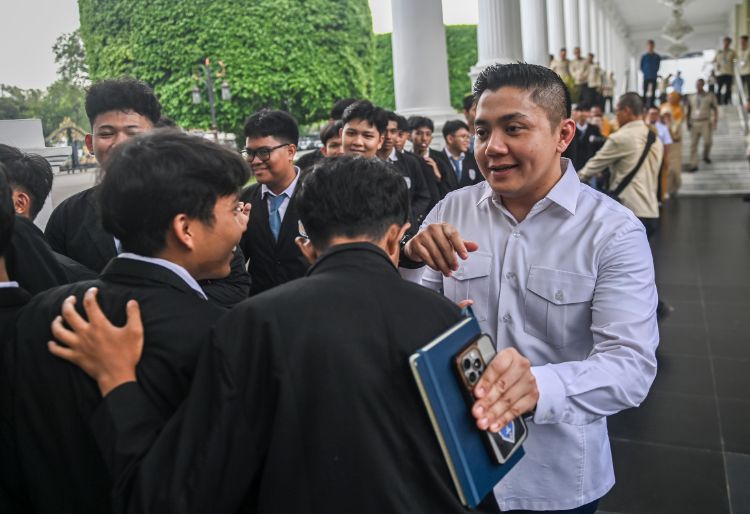
Political analyst Hendri Satrio has observed that the soaring popularity of Cabinet Secretary Teddy Indra Wijaya is not merely an online trend but is strongly felt on the ground, raising questions as it overshadows senior politicians. Satrio, familiarly known as Hensa, expressed his surprise that a figure without a political party, executive position, or family political dynasty could achieve such widespread recognition. “I am amazed by this person; he is popular on social media, but even more so in the field. From big cities to remote areas, people know and like him,” Hensa told reporters on Thursday (25/6/2026). The founder of the KedaiKOPI survey institute emphasised that such popularity usually relies on a political machine or a clear executive role, but Teddy’s case is different. He believes this phenomenon indicates a personal connection between the figure and the public’s daily experiences, rather than a temporary campaign effect. Hensa noted that Teddy’s appeal lies in his consistent presence in community spaces, his responsiveness to public issues, and his ability to explain technical matters in simple language. “Recently, he accompanied Mr Prabowo at an NU event in Madura, East Java, and then appeared before around one hundred thousand farmers and fishers in Gorontalo. In both places, the crowd cheered just at the mention of his name. That is the importance of visible and tangible performance, not just speeches full of promises,” he said. Hensa observed that Teddy’s fame makes senior politicians appear less competitive, proving that he has quickly understood how to gain public sympathy beyond rhetoric or handouts. “Even senior politicians are not that popular; Teddy has not even been Cabinet Secretary for a year, yet his reception on the ground is already huge. The seniors who usually rely on party structures and old networks must be baffled,” he remarked. He added that Teddy’s repeated presence is not a mere formality, as he genuinely seems to listen and provide real attention, allowing him to be quickly accepted across various social strata without a political machine. “If someone can achieve wide acceptance without party attributes or a political machine behind them, it shows that their communication skills and social closeness are excellent. This is rarely found in bureaucratic officials today,” Hensa said. He suggested that political actors and bureaucrats should seriously study this phenomenon to understand the elements that make a figure like Teddy accepted, so that political interaction can return to being oriented towards trust and real work, not just superficial appearances. “This is not about standard image-building; it is about how a bureaucrat can truly be accepted by the people daily. If it seems confusing, well, it is, but that is also a sign that something effective is happening and worth examining,” Hensa concluded.