
Analyst: Rp1 Minimum Share Price and Short Selling Will Have Moderate Impact on JCI
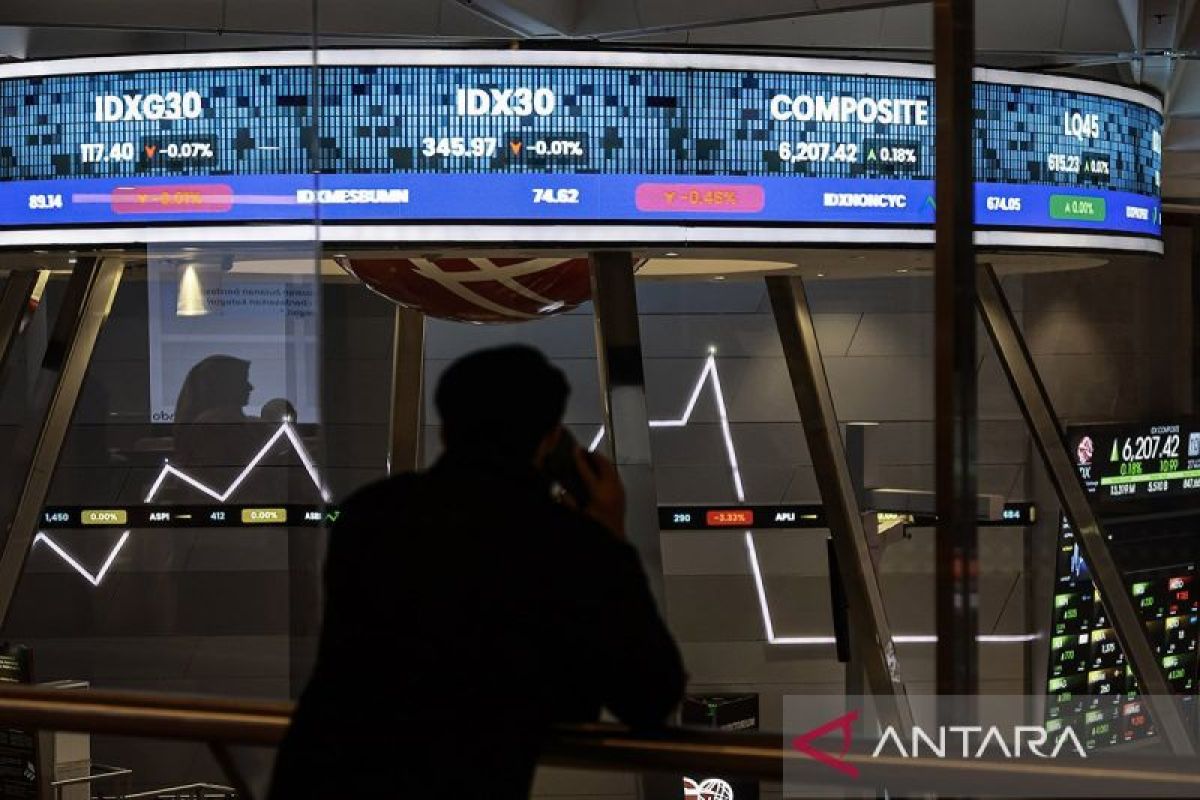
Jakarta (ANTARA) - Senior Technical Analyst at Mirae Asset Sekuritas Indonesia, M Nafan Aji Gusta, assesses that the implementation of a minimum share price of Rp1, occurring alongside the introduction of short selling transactions, will not have a significant impact and will tend to be moderate regarding the volatility of the Jakarta Composite Index (JCI).
“It has the potential to increase trading dynamics and volatility at the stock level, but its impact on the overall JCI volatility tends to be not too large in the short term,” Nafan stated when contacted by ANTARA in Jakarta on Monday.
According to him, the policy of a minimum share price of Rp1 essentially provides a new floor for stock movements, while short selling adds flexibility for investors to take positions when they identify potential price declines.
Regarding volatility, he noted that the combination of these two policies could actually make price discovery more active, particularly for highly liquid stocks included in the list of securities eligible for short selling.
“Selling activity will no longer only originate from investors divesting their holdings, but can also come from investors taking short positions,” said Nafan.
However, he reminded that the short selling mechanism also includes risk management constraints, including collateral requirements and the obligation to repurchase shares if the asset-to-short position ratio falls below a certain threshold.
Meanwhile, he explained that the Rp1 minimum share price is more relevant to very low-priced stocks, where the policy can reduce the nominal downside below Rp1, though it does not eliminate volatility risks.
“Fluctuations in percentage terms can still be very large because every one-tick change in a low-priced stock represents a significant percentage change,” said Nafan.
Thus, according to him, the main impact is not to automatically make the JCI much more volatile, but rather to improve the quality of the price discovery mechanism and the differentiation of movements between stocks.
“The JCI will still be largely determined by large-cap stocks, foreign fund flows, the condition of the Rupiah, interest rates, and global sentiment,” Nafante added.
In the medium term, he mentioned that the presence of regulated short selling with risk management can help create a more two-way market and increase the efficiency of price formation.
He noted that Indonesian capital market reforms are being directed by the Financial Services Authority (OJK), the Indonesia Stock Exchange (BEI), and the Indonesia Central Securities Depository (KSEI) to strengthen the integrity, transparency, and competitiveness of the Indonesian market.
“Therefore, for the JCI, I see the effect as tending to be moderate, whereas at certain stock levels, particularly stocks with high liquidity and large historical volatility, the impact on price fluctuations may be more noticeable,” said Nafan.
For information, the Indonesia Stock Exchange (BEI) will implement the minimum share price regulation from the previous Rp50 to Rp1 per share, effective from Monday (28/9) next week.
Additionally, the BEI will publish the List of Short Selling Securities on 28 September 2026, with short selling transactions becoming effective starting in October 2026.