
Analyst Reveals Why PDIP Has Not Clarified Its Political Stance in Prabowo's Government
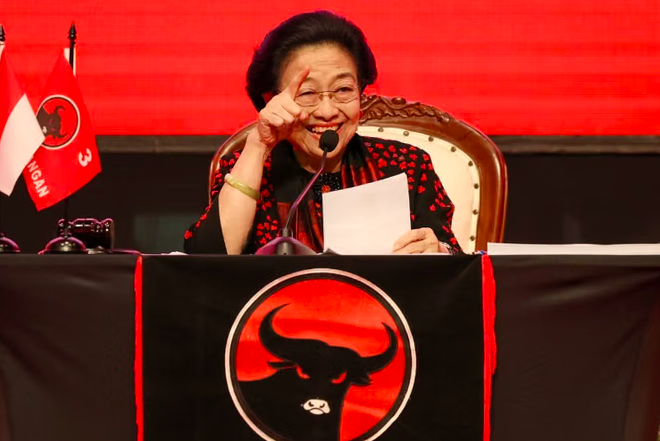
Calls from several parties within the government coalition, particularly the National Awakening Party (PKB), for the Indonesian Democratic Party of Struggle (PDIP) to clarify its political stance towards President Prabowo Subianto’s administration have resurfaced ahead of preparations for the early stages of the next general election. PKB considers clarity on PDIP’s political position important to avoid public misinterpretation, specifically whether the bull-headed party is genuinely performing a balancing and oversight function against the government or is in an ambiguous position by maintaining political closeness to the inner circle of power. Responding to this, the Executive Director of Trias Politika Strategis, Agung Baskoro, stated that PDIP’s position as a balancer is a consequence of a combination of political relations and the need for a healthy democratic system. “PDIP institutionally acts as a balancer, namely a critical and strategic partner, which is an accumulation of two things,” Agung told Media Indonesia on Monday. He explained that the two factors are the good relationship between PDIP Chairperson Megawati Soekarnoputri and President Prabowo, as well as the need for a check and balance function within the government system. “This is a formulation of the good relationship with President Prabowo and the need for a party to be a check and balancer so that our democracy is healthy,” he said. According to him, PDIP’s choice to take a balancing position is also related to efforts to maintain its constituent base, which has so far been outside the government, while still maintaining political communication with the ruling power. “The formulation of these two things is what made PDIP decide to act as a balancer, as well as an appreciation of its relationship with the President and maintaining its latent constituents,” Agung said. Furthermore, he emphasised that criticism from PKB and other parties regarding PDIP’s position is part of legitimate political dynamics. However, according to him, each party also has its own political rights in determining the direction of the coalition. “If PKB or other parties challenge PDIP’s position as a balancer, that is actually a political right,” he stated. Agung also mentioned that PKB itself has its own experience and political calculations following the presidential election contestation, so the dynamics of shifting positions in practical politics are commonplace. “We also know that PKB has its own political position after losing the presidential election and then moving to the winning side. That is also a political right, even though their constituent base might regret it,” he concluded.