
Analyst: Public trust is strategic capital for Polri in facing future security challenges
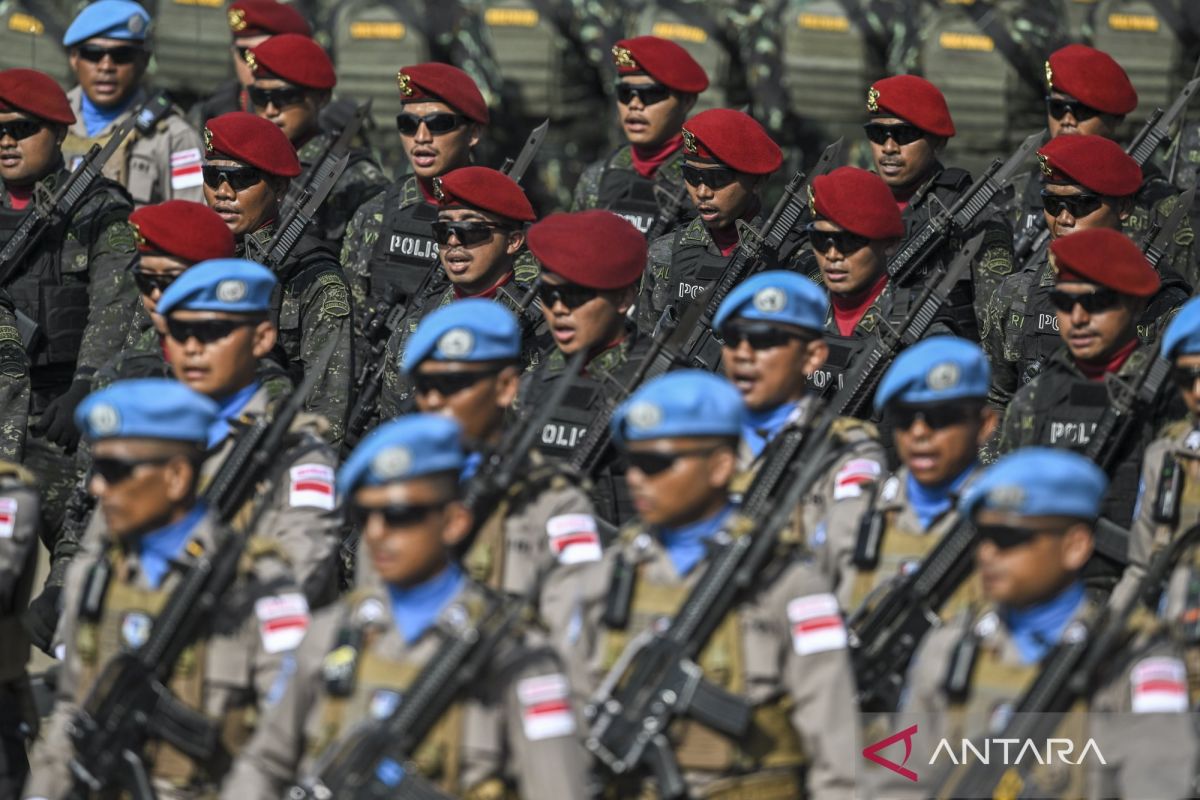
Jakarta (ANTARA) - Intelligence, defence, and security analyst Ngasiman Djoyonegoro believes that the level of public trust serves as strategic capital for the Indonesian National Police (Polri) to strengthen public services while facing increasingly complex security challenges in the future.
Ngasiman stated that this public trust is built through consistent, fast, transparent, and fair services, as well as Polri’s ability to adapt to changing security challenges from the early days of independence to the digital era.
“This 80-year milestone is authentic proof that Polri is part of the DNA of this Republic. From the era of taking up arms to fight for independence, through the reformation era, social conflicts, terrorism eradication, to the current era of rapid cyber warfare, Polri is constantly forced to adapt,” he said in a statement in Jakarta on Wednesday, coinciding with the 80th Bhayangkara Anniversary.
According to him, Polri’s orientation is now becoming closer to the community. This is evident through various service innovations, such as the implementation of ‘Polri Presisi’, electronic traffic law enforcement (ETLE), the digitalisation of motor vehicle administration services, and the strengthening of the role of Bhabinkamtibmas and the ‘Polri RW’ programme to resolve issues at the local neighbourhood level.
“The people think simply. They need police who are easy to contact, arrive quickly when there is a problem, are solution-oriented, transparent, and fair. If field performance is consistently good, public trust will naturally flow,” he remarked.
In addition to public services, Ngasiman noted Polri’s involvement in supporting various national strategic programmes, including securing the free nutritious meal programme through the Nutrition Fulfilment Service Unit (SPPG) and assisting food security alongside farmer groups, demonstrating the police force’s contribution to maintaining social stability and development.
“When the police go down to the fields to assist farmers and secure food supplies, they are essentially strengthening the national safety belt. A well-fed populace and a conducive social situation are the most basic capital for economic stability and development,” he said.
He cited results from a Kompas R&D Survey released in late June 2026, which showed public satisfaction with Polri reached 80.6 per cent. According to him, this achievement is an important social capital that must be continuously maintained through the enhancement of personnel professionalism and integrity.
“That 80.6 per cent public satisfaction figure is a strategic asset of immense value. It cannot be bought with a budget, but remember, this level of trust is not the finish line. Trust is built with sweat and integrity over many years, but it can be destroyed in seconds,” he said.
Facing technological developments, Ngasised believes Polri needs to continue strengthening data-based and analytical capabilities to anticipate threats from cybercrime, artificial intelligence (AI), and hybrid warfare. He also encouraged stronger collaboration between Polri, the government, universities, the business world, the media, and the community through the ‘Sabuk Kamtibmas’ concept to build an adaptive security system.
“The police of the future can no longer work alone. Future security is a matter of mutual cooperation (gotong royong). Polri must embrace the government, universities, businesses, communities, media, and citizens,” he concluded.