
Analyst: Polri's Free Homecoming Programme 2026 is a tangible manifestation of transformation
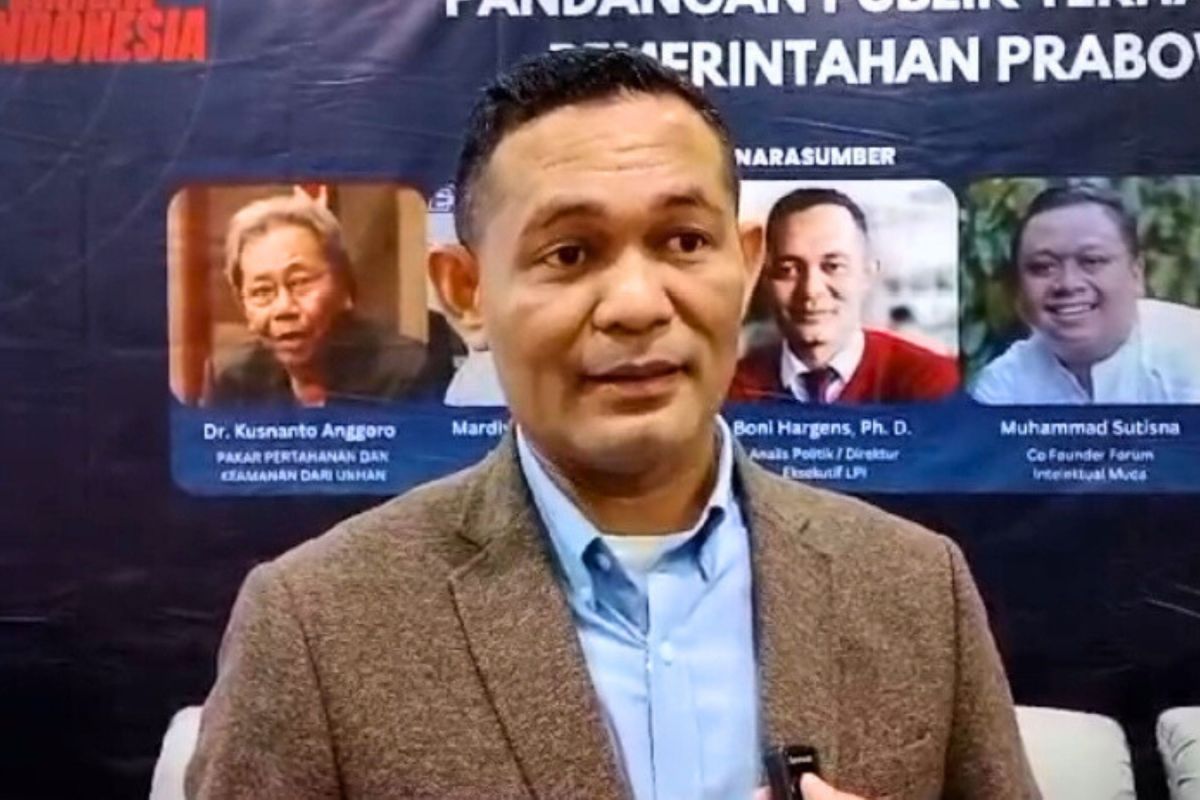
Jakarta (ANTARA) - Senior political analyst Boni Hargens stated that the “Mudik Gratis Polri Presisi 2026” programme represents a tangible manifestation of Polri’s transformation from power to service. According to him, the programme is not merely a ceremonial initiative but a concrete embodiment of Polri’s paradigm shift in viewing its relationship with the public. “This is a fundamental institutional cultural transformation, from a power approach to a servant approach, now being directly felt by the wider public,” Boni said in a statement in Jakarta on Monday. Therefore, he believes that Polri, under the command of Chief of Police General Listyo Sigit Prabowo, has made a significant contribution to the success of this year’s Eid al-Fitr celebrations through the Mudik Gratis Polri Presisi 2026 programme. By providing a free homecoming programme, Boni continued, Polri has actively lightened the burden on the public while ensuring safe and orderly travel, so the total dedication of Polri personnel in that moment is unquestionable. In addition, the security of the homecoming and return flow was carried out comprehensively, from traffic management at critical points, travel escort, to information services for travellers. Boni said that this dedication reflects the spirit of the corps that has fundamentally changed in interpreting its duties and responsibilities to the nation. He explained that the transformation carried out by Polri under the leadership of the Chief of Police is not merely cosmetic changes or uniform replacements. Thus, this transformation is a deep and comprehensive paradigm shift from the power approach (power approach) that was the dominant characteristic of the old policing tradition, to the servant approach (service approach) as the new foundation of the institution’s identity. In the old tradition, he said, the police institution was often positioned and positioned itself as an entity in power over the public, so the relationship built tended to be hierarchical and one-way, where the police command and the public obey. Although it has its own logic of order, he assessed that this approach in reality distances the police from the public it should serve. Conversely, the service approach positions police personnel as public servants who are present to help, protect, and empower the public. “In this approach, authority remains, but it is used as a tool to provide security and comfort, not as an instrument of intimidation or domination,” he said. Therefore, Boni added, the Chief of Police deserves sincere appreciation for his success in realising the PRESISI slogan in the right situation and context. According to him, effective leadership is not only about having a good vision, but about the ability to translate that vision into real actions that directly impact people’s lives. He also highlighted the invaluable sacrifice by a member of the Metro Jaya Regional Police Traffic Directorate, Brigadir Fajar Permana, who died in the line of duty during homecoming security. Boni believes that Brigadir Fajar’s death is a stark reminder that every moment of security felt by the public is the fruit of the dedication, even the lives, of those who maintain order. Thus, Brigadir Fajar’s passing while carrying out his duties is the most authentic proof of Polri’s totality, so it is not just a statistic of service, but a reflection of the value transformation that has truly permeated the soul of the police corps. It was mentioned that personnel who are willing to sacrifice their lives in carrying out service duties are personnel who have internalised the true meaning of the service approach. Boni conveyed that such sacrifices deserve appreciation and respect from the entire nation. “This reminds us that the security and comfort enjoyed by the public during Eid al-Fitr travel do not come just like that, but are fought for wholeheartedly by state servants who stand firm at every street corner,” Boni emphasised.