
Analyst considers TNI's involvement in food security programme appropriate
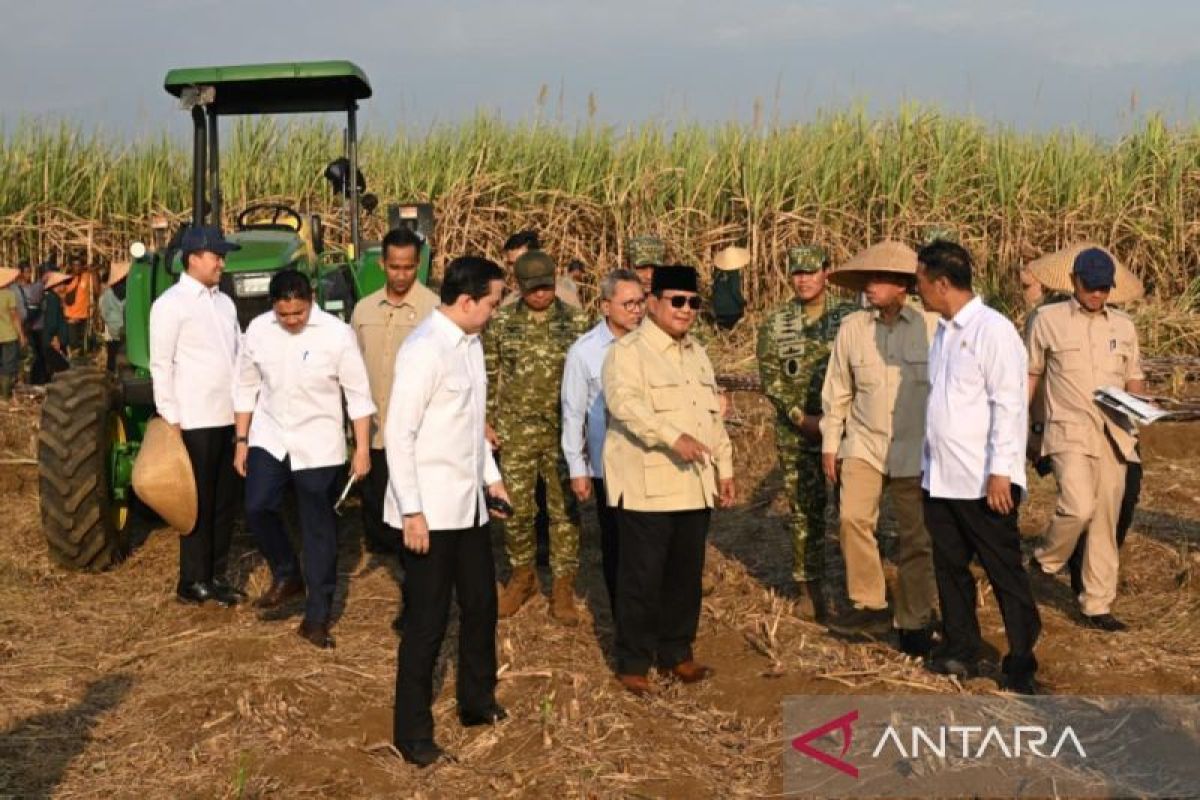
The Indonesian National Armed Forces (TNI) can provide support in line with their capacity, particularly in aspects relating to logistical support, mobilisation, and emergency conditions.
Jakarta (ANTARA) — Hanif Rahadian, a defence analyst and observer from the Strategic Defence Studies Institute (Keris), has judged the TNI fit to be involved in the food security programme, as food security is one of the factors influencing the strength of national defence.
“Food security is not only related to economic aspects and public welfare, but also has a strategic dimension in maintaining the stability of the state,” Hanif said when contacted by ANTARA in Jakarta on Tuesday.
Hanif explained that, from a geo-economic perspective, food is not merely viewed as an economic commodity, but as a strategic asset that determines a nation’s defence in facing global dynamics.
Therefore, he continued, efforts to strengthen food security must be undertaken so that the state remains strong amid the ongoing global conflicts.
Regarding the TNI’s involvement, Hanif believes the institution can make many contributions towards strengthening food security.
“The TNI can provide support in line with its capacity, particularly in aspects relating to logistical support, mobilisation, and emergency conditions,” he said.
“Meanwhile, the management of the food sector remains, in principle, the primary responsibility of the ministries, agencies, and civilian stakeholders that hold the mandate and competence in that field,” he added.
With the TNI playing a role, Hanif is confident that the government’s efforts to strengthen food security can proceed more effectively.
President Prabowo Subianto, speaking at a mass harvest event with the TNI at Abdulrachman Saleh Air Base in Malang Regency, East Java, on Friday, stated that food security is not solely the business of the Ministry of Agriculture.
“I congratulate you on the holding of this integrated TNI mass harvest, carried out simultaneously at 43 locations across Indonesia. This activity shows that food security is not only the business of the Ministry of Agriculture, but a national movement involving the entire strength of the nation,” President Prabowo said before state officials, farmers’ representatives, and representatives of agricultural business associations at Abdulrachman Saleh Air Base on Friday (17 July).
On that occasion, President Prabowo recalled the maize mass harvest driven by the National Police (Polri) two months earlier. Then, on that day, the three branches of the TNI — the Indonesian Army with cultivated paddy fields, the Indonesian Navy with soybean cultivation, and the Indonesian Air Force assisting sugarcane farmers — also held simultaneous mass harvests at 43 locations, comprising bases and cultivation lands of the three TNI branches.
“This shows that the TNI and Polri are not only the guardians of the state’s defence and security, but are an inseparable part of the Indonesian people. The TNI and Polri are the children of the people. The TNI and Polri must always stand with the people,” the President said.
Therefore, in the same speech, President Prabowo asked the TNI and Polri not to be overly concerned when criticised by certain parties for helping with the government’s food security programme. According to the President, food security is part of addressing the people’s difficulties. Moreover, amid an uncertain global geopolitical situation, building food security and food self-sufficiency is crucial for the nation’s survival.
“Don’t overthink whether this is procedure, what this is, why soldiers are in the rice fields, why the police are planting maize — no. This is Indonesia. The TNI and Polri belong to the people, and the people’s difficulties must be resolved. The TNI and Polri must overcome the people’s difficulties,” President Prabowo told the senior leadership of the TNI and Polri.