
Analyst: Battery industry extends the national mineral value chain
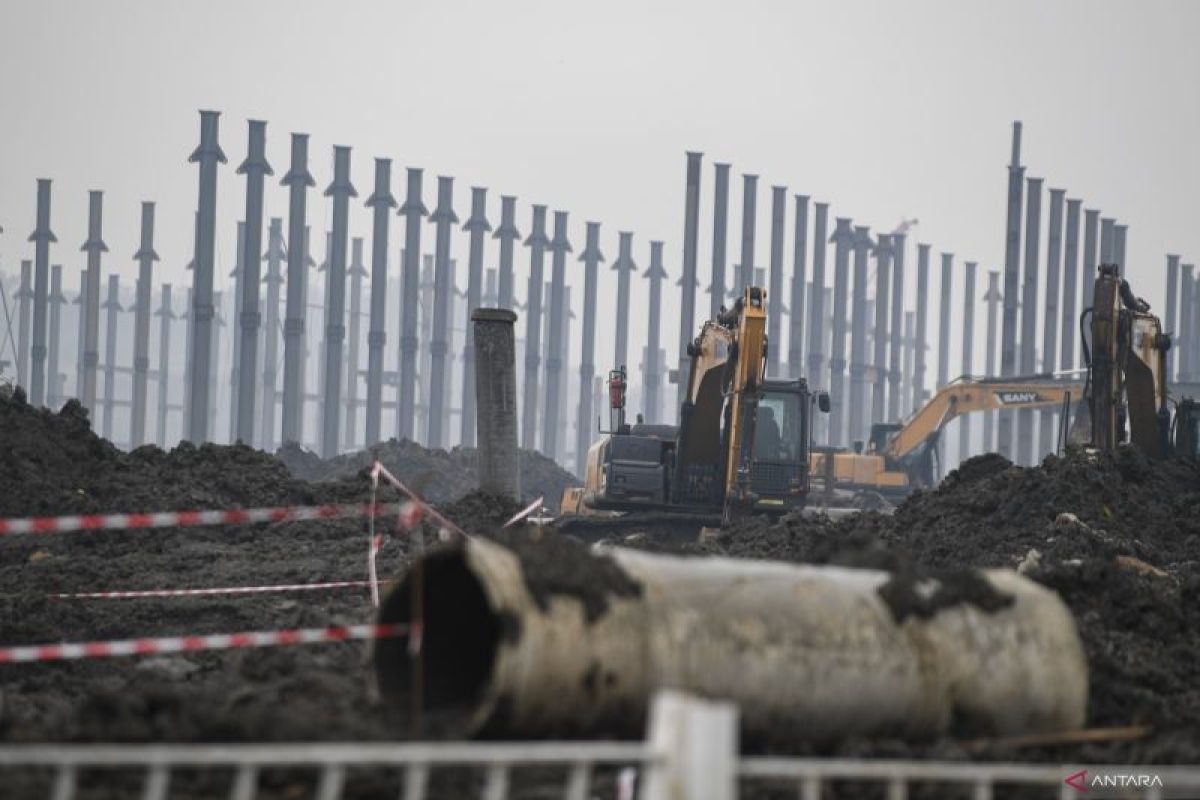
Jakarta (ANTARA) - Mohammad Faisal, Executive Director of the Center of Reform on Economics (CORE) Indonesia, believes the development of the battery industry, such as in Morowali and North Morowali Regencies in Central Sulawesi, has helped extend the national mineral value chain.
“If we look at Morowali, more than 75 per cent of its economic structure now comes from the industrial sector. Previously, more than half came from primary sectors such as mining and agriculture,” Faisal said in a statement received in Jakarta on Tuesday.
According to Faisal, more than 75 per cent of Morowali’s economic structure is currently supported by the industrial sector, a departure from the earlier situation when more than half of the region’s economy relied on primary sectors such as mining and agriculture.
A similar change, he said, has occurred in North Morowali alongside rising investment activity and the growth of the mineral processing industry in the area.
This shows that downstreaming not only increases the value of commodities after they are mined, but can also create new economic activity bases and transform the economic structure of producing regions.
Faisal noted that Indonesia’s nickel downstreaming level in the 2021-2022 period was still relatively early stage, as processing largely stopped at products such as nickel pig iron (NPI) and ferronickel.
However, the nickel processing chain is now advancing towards higher value-added products, including materials for the battery industry.
“But more recently it has reached batteries. This is something I think deserves great appreciation,” he said.
The change in economic structure has gone hand in hand with increased economic activity in nickel-producing regions.
According to data from Statistics Indonesia (BPS), the per capita GRDP of Morowali and North Morowali increased over the 2014-2024 period in line with the growth of processing industry activity.
The next stage of nickel downstreaming is directed towards producing battery raw materials, one approach being high pressure acid leach (HPAL) technology, which processes limonite ore into mixed hydroxide precipitate (MHP).
Aditya Farhan Arif, President Director of Indonesia Battery Corporation (IBC), said the growth of the national battery industry also has the potential to extend the economic impact of downstreaming to mineral commodities beyond nickel.
According to Aditya, around 23 per cent of the material required in batteries is aluminium and around 18 per cent is copper.
As such, the establishment of a domestic battery industry could create linkages with the industrial chains of both commodities.
“If we have a battery industry that is sovereign, advanced, and independent, we actually also have the opportunity to gain even greater economic impact from other commodities, not only nickel,” Aditya said.
IBC is developing a battery industry chain ranging from battery materials to cells and battery packs, which can be used for, among other things, electric vehicles and battery energy storage systems (BESS).
BESS is needed, among other purposes, as an energy storage system to support various electricity needs, including data centre requirements.
These developments show that nickel downstreaming relates not only to increasing the added value of a single commodity, but also to the formation of derivative industries, changes in regional economic structures, and the creation of linkages with other domestic mineral industry chains.