
Analyst: B50 Programme Carries Risks if CPO Supply is Limited
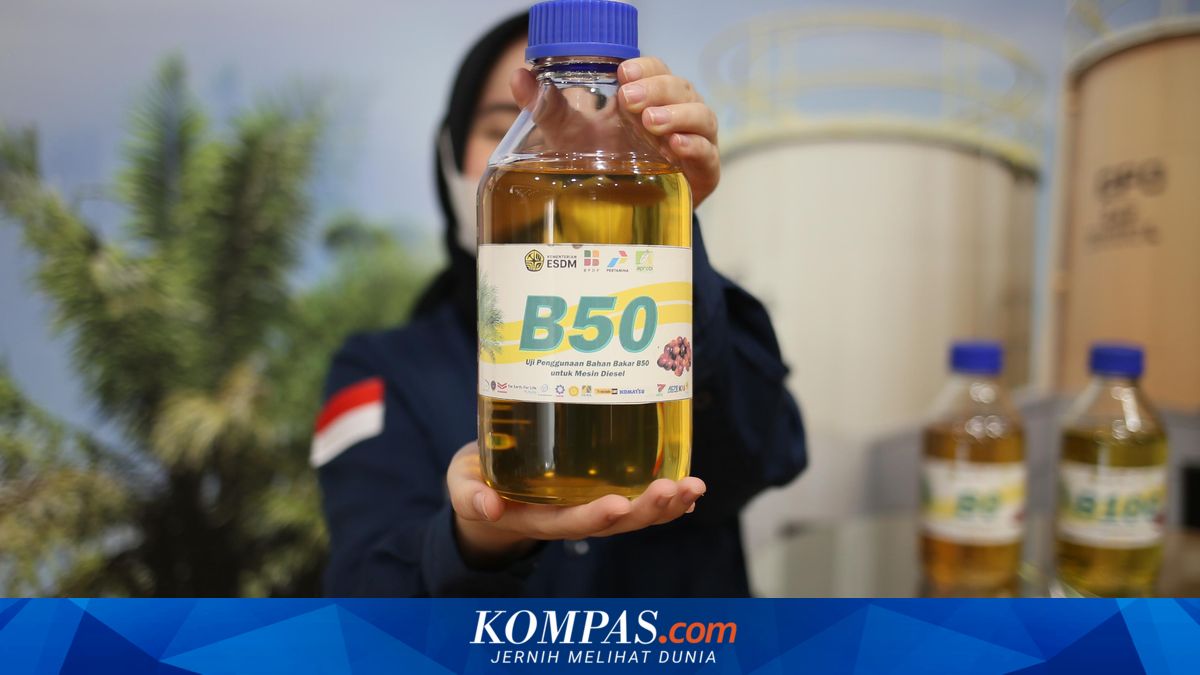
JAKARTA, KOMPAS.com - The Director of the Centre for Legal Studies and Advocacy of Natural Resources (Pustaka Alam), Zainal Arifin, has stated that the government’s plan to implement a mandatory B50 biodiesel programme is a strategic step towards strengthening national energy resilience.
However, he argues that this policy will only be successful if the government first addresses fundamental issues in the upstream palm oil industry.
He says that the B50 programme should not be viewed merely as an energy policy, but rather as a cross-sectoral agenda concerning investment stability, palm oil productivity, and legal certainty for business actors.
According to data from the Ministry of Agriculture, the area of palm oil plantations in Indonesia reaches 16.83 million hectares; however, according to Pustaka Alam’s records, the area has reached 18 million hectares.
However, the problem is not only the size of the plantations but also productivity.
“Many smallholder and corporate palm oil plantations are aging, and their productivity is declining. Furthermore, based on claims from the Task Force for the Rectification of Forest Areas (PKH), they have reclaimed approximately 4 million hectares of palm oil land. As a result, CPO production in 2025 will stagnate at 51.66 million tons,” he said.
Currently, the area of smallholder palm oil plantations has reached around 6.8 million hectares, with at least 4.8 million hectares requiring replanting. According to Zainal, the slow progress of the Replanting Programme for Smallholders (PSR) is hindering the potential increase in national production.
If the programme runs on schedule, Indonesia’s CPO production should be able to reach 60 million tons per year.
The main obstacles to the PSR, he added, still revolve around land legality, forest area status, access to financing, and concerns among authorities regarding legal risks.
He also encourages the government to implement a flexible blending concept in the implementation of B50. This means that the biodiesel mixture ratio should not be treated as a fixed number but rather adjusted to the conditions of CPO supply, world oil prices, food needs, and the country’s fiscal capacity.
According to him, this flexible approach will allow the government to maintain the direction of energy transition without sacrificing food stability or downstream industries.