
Analyst assesses SISKA programme could cut beef imports by a third
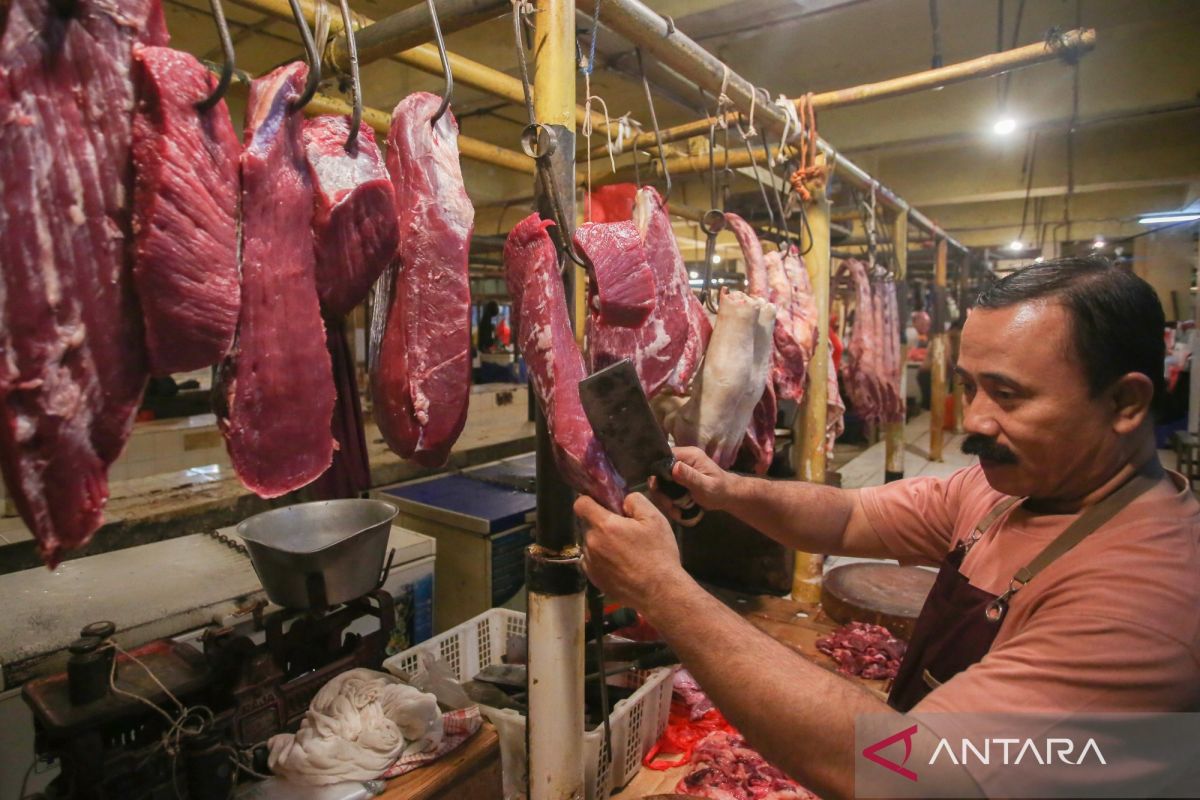
Researcher Eliza Mardian from the Center of Reform on Economics (CORE) Indonesia has assessed that the government’s Sistem Integrasi Sapi dan Kelapa Sawit (SISKA) programme could potentially reduce beef imports by around one-third, provided it is implemented in stages and supported by institutional reform. She said utilising a portion of oil palm land for integrated cattle production could add up to 2 million head to the national herd in the long term. “With the gradual addition of 1 million to 2 million head, this could reduce our imports by at least a third,” Eliza stated in Jakarta on Tuesday. She noted that nearly 40 per cent of national beef demand is currently met through imports, making SISKA development a potential instrument to strengthen domestic beef supply. Using a conservative ratio of one cow per 13 hectares, she explained that utilising half of Indonesia’s oil palm land could accommodate up to around 2 million head of cattle. However, she emphasised that such development cannot be done instantly and should begin through pilot or measured projects before wider application. “It is better to pilot first; there is no need to set a target of 2 million head immediately,” she said. Eliza considers SISKA more appropriately positioned as a complementary strategy to diversify protein sources, rather than a standalone solution for achieving protein self-sufficiency. She noted that national animal protein consumption is still dominated by chicken and fish, while beef is relatively more expensive and a premium commodity with high income elasticity. Thus, developing the cattle-palm oil integration could help reduce import dependency, save foreign exchange, and strengthen the circular economy in plantation regions. She said SISKA’s potential lies in reducing beef and dairy imports over the coming decade and bolstering rural economies in oil palm areas, provided it is supported by proper governance. The biggest challenge, she continued, is building trust and aligning incentives among plantation companies, farmers, the government, and other involved business actors. “Success depends on institutional reform. The greatest challenge is building trust and incentive alignment among actors,” she revealed. She assessed that the government needs to act as a facilitator, not just a regulator, through large-scale pilot projects with strict monitoring, fiscal incentives for companies implementing integration, and special programmes for small-scale farmers and breeders. “Without these, the SISKA programme risks becoming a narrative without broad implementation, and it is complementary to other strategies such as national breeding development and strategic import management,” Eliza remarked. Similarly, Galau Muhammad, a researcher at the Center of Economic and Law Studies (Celios), also assessed that SISKA could serve as an initial step to increase domestic cattle productivity. However, he cautioned that the larger goal of animal protein self-sufficiency requires more systemic strategies, including improved breeding stock, capital incentives for small-scale farmers, and logistics investment development. “SISKA as one supporting instrument to increase domestic supply may be one thing, but the issue of animal protein self-sufficiency is another matter,” Galau said. He noted that most cattle farmers in Indonesia are currently small-scale, so the integration programme must ensure small farmers’ access to land, financing, and supply chains. He added that incentives for large-scale oil palm plantation companies must also be designed to align with the interests of smallholder livestock development. He further assessed that improving the welfare of small-scale farmers must be a focus so that the programme’s benefits can be felt more widely. “There are many systemic problems that remain unanswered regarding how to improve farmer welfare, especially for small-scale farmers,” he said. Meanwhile, the Coordinating Ministry for Food is promoting SISKA development as one strategy to increase national animal protein production while reducing dependence on imported beef and dairy. Widiastuti, Deputy for Food and Agriculture Business at the Coordinating Ministry for Food, said domestic milk production currently meets only about 20 per cent of national demand, prompting the government to encourage the use of local resources to strengthen animal protein supply. The government also assesses that the cattle-palm oil integration can improve livestock business efficiency because the use of palm kernel meal, fronds, leaves, and grass in plantation areas can reduce feed costs by up to 40 per cent. The Coordinating Ministry for Food records that Indonesia has approximately 16.38 million hectares of oil palm plantations. If half were utilised for the integration programme, the potential additional cattle population could reach 2.73 million head, for both fattening and breeding. This increase in the domestic cattle population is expected to reduce dependence on beef imports, which are projected to reach around 297,000 tonnes in 2026.