
Analyst Assesses Ride-Hailing Presidential Regulation as Creating a Healthy Business Climate
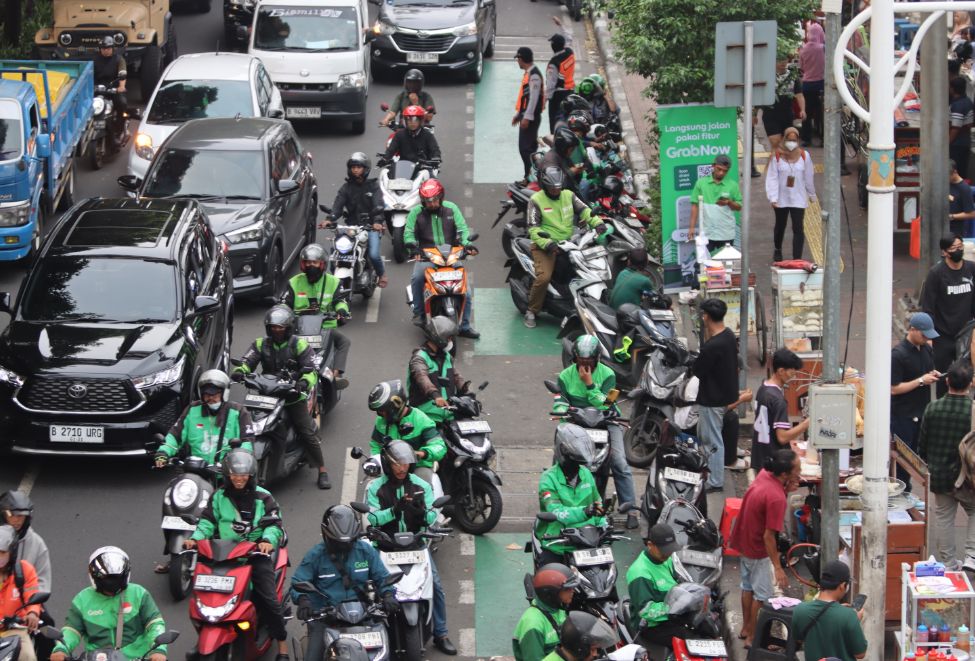
The online transport protection regulation in the form of a Presidential Regulation (Perpres) on Online Motorcycle Taxis (Ojol) is targeted for completion and official signing before the commemoration of the 81st Anniversary of the Republic of Indonesia on 17 August 2026. This regulation is designed to provide legal certainty and balance the working relationship between app operators and drivers.
Political and legal analyst Boni Hargens assessed that the presence of the Ojol Perpres represents concrete state intervention to strengthen the bargaining position of millions of drivers who have so far been considered vulnerable.
“The main urgency behind the issuance of the Ojol Perpres is to provide legal certainty and welfare protection for millions of ojol drivers who have so far been in a weak bargaining position vis-à-vis app companies,” said Boni in a written statement on Wednesday (12/8/2026).
The Executive Director of the Indonesian Voters Institute (LPI) outlined three fundamental urgencies that are the focus of this regulation. The first aspect relates to commission cuts by app operators, which have so far been deemed too high because they often exceed 20 percent of the total trip fare. Through the intervention of this new rule, the maximum limit for app operator commission cuts is reduced to a maximum of 8 percent, so that drivers are entitled to keep at least 92 percent of income per trip in order to boost their welfare.
Apart from the commission issue, the second urgency highlights certainty of social security and occupational safety. The partnership status that has so far been attached often causes drivers to miss out on formal employment rights, so this Perpres legal umbrella is designed to provide adequate social security and health protection when drivers are on the road.
The third crucial aspect concerns the arrangement of a fairer and more transparent partnership relationship. This Perpres eliminates unilateral actions by app operators, especially in determining fare formulas and unilateral account suspension sanctions without a clear clarification mechanism.
In addition to the three partner welfare aspects above, Boni added that the draft regulation is also designed to be adaptive to the modern business landscape. Integrated cross-ministerial supervision will later not only cover two-wheeled passenger transport services, but will be expanded to the food delivery and goods delivery (logistics) sectors.
“With comprehensive arrangement from the aspects of commission limitation, certainty of social security rights, to transparency of partnership sanctions, this regulation is expected to create a healthy, safe and equitable digital transport industry climate for all parties,” he said.
Previously, Deputy Speaker of the Indonesian House of Representatives Sufmi Dasco Ahmad led a cross-ministerial Coordination Meeting on Monday (10/8/2026) to finalise the draft of the Perpres. Dasco emphasised that the discussion was focused on comprehensive protection for drivers, passengers and digital platform companies, while maintaining a competitive business climate.
The Perpres will serve as the legal umbrella for regulating the online transport ecosystem, including the division of duties and authorities of each ministry.
Minister of MSMEs Maman Abdurrahman said the majority of ojol drivers choose micro-entrepreneur status for flexibility and access to KUR financing.
The decline in income occurred amid rising daily operational costs that now consume nearly half of drivers’ earnings.
This feature is designed as part of the digital transformation of public services to make it easier for the public and drivers to submit accident reports.
Amid the increasing dynamics of the ride-hailing industry in various countries, issues related to fares, commissions, as well as driver protection and welfare are a major concern.