
Analyst: Accelerate Implementation of Anti-Dumping Policy for Steel Products
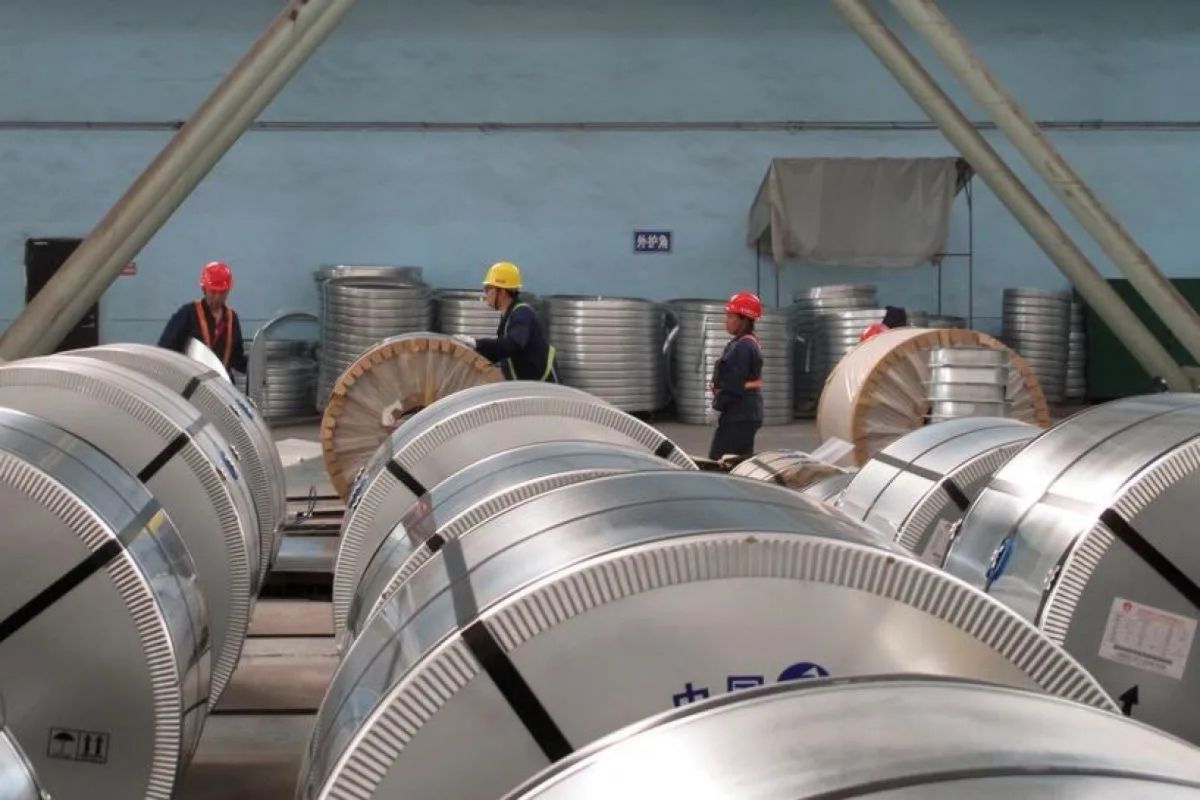
The government is expected to accelerate the implementation of anti-dumping policies for steel products from upstream to downstream.
Jakarta (ANTARA) - Executive Director of the Center of Economic and Law Studies (CELIOS), Bhima Yudhistira Adhinegara, stated that the government needs to speed up the application of anti-dumping policies for steel products from upstream to downstream to avoid further steel factory closures like that of PT Krakatau Osaka Steel (KOS).
At the end of April 2026, PT Krakatau Osaka Steel (KOS) officially halted production activities, before finally closing all business operations in June 2026.
In addition to the influx of cheap steel imports from China, the saturation of the reinforcing steel bar (long product) market produced by Krakatau Osaka Steel is also suspected to be a cause of the factory closure.
Currently, there are many players in the long product sector, around 60 factories, which has triggered significant price pressure in the market. As a result, almost throughout its 10 years of operation, Krakatau Osaka Steel has continuously incurred losses.
According to Bhima in his statement in Jakarta on Wednesday, this situation occurred due to a structural crisis in the domestic steel industry caused by the flood of cheap steel imports from China. The current national steel industry capacity utilisation is only around 52%, whereas ideally it should be about 80%.
“China’s steel production in a year is around 1 billion tonnes; if just 2% is exported to Indonesia, the amount already exceeds Indonesia’s production capacity. This is unfair competition considering the cheaper price of Chinese steel,” he said.
Bhima expressed regret over the steel factory closure, especially amid the current global and domestic economic downturn trends due to wars, particularly in the steel sector.
He revealed that Krakatau Osaka Steel (KOS) is the second steel factory to close; previously, in October 2025, the Metal Steel Group factory owned by Ispat Indo, operating in Surabaya, also shut down.
“To prevent further steel factory closures like Krakatau Osaka Steel and the Metal Steel Group owned by Ispat Indo, the government is expected to accelerate the implementation of anti-dumping policies from upstream to downstream,” he said.
According to him, the findings of the Indonesian Anti-Dumping Committee (KADI) regarding evidence of Chinese steel dumping with price margins 5.9% to 55.6% cheaper should serve as a trigger for regulatory reform so that anti-dumping import duties are immediately imposed on all segments of steel products.
Meanwhile, regarding the impact of the PT Krakatau Osaka Steel (KOS) closure on workers, a labour law expert from Padjadjaran University (Unpad) in Bandung, Holyness N Singadimedja, views positively the company’s commitment to complying with applicable laws and regulations, particularly in fulfilling the rights and compensation for affected workers.
“Of course, I support it. This commitment shows the company’s good faith in taking responsibility. It does not wash its hands of the matter,” she said.
Nevertheless, she stated that labour supervisors must still monitor the implementation of workers’ rights provision, because the company’s operational closure does not reduce or eliminate those rights.
“Even in cases of force majeure, obligations to workers must be carried out, let alone without force majeure. That is part of the company’s risk,” she said.
On the other hand, Holyness agrees that the decision to close the factory is the authority of the majority shareholders, in this case, Osaka Steel Co., Ltd., with ownership of around 86%, while PT Krakatau Steel (Persero) Tbk only holds 14% of the shares.