
Anak Krakatau Volcanic Ash and the Jakarta Incident
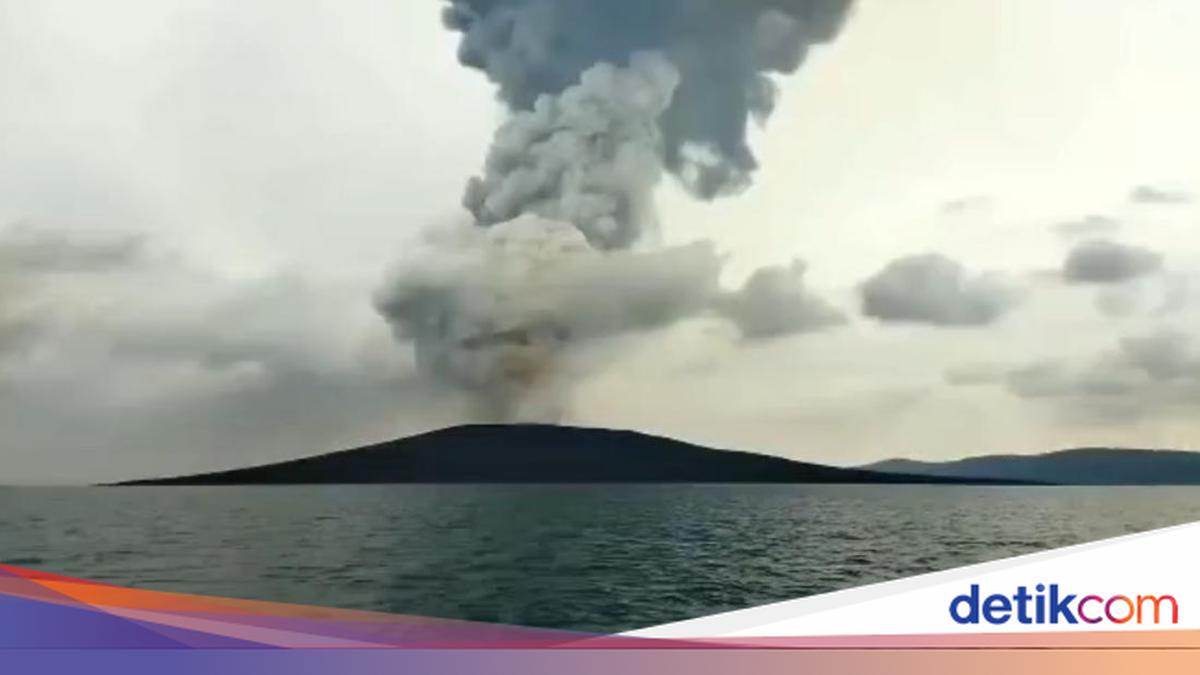
Reuters reported that more than 1,500 flights were affected and around 170,000 passengers faced air travel disruption following the eruption of Mount Anak Krakatau on Sunday, 6 September 2026. Eight airports temporarily suspended flight operations due to the spread of volcanic ash. At Soekarno-Hatta Airport alone, 964 flights were affected.
For some people, flight cancellations may feel like an annoying travel disruption. But for the aviation world, volcanic ash is not merely dust that dirties aircraft windows. It can pose a serious threat to jet engines. That is why, when volcanic ash is detected along flight routes, the decision to cancel, divert, or delay flights is not an overreaction. Aviation safety demands such caution.
There is one story that explains why the aviation world is so wary of volcanic ash. It took place on 24 June 1982. At the time, citing the BBC (24/6/2026), British Airways Flight 9 was flying from Kuala Lumpur to Perth, Australia. The Boeing 747-200 was piloted by Captain Eric Moody and carried 263 people.
The flight proceeded normally until the aircraft entered the area around Java. There were no large storm clouds. There was no warning that the plane was heading towards something dangerous. Then, one by one, all four engines failed. The cause was a cloud of volcanic ash from Mount Galunggung, which was erupting in Tasik, West Java.
In the cockpit, at an altitude of about 37,000 feet, Captain Moody and the crew had to make decisions within minutes. They descended to escape the ash layer. As they did so, Captain Moody made an announcement, as calm as possible: “Ladies and gentlemen, this is the captain speaking. We have a small problem.”
He called it a ‘small problem’. Yet for roughly 13 minutes, British Airways Flight 9 glided through the air with all four of its engines dead.
The aircraft then managed to escape the ash cloud. Several engines could be restarted. But the struggle was not over. The plane had to find an airport to land at. Halim Perdanakusuma Airport in Jakarta was the choice. The plane landed smoothly and all passengers survived.
For the 263 passengers of British Airways Flight 9, Eric Moody was the man who brought them back to solid ground. For the aviation world, he is remembered as the pilot who faced one of the most extraordinary emergencies in aviation history.
But for his family, the story felt far simpler. “To me, he was just Dad. But to them, he was a hero…” said Sarah Myers, Eric’s daughter.
Captain Eric Moody passed away on 18 March 2024, at the age of 82. He was born on 7 June 1941 and retired from British Airways in 1996 after more than 17,000 flying hours.
The aviation world later came to know the event as the ‘Jakarta Incident’. The experience changed how the aviation industry understands the dangers of volcanic ash.
Under certain conditions, volcanic ash is not pitch black. It can resemble an ordinary cloud or even be invisible to the crew’s eyes.
Inside a jet engine, however, the very fine ash particles can melt due to the high temperatures in the combustion chamber. The material can then stick to engine components and disrupt airflow, causing the engine to lose power. That is the lesson Galunggung left to the world of aviation.
Forty-four years later, when ash from Anak Krakatau affected more than 1,500 flights and disrupted the journeys of some 170,000 passengers, the decision to temporarily halt flight operations was not merely a matter of delays. There is a long history behind such vigilance.
Source: jawawa.id (https://jawawa.id/newsitem/anak-krakatau-volcanic-ash-and-the-jakarta-incident-1788753235)
Originally published by detikcom (https://news.detik.com/kolom/d-8651649/abu-vulkanik-anak-krakatau-dan-jakarta-incident), translated from Indonesian