
Anak Krakatau Ash Spreads, Government Issues School Directives
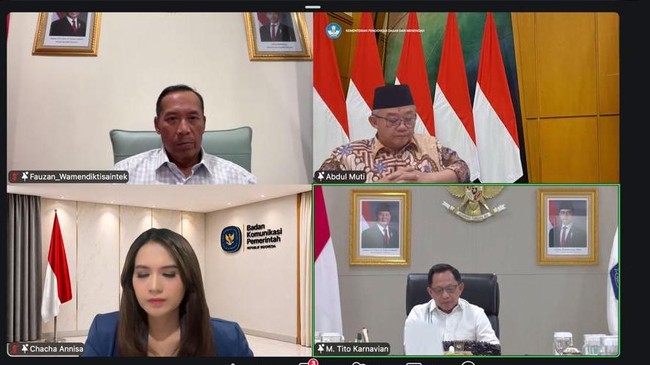
The government has issued a number of advisories regarding educational activities amid the eruption of Mount Anak Krakatau. Teaching and learning activities are asked to adjust to conditions in each region by prioritising the safety and health of students and teaching staff.
Minister of Home Affairs Tito Karnavian said teaching and learning activities can still be carried out as usual if regional conditions still allow. However, schools are asked to continue monitoring the potential for increased activity and the impact of volcanic ash.
“If it can still be carried out, study indoors, especially activities in the classroom, carry on as usual while continuing to observe the potential for escalation,” Tito said in a virtual press conference on Sunday (6/9/2026).
According to Tito, educational activities that take place outdoors, including extracurricular activities and field activities, can be adjusted to conditions in each respective region.
Meanwhile, Minister of Primary and Secondary Education Abdul Mu’ti said a number of areas in Lampung and Banten have experienced quite severe impacts from volcanic ash.
For severely affected areas, the government recommends that learning be conducted from home online starting Monday (7/9/2026).
“In areas that are very severely affected, we recommend that learning be carried out at home online,” said Mu’ti.
However, Mu’ti acknowledged that not all students have adequate internet access. Therefore, if learning from home is not possible, learning activities can be carried out at certain locations deemed safe and do not necessarily have to be at school.
Mu’ti stressed that the central government has not stipulated that all regions must implement distance learning. Decisions are adjusted to conditions in each respective region because the impact of volcanic ash is still dynamic and influenced by a number of factors, including wind direction.
“So we cannot determine which regions must conduct learning from home. But we emphasise, in accordance with the provisions we have mentioned, that the safety and health of students and educators, as well as education itself, are the top priority,” he said.
If the regional government assesses that an area is unsafe for face-to-face activities, learning at school must not be carried out.
Conversely, if conditions still allow for face-to-face learning activities, schools are still asked to implement strict health protocols.
One of these is by reducing activities outside the classroom, including sports and other activities. In fact, outdoor activities can be eliminated if conditions do not allow.
For activities inside the classroom, schools are also asked to minimise the entry of volcanic ash. Windows, doors, and other facilities that could potentially become entry points for dust need to be secured.
At the higher education level, Deputy Minister of Higher Education, Science, and Technology Fauzan also urged both public and private campuses to reduce activities outside the campus.
He said office services, learning processes, and other academic activities can be carried out online, hybrid, or through other methods deemed effective in reducing the risk of exposure to eruption dust.
“We urge all higher education institutions, both public and private, to take strategic and effective steps oriented towards reducing activities outside the campus for the entire academic community,” said Fauzan.
Fauzan also asked higher education leaders to activate emergency response posts within their respective campuses and continue to coordinate with local regional heads.