
An Ecological Prayer Mat Amid the Fires of Forest and Land Fires: Bina Insan Mulia Students’ Appeal to Heaven and Earth
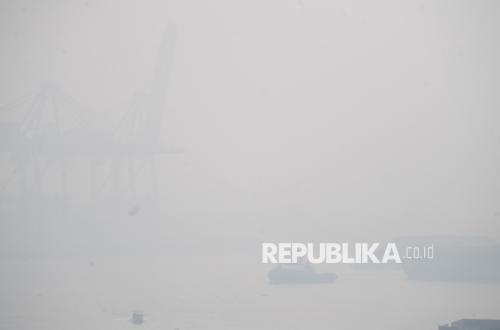
The prolonged dry season we are experiencing today is not merely a passing weather cycle. It is a theological alarm. As smoke from forest and land fires (karhutla) begins to choke our brothers and sisters in various regions, and the soil cracks and withers in the drought, our faith is being put to the test in terms of how effectively it is practised.
Does the religion we profess stop at the walls of prayer rooms, or can it offer a concrete response to the earth’s cries? As Nahdliyin, we often invoke the principles of fikrah (thought) and harakah (movement). But in the face of an increasingly evident climate crisis, it is time for Nahdlatul Ulama (NU) and Indonesia’s pesantren networks to undertake what I call ecological renewal.
The prolonged drought and forest and land fires affecting the country are not merely cyclical natural phenomena. For us as believers, this crisis is both a spiritual alarm and a stern ecological warning.
The Qur’an makes this clear in Surah Ar-Rum, verse 41: corruption on land and sea has emerged because of what people’s hands have wrought, so that they may taste the consequences and return to the right path.
In the tradition of Islamic jurisprudence, we know the concept of Maqashid Asy-Syariah (the objectives of Islamic law), whose core is summarised in Kulliyatul Khams: the protection of religion, life, intellect, lineage and property. Yet, given today’s reality, in which exploitation of nature has reached a point that threatens the existence of living things, contemporary scholars have formulated an urgent additional dimension: Hifdhul Bi’ah (protection of the environment).
For Nahdlatul Ulama (NU) and the pesantren world, hifdhul bi’ah is not a secondary agenda. Culturally, pesantren and NU were born and grew from agrarian communities. When the earth withers in drought and dense smoke from forest and land fires constricts the lungs of our brothers and sisters, pesantren must not remain silent in an ivory tower of purely ritual piety. Ritual piety must be transformed into social and ecological piety.
The development of fiqh must not stall at discussions of ritual worship alone; it must instead move forward to formulate an environmental fiqh that responds to the realities of our time (hifdzul biah).
Today, thank God, more than 5,000 students of Bina Insan Mulia Islamic Boarding School (BIMA) gathered in supplication on the field. We held the Shalat Istisqo, a prayer seeking rain, to knock on the door of Allah SWT’s mercy and ask for rain that brings blessings. But the fiqh taught at BIMA is not passive.
We cannot ask for rain to put out the fires of forest and land fires while folding our hands and taking no practical action on the ground. In Islam, the relationship between humanity and nature is based on the mandate of stewardship (khalifah fil ardhi).
Protecting the environment (hifdzul biah) is, in truth, as urgent as protecting religion (hifdzun din) or protecting life (hifdzun nafs). Environmental destruction, smoke pollution and denuded forests are tangible signs that our humanity and spiritual responsibility have been lost.
Source: jawawa.id (https://jawawa.id/newsitem/an-ecological-prayer-mat-amid-the-fires-of-forest-and-land-fires-bina-insan-mulia-students-appeal-to-heaven-1792237821)
Originally published by Republika (https://opini.republika.co.id/berita/tn1ryp451/sajadah-ekologi-di-tengah-bara-karhutla-ikhtiar-langit-dan-bumi-santri-bina-insan-mulia), translated from Indonesian