
Amran to Issue Circular After Exposing SPHP Rice Repalletising Case
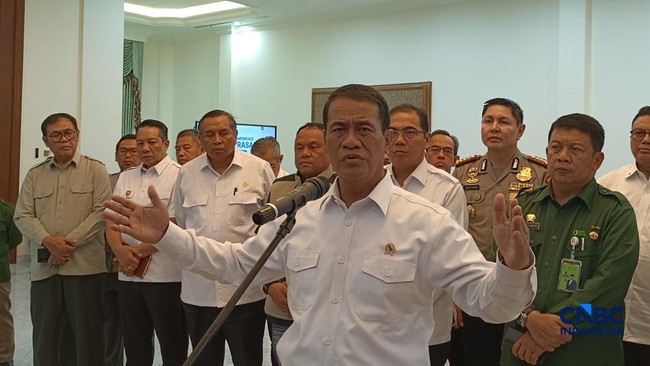
Jakarta, CNBC Indonesia — Agriculture Minister and National Food Agency (Bapanas) head Amran Sulaiman will issue a circular across Indonesia to strengthen oversight and publicise regulations on violations in the food sector.
The move follows the uncovering of alleged misuse of rice supplied under the government’s Food Supply and Price Stabilisation (SPHP) programme.
Amran said the government would step up education about the risks, fines and criminal penalties faced by those who commit violations. Monitoring would also be carried out in collaboration with law-enforcement agencies.
“[To prevent rice adulteration cases from happening again,] regulations will be tightened. A circular will be issued, alongside education and outreach, explaining the risks, the fines and that this is a criminal offence. We will strengthen public awareness, while continuing to work very closely with the police and prosecutors,” Amran said at a press conference in Jakarta on Thursday (29 October 2026).
He stressed that the government would show no tolerance towards anyone found to have committed food-sector violations. The enforcement action is in line with President Prabowo Subianto’s directive to eradicate mafias and corruptors.
“Once again, they must be punished severely. There can be no tolerance. [In accordance with] President Prabowo’s orders, mafias and corruptors must be driven out of the Republic of Indonesia,” he said.
The remarks came as authorities investigate the alleged repackaging of SPHP rice in the Kayu Manis area of Matraman and at the Cipinang Rice Wholesale Market (PIBC) in East Jakarta. In the case, the government and police found around 600 tonnes of SPHP rice allegedly removed from its original packaging and repacked for sale as premium rice.
Bapanas estimates that misuse of the 600 tonnes could mean Rp3.3 billion in subsidies fail to reach the public. The estimate is based on a price subsidy of around Rp5,510 per kilogram.
Amran said the practice harms the public because SPHP rice is a government programme intended to provide affordable rice, particularly for people in need.
“[SPHP rice] is for people who are struggling. Its packaging is removed, it is repacked and then sold at a high price. Isn’t that wicked?” Amran said.
The government plans to widen its inspections and strengthen oversight of food distribution to prevent further misuse of subsidised rice.