
Amran: Seed Innovation Key to Reducing Indonesia's Soybean Import Dependency
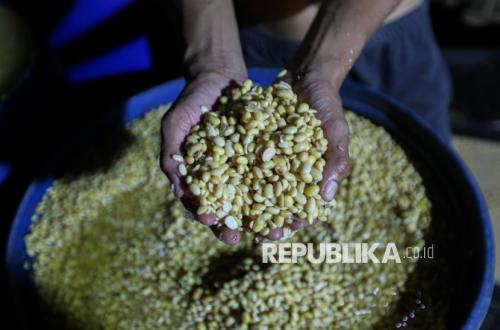
Minister of Agriculture Andi Amran Sulaiman has stated that seed innovation is the key to reducing Indonesia’s dependency on soybean imports. The Ministry of Agriculture is therefore collaborating with Surabaya State University (Unesa) to develop superior, high-productivity soybean seeds as part of accelerating national soybean self-sufficiency. Amran encouraged Unesa to produce soybean varieties capable of yielding 5-6 tonnes per hectare. The government is also ready to facilitate the development of these seeds if the research proves capable of increasing productivity in the field. “If the seeds are good and the results are proven, we will push for them to be developed nationally. What we are looking for now is innovation that can increase farmer productivity,” Amran said during an audience with Unesa officials at the Ministry of Agriculture office in Jakarta. According to Amran, collaboration between the government and universities is an important strategy for producing seed innovations that can increase harvest yields while reducing dependence on imported soybeans. He assessed that the self-sufficiency target can only be achieved through synergy among various parties. “The government cannot work alone. Campuses must become centres of innovation, the TNI and Polri assist with field mentoring, while farmers are the main actors. If everyone moves together, I am optimistic we can achieve soybean self-sufficiency,” Amran stated. Responding to this challenge, Unesa Vice Rector IV Dwi Cahyo Kartiko stated that the university is ready to develop soybean seeds with a productivity of 5-6 tonnes per hectare. He noted that success on a 56-hectare plot would serve as a model for national soybean development. Unesa has also established a partnership with the 932 Sunan Bonang Infantry Battalion in Tuban, which has prepared approximately 600 hectares of land for soybean development. According to Dwi, the biggest challenge currently is providing superior seeds that can meet the government’s productivity targets. The Unesa research team is currently focusing on developing superior soybean seeds and targets completing the search and preparation of seeds by 2026. The research results are expected to be tested in the field soon to support the acceleration of national soybean self-sufficiency.