
Amran Reveals Indonesia Loses IDR 600 Trillion Annually Due to Palm Oil Under-Invoicing
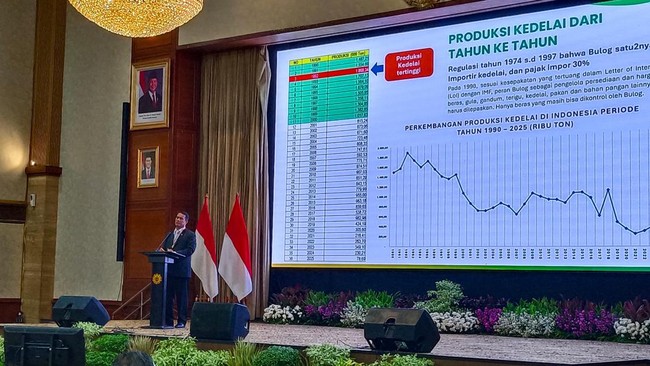
Agriculture Minister Amran Sulaiman has revealed that the practice of under-invoicing in crude palm oil (CPO) exports has caused Indonesia to lose potential revenues of up to IDR 500-600 trillion per year. Consequently, President Prabowo Subianto has reportedly ordered that export governance be conducted through a single door, in this case via PT Danantara Sumberdaya Indonesia (DSI). Amran presented data showing that the practice of export under-invoicing occurred over a 34-year period, from 1991 to 2024. Based on the data he presented, the cumulative value of under-invoicing reached approximately US$908 billion. Amran said the practice has caused the state to lose a very large amount of potential revenue, especially from palm oil commodities. "Yesterday the President ordered, there is a game being played, the President ordered a single door. Why? There is under-invoicing," Amran said at the event for the Election of the General Chairman of the Agricultural Wredatama Association for the 2026-2031 Service Period at the Ministry of Agriculture, Jakarta, Tuesday (30/6/2026). He then explained the anomaly in palm oil pricing. According to him, when the global CPO price rises, the price of fresh fruit bunches (FFB) domestically actually falls. "The global CPO price is IDR 27,000 per kg. Then the dollar rose to IDR 18,000 or IDR 17,000 (per US$), that’s a 10% strengthening. FFB prices should rise, but FFB prices fall. This doesn’t make sense, and we called them in, don’t you play games with your country,” he explained. Amran explained that under-invoicing is carried out by recording export values lower than the actual selling price in the destination country, even though transactions occur between companies still within the same business group. This practice, he said, makes tax obligations much smaller. “Under-invoicing means they buy at IDR 14,000 per kg, sell there at IDR 27,000 per kg, even though it’s their own company. So no tax is paid for 34 years, that’s IDR 15,000 trillion lost to the state, equivalent to the state assets of SOEs. This is what the President meant,” he stated. According to Amran, if this practice is stopped and exports are made directly to destination countries at the actual price, state revenues from palm oil commodities could increase significantly. “If we take this back and go direct to the destination country, what does it mean? It could double. We are losing an opportunity of IDR 500-600 trillion. IDR 600 trillion is our loss, in one year. What about ten years? That’s IDR 6,000 trillion, just for palm oil. And this is the work of the nation’s children,” he concluded.