
Amran Plans Sugarcane Ratoon Replacement, Giving Farmers an Additional Rp3 Trillion
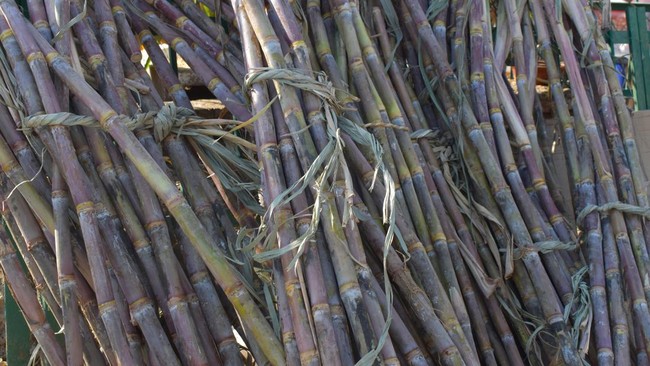
Agriculture Minister Amran Sulaiman has stressed that the ratoon replacement programme, which renews sugarcane crops, does not need to cover every sugarcane plantation. It will be prioritised for low-yielding crops, particularly those producing less than 60 tonnes per hectare.
Amran said sugarcane with high productivity did not need to be replaced. Instead, replanting should focus on old crops whose productivity has fallen, so that harvests can increase.
“If yields are high, there is no need to replace the ratoon — if it is 80 tonnes per hectare. We are targeting those at 60 tonnes or below, 60 tonnes per hectare,” Amran told reporters in Jakarta on Tuesday (10 November 2026).
He said the programme could lift productivity from around 40–50 tonnes per hectare to 80 tonnes, or even 100 tonnes per hectare.
“If it is replaced, it can produce 80 tonnes or 100 tonnes per hectare. Understand? It can double, or rise by 70% or 50%,” he said.
Amran said the replanting programme was beginning to show results in national sugar production. Output, which was around 2.6 million tonnes last year, is expected to rise to 2.8 million tonnes in 2026, an increase of about 200,000 tonnes.
He estimated national sugar production could rise further to around 3 million–3.3 million tonnes next year as the effects of the replanting programme, which have yet to be fully realised, take hold.
Amran calculated that the additional production could generate up to Rp3 trillion in additional economic value for farmers this year. If production rises by 400,000 tonnes, the additional value is estimated at Rp6 trillion a year.
“Farmers will gain Rp3 trillion this year. That is additional income — remember, additional income for sugar farmers,” he said.
If the increase can be sustained for four years, Amran estimated that the additional economic value received by farmers could reach Rp24 trillion.
The ratoon replacement programme is one of the government’s strategies to accelerate national sugar self-sufficiency. An evaluation by the Ministry of Agriculture found that around 70%–80% of the country’s sugarcane crops were no longer viable or were not producing optimally.
The government aims to replant around 100,000 hectares a year for three years, alongside financing support to ensure farmers are not burdened by the cost of replanting.
Alongside replanting, the government is promoting the expansion of sugarcane plantations, the provision of certified high-quality seeds, greater agricultural mechanisation and the revitalisation of sugar mills.
In 2026, the government aims to develop 99,547 hectares of sugarcane-growing areas. National sugar production is targeted to reach 3.27 million tonnes in 2027, according to the national sugar self-sufficiency roadmap.
The Indonesian Sugar Association (AGI) has welcomed the government’s policies, saying they are beginning to produce positive results.
AGI Secretary-General Dwi Purnomo said sugar production from sugarcane during the 2026 milling season was expected to reach at least 2.8 million tonnes. This could be the highest level in about a decade.
“I think it is quite good. It means the policies implemented so far have produced strong operational performance in production from a technical perspective,” Dwi said.
He said the production increase was supported by ratoon replacement, plantation expansion and higher sugarcane recovery rates.
The AGI has urged the government to maintain the momentum by ensuring that farmers’ harvests and output from the domestic sugar industry find a market. One way to do so, it said, is to manage import policy so that it does not disrupt domestic prices and markets.
“Policies that would reduce the income of farmers and the sugar industry should not be introduced. Policies moving in that direction must not be allowed,” he stressed.
Amran echoed the association’s position, saying the government would not import white sugar if domestic production could meet local demand.
“We agree with the association. As long as we can meet domestic needs, we will not import white sugar,” Amran said.
He added that the government would continue to encourage higher national sugarcane and sugar production in order to gradually reduce dependence on imports.
Source: jawawa.id (https://jawawa.id/newsitem/amran-plans-sugarcane-ratoon-replacement-giving-farmers-an-additional-rp3-trillion-1794318628)
Originally published by CNBC Indonesia (https://www.cnbcindonesia.com/news/20261110185923-4-784031/amran-mau-bongkar-ratoon-petani-tebu-dapat-tambahan-rp3-triliun), translated from Indonesian