
Amran: Government Rice Stock at 4.5 Million Tonnes, Bulog Warehouses Full
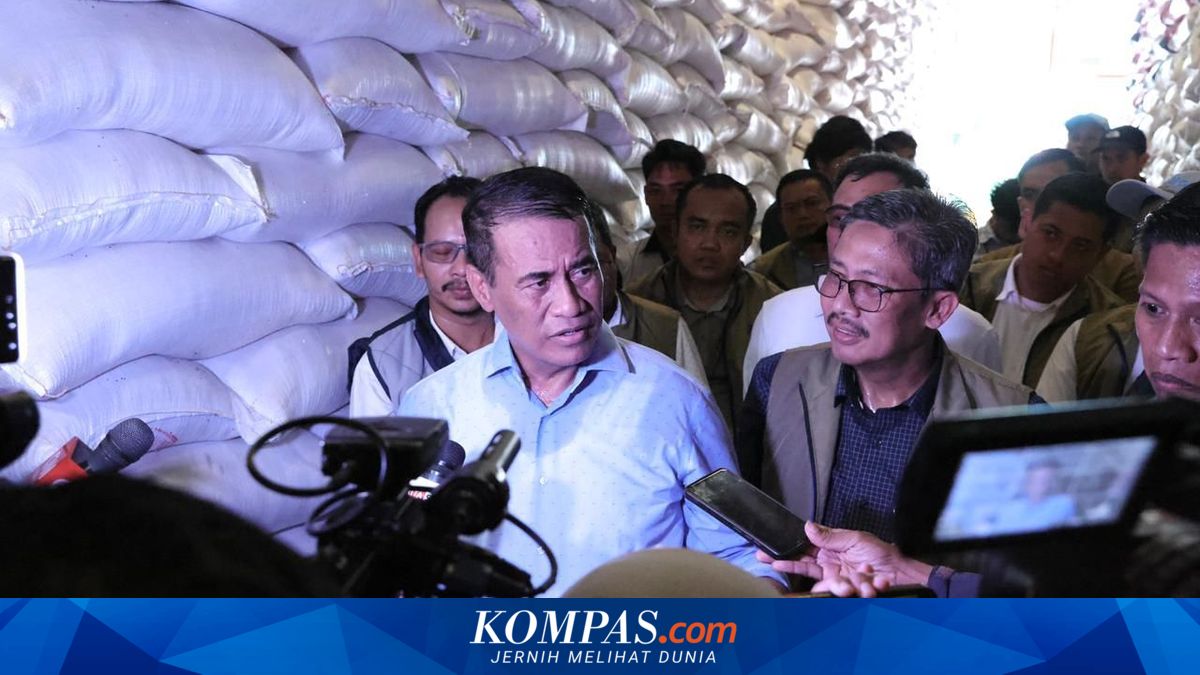
JAKARTA - Agriculture Minister Andi Amran Sulaiman stated that the national Government Rice Reserve (CBP) has reached 4.5 million tonnes, the highest since Indonesia’s independence.
The abundance of government rice stocks has filled the warehouses of the state-owned company, PT Perum Bulog.
Amran directly inspected a Bulog warehouse in Makassar, South Sulawesi, on Sunday (5/4/2026) to ensure that the figures on paper match the stocks in the field.
“So we are checking the accuracy from front, side, back; we check so that it’s not full in the front and empty in the back,” said Amran, as quoted from an official statement on Monday (6/4/2026).
“But across Indonesia now, it’s approximately 4.5 million tonnes. This is the highest during the Republic’s existence,” Amran stated.
According to Amran, the increase in Bulog’s rice stocks is the impact of government policies that have boosted production in a short time.
The government raised the government rice purchase price (HPP), lowered the price of subsidised fertiliser, modernised agriculture, and implemented several other policies.
Amran then urged the public not to doubt the staple food stocks because rice is the main concern of President Prabowo Subianto.
This is evidenced by the surge in rice production within one year.
“So no need to doubt it; now this is the directive from Father President Prabowo, the President’s top priority programme,” said Amran.
“Now we have rented 2 million tonnes of warehouses. Well, moving forward, we will rent more. Possibly in the next 10 days or 20 days, the stock will be 5 million tonnes,” Amran explained.
He emphasised that this CBP stock achievement has never been reached throughout Indonesia’s history.
“Have you ever heard of the Republic of Indonesia having a rice stock of 5 million tonnes? So no need to worry, food is secure,” said Amran.
Currently, the government continues to increase storage capacity to support the absorption of farmers’ production results.
The government also goes directly to the field to ensure that rice stock data matches the field conditions.
“Imagine, in the past, warehouses were rented out to people because they were empty. Now we are renting warehouses,” he said.