
Amran Firmly States IMF is Wrong, Indonesia's Agriculture in Ruins!
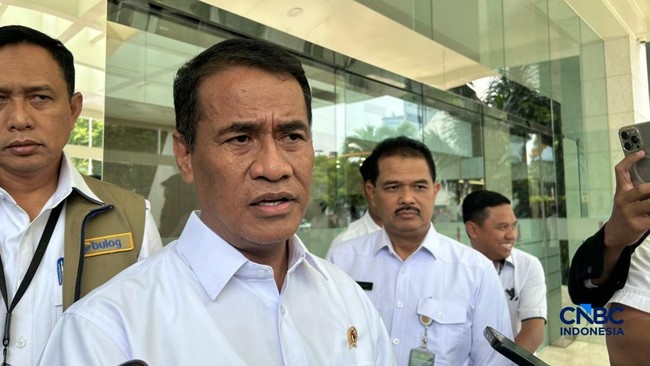
Karawang, CNBC Indonesia - Agriculture Minister/Head of the National Food Agency (Bapanas) Amran Sulaiman has launched a strong critique against policies influenced by the International Monetary Fund (IMF), which he deems to have severely impacted Indonesia’s agriculture sector.
He assesses that import liberalisation without controls has weakened domestic production and even destroyed several strategic commodities.
“The IMF is wrong, and I say it has wrecked agriculture. I can take responsibility for that,” Amran stated during a visit to rice stocks at the JDP Karawang 1 Logistic Park warehouse in West Java on Thursday (23/4/2026).
As an example, Amran highlighted the soybean commodity, which achieved self-sufficiency in the early 1990s but then plummeted after import policies were opened wide.
“Soybeans were self-sufficient in 1993. After the IMF, it was free, no Lartas (limited prohibition), free entry. It’s like pitting Mike Tyson against Ellyas Pical with no referee; he’d die. He’d be battered. It’s destroyed now, even until now,” he said.
He also touched on the dairy sector, which has seen a significant increase in import dependency over the past few decades.
“Milk… But I wasn’t minister then. If I had been minister, I would have fought there. Back then, milk was good, imports at 48%. Because of the IMF, now milk imports are 79%. It just moved a bit, last year 80%, now it’s moved 1%,” he explained.
According to Amran, this situation directly affects domestic farmers who struggle to sell their produce.
“In the end, (farmers) bathe in milk, because their milk doesn’t sell,” he said.
To address this, the government is now planning steps to strengthen the role of SOEs to boost national food production and reduce import dependency.
Previously, Amran stated that SOEs, including Perum Bulog, will be encouraged not only as off-takers but also to directly engage in the production of strategic commodities.
“SOEs, including Bulog, must be strengthened going forward. So we’re pursuing this again, milk and meat are a package. Soybeans, garlic, we’re pursuing these,” Amran said at his office some time ago.
He is even designing a scheme for SOEs to participate in planting commodities like garlic and soybeans.
“SOEs. We’ll design it later. I’m currently designing… SOEs to join in planting garlic, soybeans too,” he stated.
Amran views this step as crucial to addressing anomalies in the food trade system, including situations where imports continue despite domestic production being available.