
Amran affirms fortified rice is not meant to replace premium rice
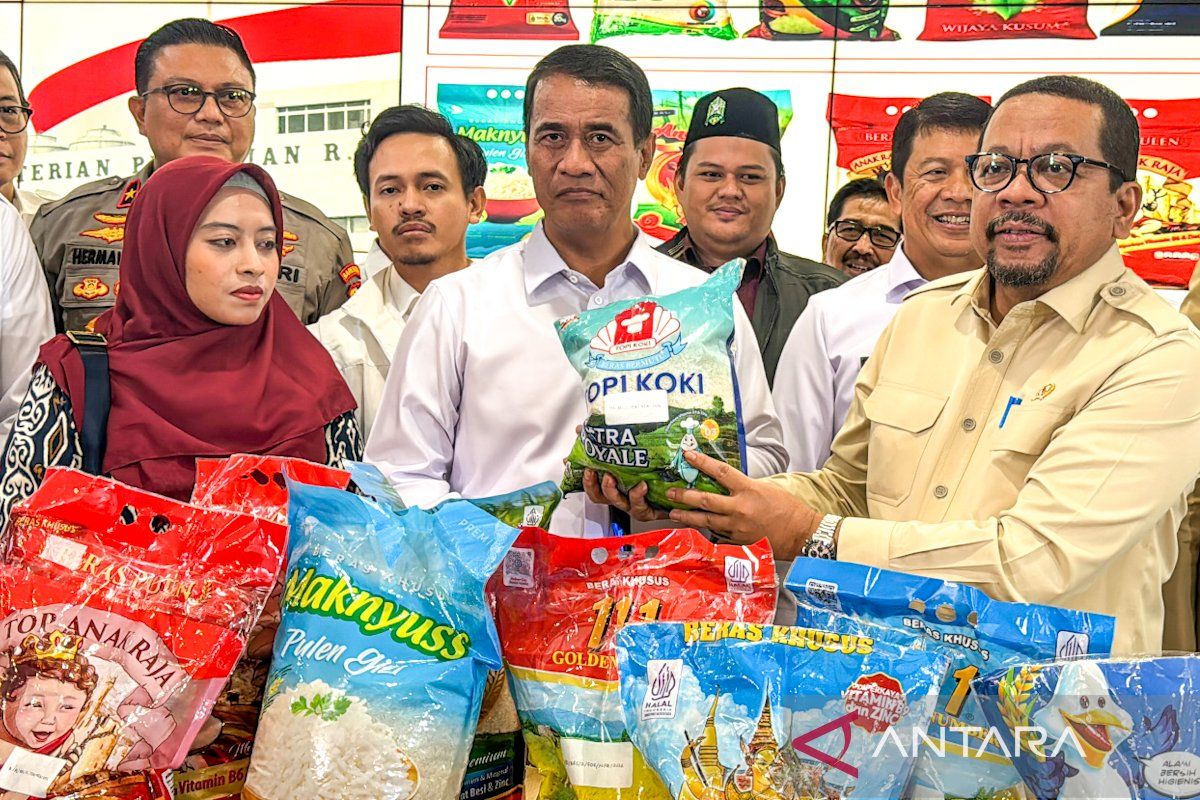
Jakarta (ANTARA) - Agriculture Minister and Head of the National Food Agency (Bapanas) Andi Amran Sulaiman has affirmed that fortified rice is not intended to replace premium rice, but rather serves as a special food for vulnerable groups.
Amran explained that fortified rice aims to improve public nutrition, particularly to support stunting prevention efforts among toddlers, pregnant women, breastfeeding mothers and the poor.
“Fortified rice is not meant to replace premium rice. But now there has been a shift. When premium rice was previously prosecuted (due to fraudulent practices by a number of premium rice producers), fortified rice has now emerged. It has shifted,” Amran said in Jakarta on Tuesday (15/9).
He made the remarks during an expose on the results of inspections and findings of alleged fraud involving 25 fortified rice brands at the Agriculture Ministry’s head office in Jakarta.
According to Amran, the circulation of fortified rice replacing premium labels warrants attention, as it could shift the original purpose of the public nutrition programme.
The minister stressed that fortified rice should not be exploited by rent-seeking individuals, as the programme is part of the government’s efforts to improve the quality of food consumption.
Amran highlighted allegations that fortified rice was being sold at prices as high as Rp57,000 per kilogram, whereas the price should be around Rp13,000 per kilogram given its intended use.
He said the price difference of Rp44,000 per kilogram was suspected to stem from practices that do not comply with regulations, including claims about vitamin content.
Based on initial estimates, Amran added, the alleged irregularities in fortified rice trading could be worth around Rp89 trillion, with calculations based on rice circulation data.
According to Statistics Indonesia (BPS) data, Amran continued, around 39 per cent of rice in circulation falls into the premium and fortified categories, but premium rice is now suspected to have shifted into fortified rice.
Amran lamented the fraudulent practices in fortified rice, given that the government has provided various forms of support and subsidies in the upstream agricultural sector, ranging from seed provision, fertiliser and irrigation to agricultural tools and machinery.
The 25 fortified rice brands allegedly in violation bear the initials WFO, TKS, IMF, NUR, TKL, HOK, BRV, IMR, IHJ, IAK, PBK, GNB, DTR, TKR, WJK, PLK, MKY, IMC, PTK, ARP, ARN, SKM, GNM, TAR and CMS.
The government found a very high price disparity. Products that should be priced at around Rp13,000 to Rp13,500 per kilogram were found being marketed at up to Rp57,000 per kilogram.
According to Amran, such a price difference is highly detrimental to the public if the products purchased do not actually contain the fortification as promised.
The highest retail price (HET) of medium rice under the National Food Agency’s zoning regulation is set at between Rp13,500 and Rp15,500 per kilogram, with adjustments based on sales regions across various parts of Indonesia.
Meanwhile, the HET for premium rice ranges from Rp14,900 to Rp15,800 per kilogram, in line with the zoning divisions established by the government.
As for the reference price of fortified rice, the government has not yet set an HET.
Source: jawawa.id (https://jawawa.id/newsitem/amran-affirms-fortified-rice-is-not-meant-to-replace-premium-rice-1789498241)
Originally published by Antara (Indonesian) (https://www.antaranews.com/berita/5742975/amran-tegaskan-beras-fortifikasi-bukan-untuk-gantikan-beras-premium), translated from Indonesian