
AMPI Reaffirms Commitment to Becoming a Leadership Laboratory for Young People
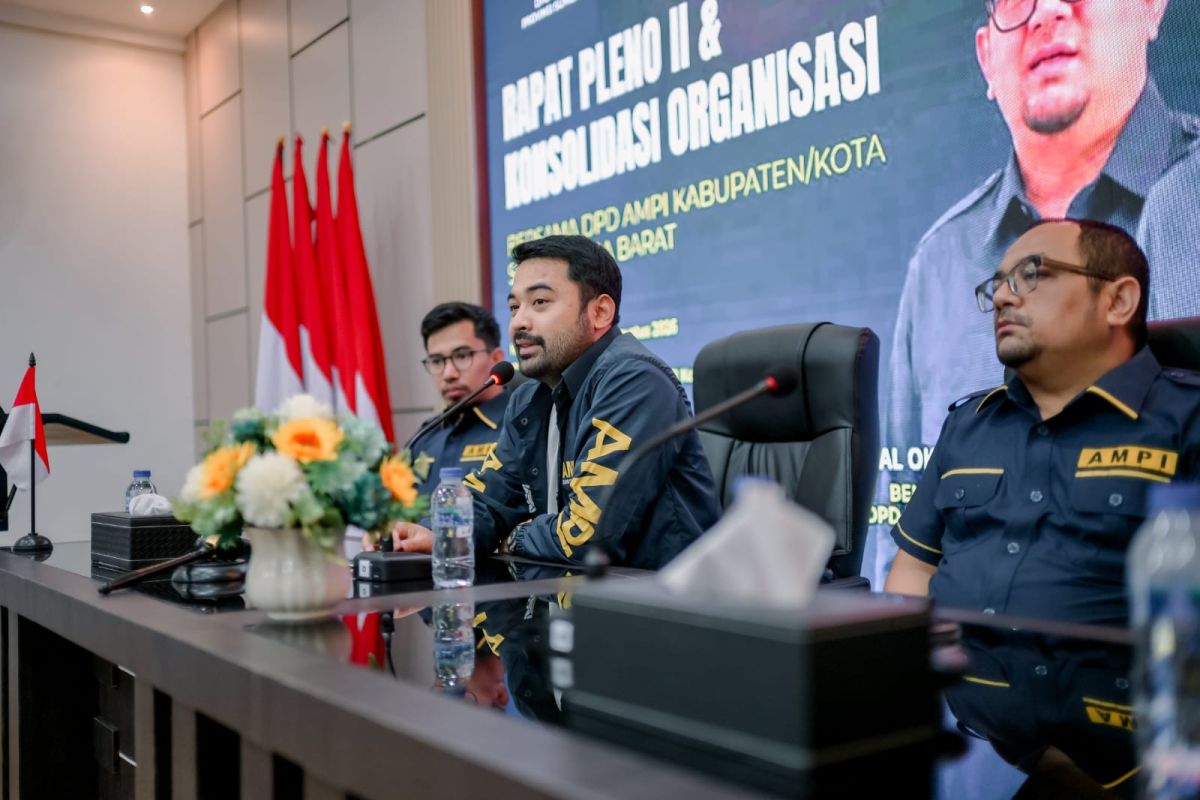
Jakarta (ANTARA) – Angkatan Muda Pembaharuan Indonesia (AMPI) chair Zigo Rolanda has stressed that the youth organisation must serve as a national leadership laboratory and a Golkar Party cadre-development forum, preparing young people to be competent, principled and able to serve the public.
“AMPI must become a national leadership laboratory as well as a proving ground for Golkar Party cadre development, where young people are shaped into leaders with ideas, character and the capacity to serve,” Zigo said in a written statement in Jakarta on Wednesday.
Zigo made the remarks in a reflection marking Youth Pledge Day on 28 October. The Golkar Party legislator said youth organisations must do more than hold ceremonial events or mobilise political support; they must equip their members with the skills and experience to meet development challenges.
He said the challenges facing young people were increasingly complex, ranging from technological disruption and competition in the jobs market to the rapid flow of information and growing demands for competent, ethical leadership.
Indonesia’s demographic dividend, he said, must be translated into higher productivity, innovation and better-quality leadership so that it benefits national development.
Data from the General Elections Commission (KPU), cited by Zigo in his article, show that Generation Z and millennial voters accounted for about 58.38 per cent of the electorate in the 2024 election.
That large share of young voters, he said, underlines that young people are not only the nation’s successors but also have a role in determining the direction of national leadership.
Zigo said AMPI should develop its cadres through three main pillars: leadership grounded in ideas, direct experience in communities, and professional, ethical pathways for developing leadership talent.
Under the ideas-based leadership pillar, cadres would be encouraged to understand strategic issues such as the digital economy, entrepreneurship, food security, the energy transition and regional development, and to produce data-based policy recommendations.
Direct community experience could be developed by involving cadres in supporting micro, small and medium-sized enterprises (MSMEs), fostering youth entrepreneurship, taking part in social activities and addressing concrete local problems.
Leadership talent, meanwhile, would be developed through mentoring, ongoing training and opportunities for cadres to take on responsibilities suited to their abilities and track records.
He also highlighted the importance of digital literacy and critical thinking for young cadres amid rising internet use. AMPI, he said, should encourage its members to become producers of ideas who can turn public aspirations into measurable programmes, rather than merely consumers of information.
Zigo added that Golkar’s strength was determined not only by its political history and experience, but also by its ability to prepare a new generation that can adapt to changing times and respond to public needs.
In his reflection on Youth Pledge Day, he said AMPI’s success should not be measured solely by the organisation’s size, the number of its activities or its political mobilisation, but by the quality of the leaders it produces and the benefits they bring to society.
He expressed hope that AMPI would provide a space for young people to develop into individuals who dare to think, can work together and are ready to take responsibility, helping to realise Golden Indonesia 2045.