
Amnesty Warns of the Dangers of the 'Foreign Agent' Narrative to Freedom of Expression
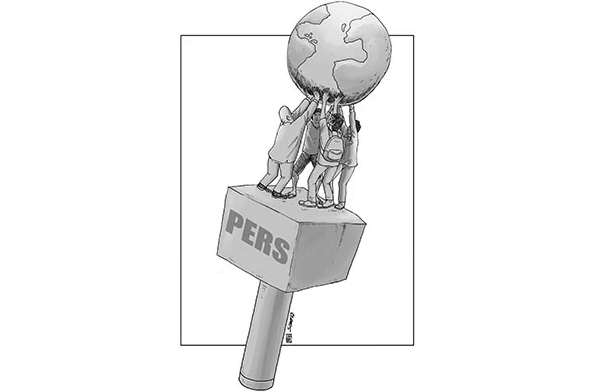
Amnesty International Indonesia has warned that the labeling of government critics as ‘foreign agents’ poses a danger because it can foster an imaginary enemy and silence public criticism. The warning comes as the rights group launched a report titled ‘Building an Imaginary Enemy: Misinformation, Disinformation, and the Allegations of ’Foreign Agents’’ in Jakarta on Tuesday, 19 May.
‘How disinformation creates an imagined foe that becomes the target of every kind of problem in a country. It suggests that to resolve any issue, be it corruption, disasters, or other matters, the answer is to accuse foreign agents,’ said Wirya Adiwena, Deputy Director of Amnesty International Indonesia.
He argued that the issue becomes more serious when the narrative is produced and amplified by state actors, ranging from government officials to social media accounts described as affiliated with the military. In such circumstances, citizen criticism is presented as a threat to the state.
‘When the government creates imaginary enemies without basis, what is actually happening is that they are turning the people into enemies,’ he said.
Public concern about corruption, deforestation, natural disasters, and government policy is being reduced to the claim that these issues stem from a foreign agenda whose presence is unclear. Amnesty contends that such practices do not merely attack particular groups but attack criticism itself.
‘Disinformation is an assault on criticism itself, while also legitimising various forms of repression that often accompany these disinformation campaigns,’ he added.
The occasion also touched on several reports about alleged state violence against demonstrations in 2025, the criminalisation of activists, and intimidation of civil society groups. Wirya described disinformation as part of a broader pattern of repression against peaceful dissent.
‘Disinformation is not a stand-alone phenomenon. It is a systematic, planned form of attack targeting peaceful criticisms of the government,’ he said.
He also highlighted the large number of social media accounts described as affiliated with the military and acting as mouthpieces for the disinformation narrative against citizens. This is seen to give the impression that public criticism is treated as a threat to the state.
‘As if a war against the people is something normalised in this country. As if the military’s task is not only to fight external enemies but also to confront criticism from its own citizens,’ he observed.
Beyond the state, Amnesty stressed the responsibility of social media platforms, which are viewed as allowing propaganda and attacks on critical groups to proliferate in digital spaces.
‘They have a responsibility to conduct human rights due diligence. By allowing these assaults to occur on their platforms, they become part of the problem,’ said Wirya.
According to him, the 160-page report shows how public criticism can be diminished through the label of ‘foreign agents’.
‘Whenever we raise criticisms about corruption, the economy, or other public concerns, it can be dismissed as merely the voice of foreign agents,’ he said.
Amnesty International’s Secretary General, Agnès Callamard, said authoritarian practices in Indonesia have been seen to increase since Prabowo’s government came to power. She noted that such practices directly affect the credibility of media and journalists who have traditionally earned public trust.