
Amnesty International Describes Global Situation as Increasingly Grim
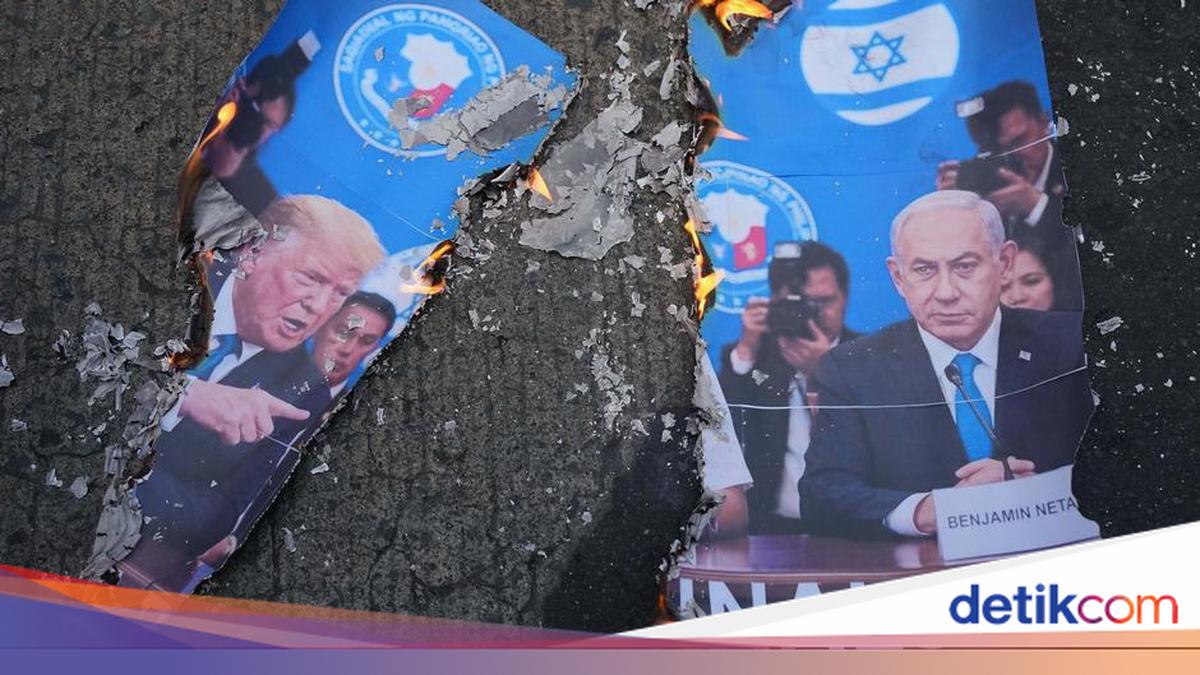
Amnesty International, the human rights monitoring organisation, has concluded in its report from last year that the situation is increasingly grim. Human rights violations are rising worldwide, both by states and non-state actors. In most cases, the perpetrators also do not face punishment.
The “Amnesty Report 2025”, recently released in various countries, states that in 2025 many rulers acted “ferociously”. Amnesty also condemns political leaders whose actions became international news throughout the past year.
“Political leaders such as Trump, Putin, and Netanyahu, among others, have made efforts to dominate the economy and politics through destruction, repression, and large-scale violence.”
Violations of international law in the Iran conflict
According to Julia Duchrow, Secretary General of Amnesty International in Germany, the war in Iran is the most pressing issue. However, she emphasised that Amnesty has recorded human rights violations in around 140 countries. In her interview with DW, Duchrow said:
“In Iran, society faces a double threat: first, attacks on civilians and infrastructure by the United States and Israel that clearly violate international law, and second, repression by their own government, which has caused thousands of deaths.”
Nevertheless, Duchrow stated that the regime in Tehran can only be overthrown if international law is also respected.
“Those attacks that violate the law do not improve the situation. Now, we are increasingly concerned if there are more intense attacks by the Iranian government against its own people.”
However, it is not only the United States, Russia, and Israel that are moving further away from the old world order. Many other countries are also defecting from the political system based on international rules.
The Amnesty report states, “The world order was formed after the Holocaust and the devastating destruction from World War I and II. That order has been built painstakingly over the last 80 years, although much still needs to be perfected.”
Countries that remain committed to democracy, the rule of law, and international stability appear powerless and ultimately have to compromise in making policies.
Is there anything left of the old world order? Amnesty answers in the negative. In its report, Amnesty appreciates the extraordinary work of diplomats and activists who have struggled for world peace since 1945.
“The adoption of the Universal Declaration of Human Rights and the Genocide Convention in 1948, as well as various other efforts discussed and ratified over the last 80 years, are not an illusion.”
The report also states that parties that loudly criticise the collapse of the world order, in practice, have other interests in it.
“Do not be mistaken, reports about the death of the rules-based international order are sometimes exaggerated.”
Amnesty International specifically highlights the governments of the United States and Israel. In January 2026, under Donald Trump’s leadership, the US Secretary of State, Marco Rubio, outlined a vision for a new order, in the form of an alliance of Western countries from Christian civilisation. A vision that ignores the history that has occurred.
Further, Amnesty conveyed, “That statement cannot be denied as it could perpetuate the history of domination, colonialism, slavery, and genocide.”
Israel’s actions towards its neighbouring countries in the Middle East conflict are also criticised quite sharply. “For millions of people, international protection mechanisms have failed; in fact, the Palestinian people are still experiencing genocide, discrimination, and occupation by the Israeli government.”
And to Russian President Vladimir Putin, the report states “Russia continues to commit crimes against humanity in Ukraine.”
Hope for civil society involvement
All this shows a trend that will continue and has the potential to give birth to new conflicts. However, at least in the case of the war by the United States and Israel against Iran, the annual report notes that several European Union member states firmly distanced themselves from the conflict.
“In early 2026, a number of European countries have realised the risks; they refused to participate in the US and Israeli attacks on Iran and committed to protecting strategic security.”
Julia Duchrow is also still optimistic; there are quite a few efforts to repair the world order that appears increasingly fragile.
“In Iran, people take to the streets even though they know their lives are at risk. In Hungary, the arbitrary government of Viktor Orbán has just been overthrown through elections. And political prisoners continue to be released, such as Maria Kolesnikova in Belarus, whom we have been fighting for.”
Maria Kolesnikova is a famous musician and human rights activist from Belarus. She was finally released in December 2025 after five years in prison.