
Amidst Crisis, This Indonesian Entertainment Exploded as a Stress Reliever
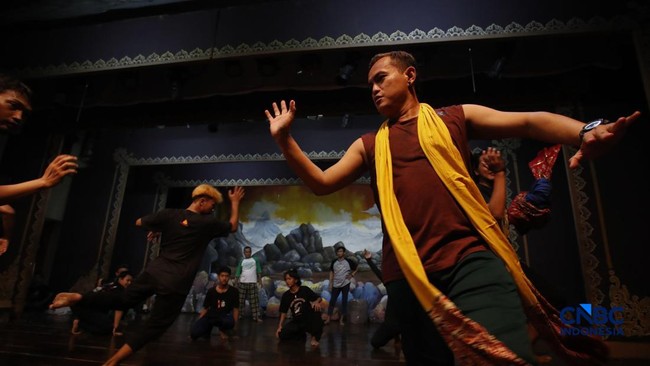
Economic crises typically lead to reduced consumer spending on entertainment. However, the opposite occurred in Indonesia during the 1930s. Amidst widespread unemployment and poverty caused by the global economic crisis, Wayang Orang performances saw a massive influx of spectators.
The Bank Indonesia Museum, through its exhibition ‘Ing Lakta: Wayang Wong Dadi Saksi’, reveals that Wayang Orang became one of the favourite forms of entertainment for the people of the Dutch East Indies to relieve tension amidst increasing life pressures. ‘Behind these difficulties, interest in Wayang Orang performances actually increased. Performance halls were crowded with spectators from various backgrounds seeking entertainment amidst the hardships of life,’ stated the Bank Indonesia Museum regarding the exhibition held from 3 June to 30 August 2026.
For the public, Wayang Orang served as a means to momentarily forget economic hardships. Meanwhile, for the performers and organisers, the large crowds provided a vital source of income to help them survive. This phenomenon occurred while the Dutch East Indies was gripped by a prolonged economic crisis, a consequence of the New York Stock Exchange crash in October 1929. The stock market collapse triggered a global economic slowdown, reducing purchasing power and increasing unemployment rates in many countries, including the Dutch East Indies.
In Indonesia, many companies and factories reduced their business activities or even ceased operations entirely. Waves of layoffs spread and poverty increased. Historian Onghokham, in ‘The Fall of the Dutch East Indies’ (1987), noted that the colonial government was slow to respond to the crisis, causing the impact to persist for nearly nine years, from 1930 until the approach of 1939.
Interestingly, Wayang Orang, which was previously an exclusive entertainment for the royal courts, became accessible to the wider public after a Chinese-Indonesian entrepreneur named Gan Kam transformed it into a commercial performance open to the public via a ticketing system. Thanks to this change, Wayang Orang evolved into folk entertainment. As the economic crisis hit daily life, the art form emerged as a favourite escape for the people to ward off stress and life’s difficulties.