
Amid War with the US, Iran’s Government Faces Pressure from Hardliners
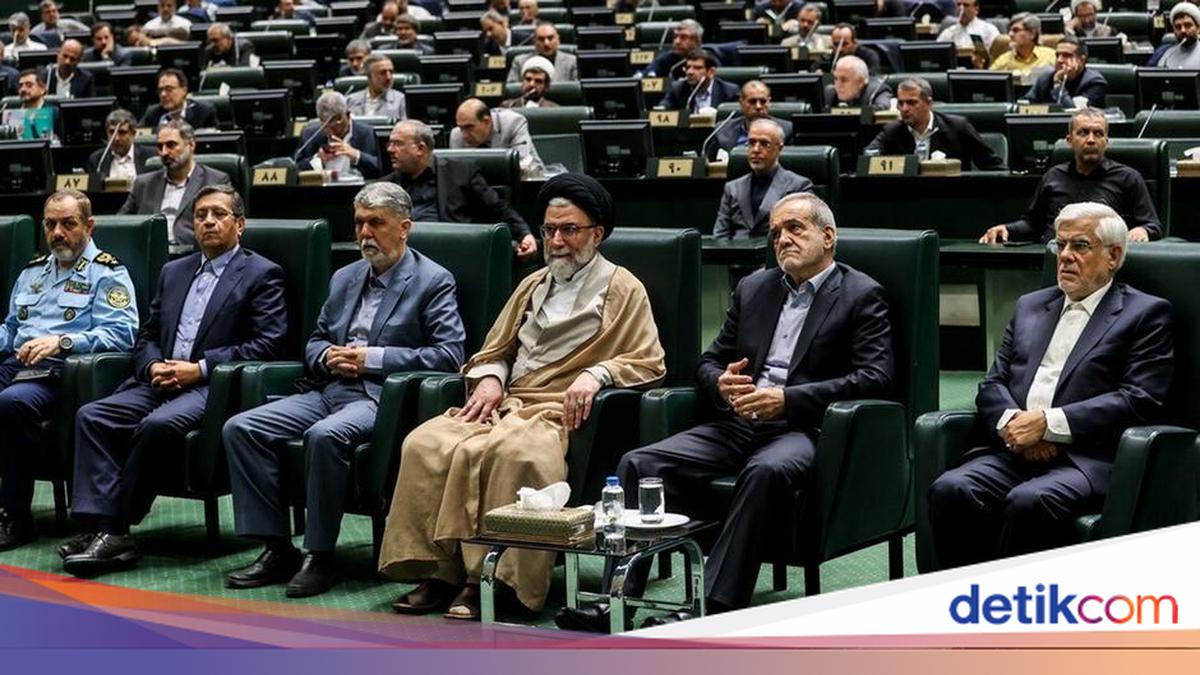
President Masoud Pezeshkian’s government is facing mounting political pressure. With the war against the US still unresolved and diplomatic efforts showing little progress, the domestic power struggle is intensifying.
Foreign Minister Abbas Araghchi is at the centre of the dispute. His diplomatic mission to New York has reportedly met resistance from conservative groups in Iran’s parliament.
Hardliners in parliament have consequently pushed for impeachment proceedings against Araghchi. One trigger was the minister’s meeting with US negotiators on the sidelines of the United Nations General Assembly. His critics accused him of lacking a mandate to hold the meeting.
Tehran MP Amirhossein Sabeti said in a letter to parliamentary Speaker Mohammad-Bagher Ghalibaf that he had registered a motion to impeach Araghchi on the parliament’s portal. Another MP, Hossein-Ali Haji-Deligani, also said parliament could use its oversight powers, including by seeking impeachment.
Iran’s power structure
“When the regime is forced to negotiate, as in the current situation and in talks with the US, the supreme leader or the inner circle of power does not want to take responsibility. Instead, they shift that responsibility to democratic institutions and moderate factions within the government,” Ali Afshari, a political analyst based in the United States, told Deutsche Welle.
The political conflict reflects a fundamental problem in Iran’s power structure. According to Afshari, the system allows hardliners to attack moderates over decisions that have already been agreed within the ruling circle.
Afshari said hardliners play an important role in the Islamic Republic of Iran. “The function of hardliners in the Islamic Republic is to influence public opinion, the system’s traditional supporters, and the Islamic Republic’s values in domestic and foreign policy.”
A similar pattern emerged when the Iran nuclear deal, or Joint Comprehensive Plan of Action (JCPOA), was implemented in 2015. Hardliners then held a majority of seats in parliament and staged political opposition. However, that resistance ultimately did not affect the signing of the agreement.
“The Foreign Ministry is not a decision-maker. It only carries out what the government orders—and Araghchi is working within that framework,” Afshari said.
To advance the impeachment process, MPs must first collect the required number of signatures.
Profitable oil business
The impeachment initiative comes at a critical time. Iran’s government is facing severe economic pressure. Oil exports, one of the country’s main sources of revenue, have fallen sharply because of the US blockade.
The pressure has been compounded by the resignation of Oil Minister Mohsen Paknejad. According to an official statement, he stepped down for personal reasons.
Umud Shokri, an energy strategist, geopolitical analyst and energy security expert, doubts that a change at the ministry’s helm will alter the situation. Iran, he said, relies on networks that enable it to keep exporting oil despite sanctions. These have given rise to an opaque structure that makes it difficult for the government to control an important source of state revenue.
Sanctions evasion, Shokri said, has become a profitable business for certain groups within Iran’s political system.
“Under the law, that revenue should belong to the state. But we know that for many years this has not been the reality,” Shokri said.
Economic secrecy has intensified during the sanctions period. National security and the protection of the public are often cited to justify the situation.
Private operators with links to centres of state power, particularly the Islamic Revolutionary Guard Corps, are said to have developed ways to sell oil to the armed forces through opaque channels. The sale prices, commissions and total value of the transactions are not publicly known.
“The government has only limited influence over these transactions. The Revolutionary Guards in particular organise and control them,” Shokri said.
Iran’s political and economic situation could become more volatile in the coming days and weeks.