
Amid Ultra-Processed Food Polemic, PATPI Urges Science-Based National Food Policy
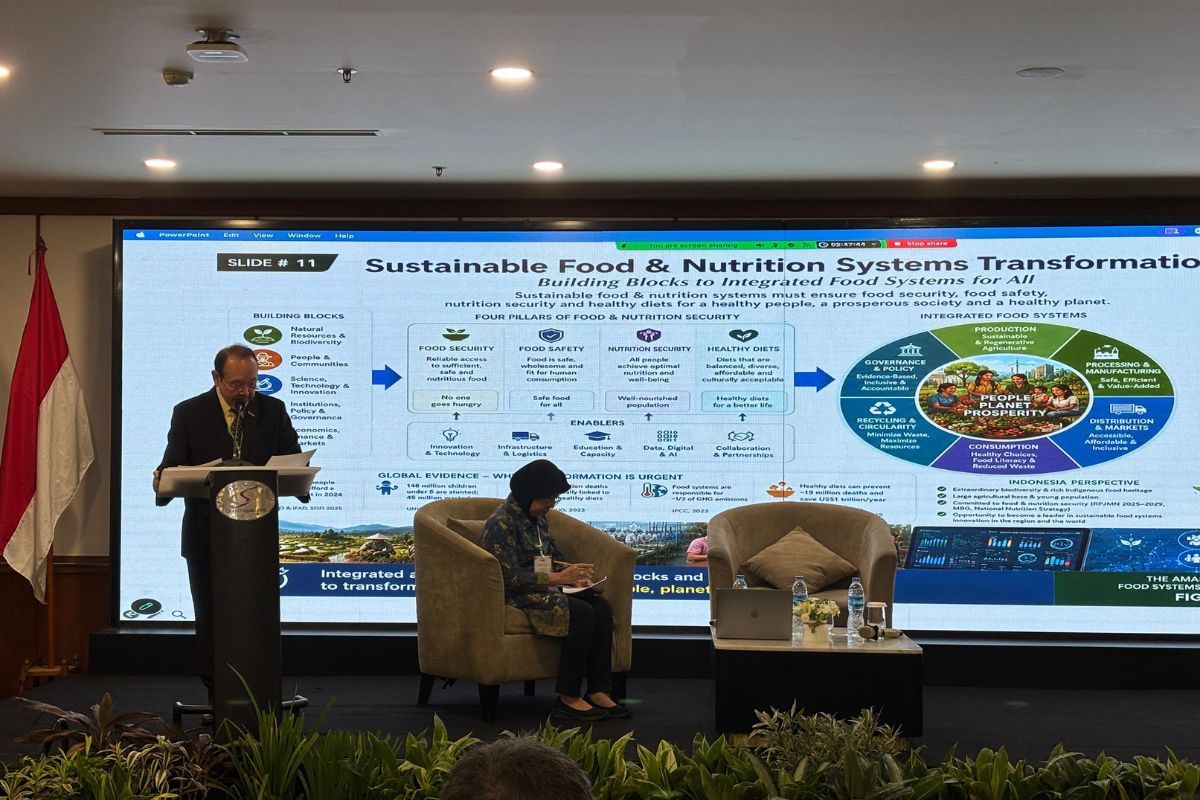
The debate regarding Ultra-Processed Food (UPF) is intensifying in various countries, including Indonesia. Amidst diverse perceptions of processed food, the Indonesian Association of Food Technologists (PATPI) has emphasised the need for science-based food policies during a national seminar titled ‘Building a Food Technology Civilisation for Future and Healthy Food’ held in Jakarta on Tuesday. The forum brought together government, regulators, academics, and industry to build a more comprehensive perspective on the future of Indonesia’s food system. Indonesia is currently facing increasingly complex nutritional challenges. While still working to overcome malnutrition, the country is also seeing a continuous rise in obesity and metabolic diseases. At the same time, a stigma against processed foods is developing, often based solely on the level of processing without considering safety, nutritional content, or the technological innovations that support food supply for the community. Through this seminar, PATPI encouraged a science-based dialogue so that national food policies are formulated comprehensively and proportionally. PATPI Chairperson Prof. Dr. Ir. Giyatmi, M.Si., asserted that science must be the primary foundation in drafting food policy. ‘The debate on food should not be based merely on perception or global trends. Indonesia needs food policies built on scientific evidence to address nutritional challenges, food safety, and food security, while also encouraging innovation in the national food industry. Food technology is not the problem; it is part of the solution,’ she stated. The seminar featured the Minister of Health, represented by the Director General of Primary and Community Health, dr. Maria Endang Sumiwi, MPH., who outlined the direction for science-based food and nutrition policy development towards the Golden Indonesia 2045 vision, including the development of Future Food and Healthy Food, the challenges of misconceptions regarding Ultra-Processed Food, and the contribution of food technology in strengthening national food security. The Head of the Indonesian Food and Drug Authority (BPOM), Prof. dr. Taruna Ikrar, M.Biomed., Ph.D., highlighted the importance of adaptive food regulations in line with scientific and technological advancements. His presentation emphasised strengthening the food surveillance system based on scientific risk assessment, labelling policies, and fortification as instruments to ensure food safety, quality, and nutritional value, while also boosting public trust in processed foods. The PATPI National Seminar, a continuation of a Focus Group Discussion on UPF held last April, featured experts including Prof. Ir. M. Aman Wirakartakusumah, Ph.D.; Prof. Dr. Ir. Hardinsyah, M.S.; Prof. Dr. Ir. Sri Raharjo, M.Sc.; Prof. Dr. Ir. Eni Harmayani, M.Sc.; Prof. Ardiansyah, Ph.D.; Ir. Adhi S. Lukman; Prof. Dr. Yuli Witono, S.TP., MP.; and Prof. Dr. Ir. Purwiyatno Hariyadi, M.Sc. Their diverse perspectives enriched the discussion on global food systems, food technology innovation, product reformulation, and the relevance of UPF classification in the Indonesian context. The participants acknowledged that the global food system is facing rapid changes due to population growth, climate change, limited natural resources, shifting consumption patterns, urbanisation, and increasing public health challenges. They declared a commitment to future and healthy food, agreeing to: place science as the primary foundation in every food and nutrition policy in Indonesia; develop a food system that is safe, nutritious, healthy, affordable, inclusive, and sustainable for all; recognise food and nutrition technology as part of the solution in strengthening food resilience and safety, enhancing nutritional value, and protecting public health; encourage responsible food innovation through technology development, product reformulation, fortification, and the utilisation of value-added local food resources; build public food literacy based on scientific evidence so that understanding of food develops objectively, proportionally, and contextually; develop food policies and regulations based on scientific risk assessment, nutritional quality, food safety, and scientific progress; promote close collaboration between government, academia, industry, professional organisations, the media, and the community in building a healthy and competitive food ecosystem; respect the diversity of food systems, cultures, and biological resources as the main capital towards national food independence and sovereignty; support the transformation of the food system to be adaptive to global challenges through innovation, environmental sustainability, and human resource capacity building; and commit to jointly building an Indonesian Food and Nutrition Technology Civilisation that is based on science, oriented towards public health, and contributes to the welfare of the nation and humanity. As a follow-up, the seminar produced a PATPI 2026 Policy Brief on Future and Healthy Food and a PATPI Scientific Position on Ultra-Processed Food. These documents are expected to serve as a reference for the government, regulators, academics, industry, media, and the public in strengthening science-based food policies towards the Golden Indonesia 2045 vision.