
Amid the streaming era, physical music continues to find a market
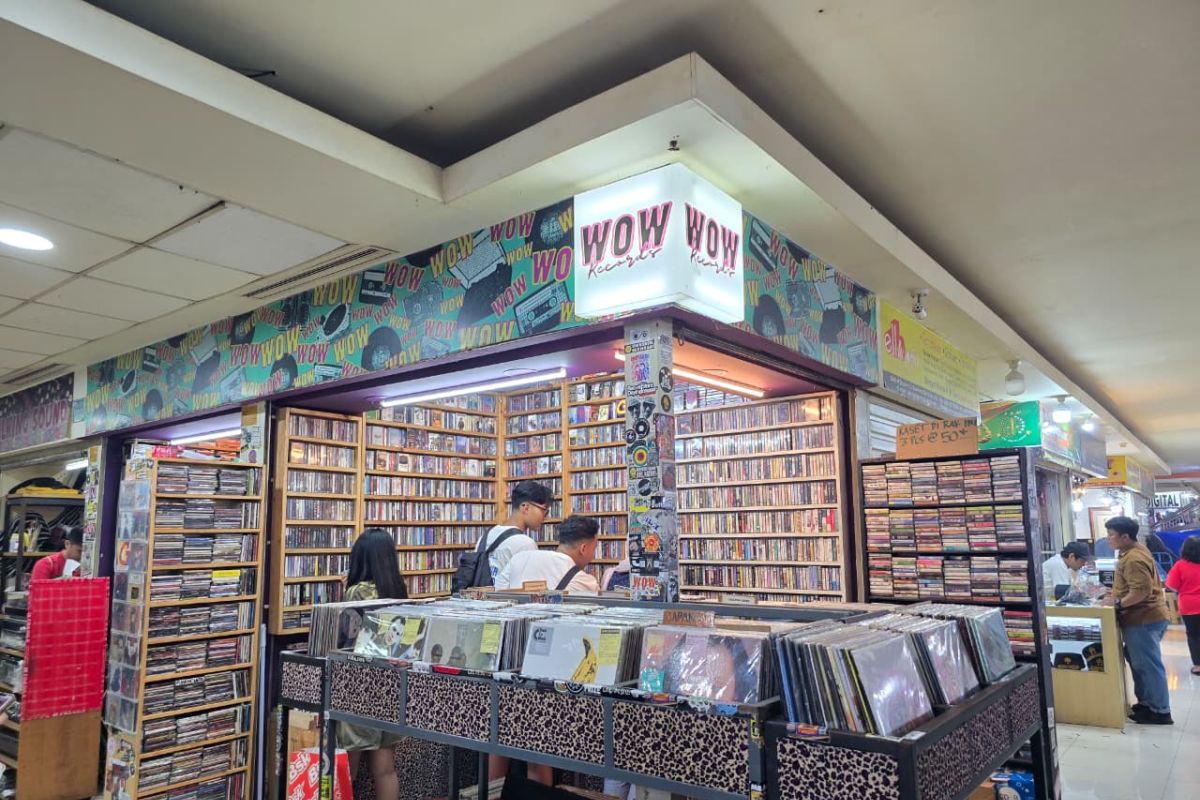
Jakarta (ANTARA) - As music can now be accessed with just a few taps on a smartphone screen, physical formats such as cassettes, CDs, and vinyl records still hold a unique place among music enthusiasts. For some, listening to music is not just about the sound, but also about owning an object, enjoying the artwork, and reading the lyrics that accompany an album.
This experience is shared by Andrash, who manages Wow Records in Blok M Square, South Jakarta. He began pursuing the physical release business in 2019, starting from his hobby of collecting cassettes, CDs, and vinyl records.
“Initially, I just liked collecting physical releases—cassettes, CDs, vinyl—then I tried selling them and it turned out to be quite good. This business, alongside my hobby, is also generating income,” Andrash said when contacted by Xinhua recently.
In the beginning, Andrash consigned physical releases to be sold in a friend’s shop. Towards the end of 2019, he began opening his own store. Since then, his business has continued to operate.
Andrash noted that the current business condition for physical music products is relatively stable, without significant increases or decreases. “There are changes in trends and the market is also shifting,” he said. One change observed by Andlag is the increasing number of young people and new visitors coming to purchase physical releases. According to him, younger customers also bring more diverse tastes compared to veteran collectors.
Young people are now not only looking for vintage music but also releases from the early 1990s to the present day. This shift has also influenced the strategies of sellers in meeting customer needs. “As sellers, we must be able to provide according to market demand,” said Andrash.
The emergence of new customers indicates that the physical collection market does not rely solely on old collectors. According to Andrash’s experience, young people who are just starting to collect vinyl often come to ask for advice on how to begin their collections.
One visitor, Raka Pratama (27), said he remains interested in buying physical releases despite music being easily accessible through streaming services. “Streaming is certainly more practical, but I still love buying CDs because there is a sense of satisfaction in owning the physical form. You can see the cover, the artwork, and the booklet. If I really like an album, it feels incomplete just listening to it via streaming,” said the private sector employee.
One of the questions Andrash frequently receives is whether prospective collectors should buy vinyl records first or the playback equipment. Andrash suggests they buy the desired releases first, especially since vinyl records that have run out of stock in the market can become more expensive.
Andrash also advises prospective collectors to start with the music they love, and then explore other genres. “Choose the music they like, and subsequently, they can start exploring new music,” he said.
For Andrash, the existence of digital music services does not pose a major obstacle to the physical release business. In his view, the market for physical formats is still large enough that the development of digital music does not significantly affect his business. “There is an impact, but it is not too disruptive, because there are still many enthusiasts for physical releases,” said Andrash.
Furthermore, according to Andrash, one reason physical formats remain in demand is the different experience they offer to owners. He noted that the sound quality is often better compared to music listened to through various streaming platforms, and owners can physically hold the item.
“It is different. By owning a physical release, we can hold the item, listen to the music while looking at the cover and the artwork, and read the lyrics. There is a certain sense of pride that only the buyer can feel,” said Andrash.
Nevertheless, the survival of the physical collection market does not mean the business is without challenges. According to Andrash, costs related to imported goods and sales through marketplaces also pose challenges for sellers. For imported goods, increases in taxes can force sellers to adjust prices. Meanwhile, commission fees from marketplaces can reduce seller income, necessitating price adjustments to maintain business sustainability.
For some music lovers, streaming offers the convenience of accessing songs, while physical releases offer something different: an album that can be touched and seen, enjoyed through its artwork, read through its lyrics, and collected—and even resold one day. As long as the experience of owning music physically remains attractive to consumers, the formats of cassettes, CDs, and vinyl records will continue to find their place in the streaming era.
Globally, industry developments also show that physical formats have not lost their market. According to the International Federation of the Phonographic Industry (IFPI), revenue from recorded music in physical format increased by 8 per cent in 2025, reaching approximately 3.5 billion USD (1 USD = Rp17,618). Amidst these various changes, Andrash sees the market for physical music products as remaining relatively stable. The formats favoured by customers are also quite diverse, with cassettes, CDs, and vinyl records all having enthusiasts.