
Amid the IHSG Storm, These Are the Stocks Still Worth Pursuing
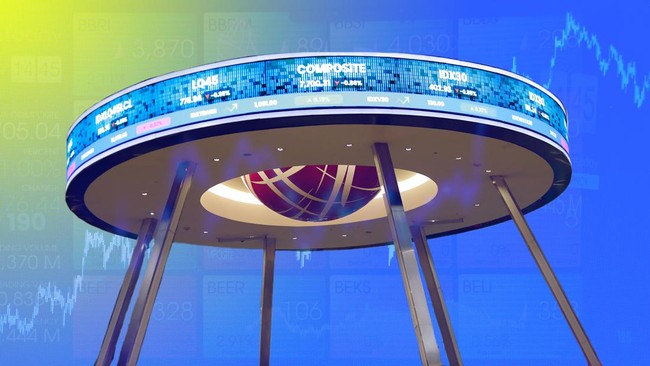
The Indonesian stock market enters the second half of 2026 with significant challenges. Hopes for interest rate cuts have shifted towards a higher-for-longer scenario, following global inflationary pressures, geopolitical uncertainty, and the need to maintain rupiah stability. Bank Indonesia raised the BI Rate from 4.75% in April to 5.75% in June 2026. This policy was adopted to strengthen rupiah stabilisation while keeping inflation within the 2.5% plus or minus 1% target. Additionally, index provider MSCI expressed unease about the Indonesian market, indicating a tendency for coordinated trading behaviour that caused the IHSG to plunge into extreme oversold territory at the 5,300 level. Although it has since rebounded, it remains below 6,000. Consequently, the IHSG will find it very difficult to return to a bull market unless it can achieve a solid weekly close above the 6,450 level. Hope remains, but an improvement in public sentiment is crucial to inviting investors back to the exchange. Pressure also comes from abroad. The Federal Reserve maintained US interest rates in the 3.50%-3.75% range. Minutes from the June meeting indicate market expectations point to no change in rates until early 2027, with the possibility of a cut only emerging in the second quarter of 2027. Under these conditions, investors need to prioritise companies with earnings visibility, healthy balance sheets, and rational valuations. Not all sectors will be affected equally. Banking is highly sensitive to interest rates and exchange rates, mining depends on commodity cycles, while telecommunications and healthcare have relatively more defensive demand characteristics. The banking sector has the strongest link to domestic and international economic policy. The BI Rate, liquidity conditions, credit demand, fiscal policy, and asset quality directly affect bank revenues and costs. Global factors also play a major role. The Fed’s policy, dollar movements, US Treasury yields, and energy prices determine capital flows and Bank Indonesia’s room to lower rates. When the dollar and US bond yields rise, lowering the BI Rate risks adding pressure to the rupiah. Higher-for-longer rates can have two different impacts. Lending rates and yields on productive assets may increase, but deposit and wholesale funding costs also rise. Banks with a large proportion of low-cost funds are in a better position. PT Bank Central Asia (BBCA) is a quality choice due to its strong CASA base, profitability, and asset quality. PT Bank Mandiri (BMRI) offers the most balanced combination of quality and valuation. PT Bank Negara Indonesia (BBNI) is a deep value pick with a price-to-book value below one time, while PT Bank Rakyat Indonesia (BBRI) offers recovery potential, though micro-credit risks need monitoring. Industry-wide, bank credit grew 9.98% year-on-year in April 2026, with state-owned bank credit growing 14.35%. Third-party funds increased 11.39%, so liquidity remains relatively well maintained. With 2027 PE valuations between 5.1 and 11.1 times, the price correction in major banks has provided a better margin of safety compared to their historical valuation positions. However, a rerating is likely to occur gradually as long as certainty regarding the direction of interest rates and the rupiah remains unformed. The mineral sector’s prospects are supported by copper demand for electrification, gold’s use as a safe-haven asset, and the continuation of the downstreaming agenda. Issuers with dollar-based revenues also gain a natural hedge when the rupiah weakens. However, this sector is highly cyclical. Nickel, copper, and gold prices can change rapidly depending on global demand, China’s economic conditions, production policies, and geopolitical developments. Therefore, earnings need to be normalised so that valuations do not appear cheap simply because commodity prices are high. PT Aneka Tambang (ANTM) offers diversification through gold, nickel, and bauxite. The gold business can act as a balance when nickel prices weaken. The target price of Rp3,300 does not assume the 2026 earnings surge will continue without normalisation. PT Amman Mineral Internasional (AMMN) offers higher growth from the ramp-up of its mine, copper smelter, and gold refining facility. These expectations cause the PE to drop from 14.9 times in 2026 to around 9.5 times in 2027. However, the risks of production delays and cost increases must still be considered. PT Trimegah Bangun Persada (NCKL) is the stock with the lowest valuation in this group. Its shares are trading at around 4.5 times estimated 2027 earnings. The significant rerating potential is balanced by sensitivity to nickel prices, royalties, energy costs, and contributions from joint ventures. Telecommunications has a recurring revenue characteristic and ever-increasing data demand. Connectivity needs come not only from retail consumers but also from corporations, cloud services, artificial intelligence, and data centres. PT Telkom Indonesia (TLKM)