
Amid Oil Price Volatility, United Arab Emirates Withdraws from OPEC
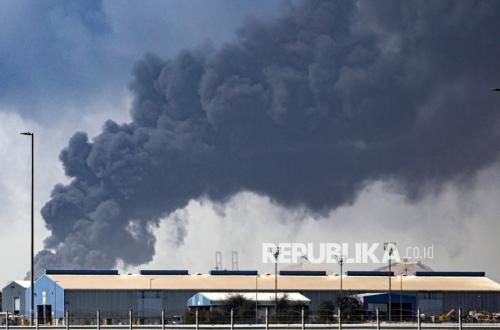
REPUBLIKA.CO.ID, ABU DHABI — The United Arab Emirates (UAE) announced on Tuesday (28 April 2026) its withdrawal from the Organisation of Petroleum Exporting Countries (OPEC) and OPEC+. One of the considerations behind this decision is the UAE’s intention to prioritise its national interests.
“This decision reflects the UAE’s long-term strategic and economic vision as well as its evolving energy profile, including the acceleration of investments in domestic energy production, and strengthens its commitment to playing a responsible, reliable, and forward-looking role in the global energy market,” stated the UAE’s state news agency, Emirates News Agency (WAM), in its report on the UAE’s exit from OPEC and OPEC+.
WAM added that the UAE’s decision to leave OPEC and OPEC+ follows a comprehensive review of the country’s production policies as well as its current and future capacities. “And is based on national interests and the commitment to contribute effectively in meeting the urgent needs of the market,” it said.
WAM revealed that the UAE’s withdrawal from OPEC and OPEC+ also reflects a policy-driven evolution in the UAE’s approach. This includes increasing flexibility to respond to market dynamics, while still contributing to stability in a measured and responsible manner.
Despite leaving OPEC and OPEC+, the UAE remains committed to supplying oil to the market. “The UAE will continue to act responsibly, bringing additional production to the market gradually and in a measured way, in line with demand and market conditions,” WAM disclosed.
With the UAE’s departure, OPEC now has only 11 member countries. They consist of Saudi Arabia, Iran, Iraq, Kuwait, Algeria, Libya, Nigeria, Gabon, Equatorial Guinea, Republic of the Congo, and Venezuela.
Indonesia is known to have once been a member of OPEC. However, Indonesia decided to withdraw or suspend its membership in 2008 and 2016.
OPEC was formed through the Baghdad Conference in September 1960. One of OPEC’s objectives is to coordinate petroleum policies among member countries and ensure oil market stability.