
Amid Global Turmoil, Indonesia Relies on This Sector to Boost Economy
Jakarta, CNBC Indonesia - The government continues to strengthen efforts to maintain the momentum of national economic growth amid rising global uncertainties. Various dynamics, from escalating geopolitical conflicts to global supply chain disruptions, are putting pressure on industrial performance and economic stability.
In this context, the government is taking integrated strategic steps to ensure the national economy continues to grow and remains resilient.
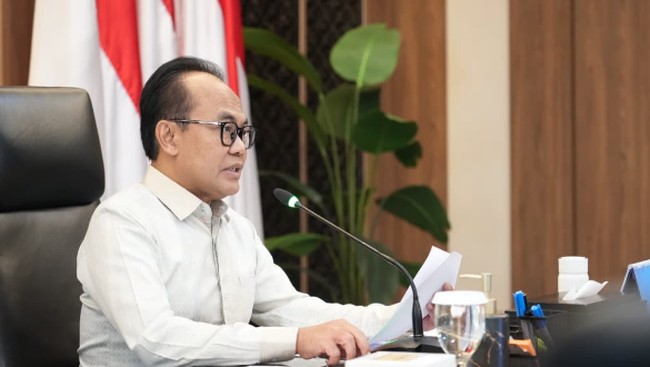
Secretary of the Coordinating Ministry for Economic Affairs Susiwijono revealed that the processing industry sector, particularly manufacturing, is one of the main pillars relied upon to support economic growth.
“With its significant contribution to Gross Domestic Product (GDP), job creation, investment, and national exports, this sector plays a strategic role in creating added value and expanding employment,” he stated, quoted on Monday (4/5/2026).
In 2025, the growth of the processing industry was recorded at 5.30%, exceeding the national economic growth of 5.11%, which is a positive indication for strengthening the economic structure going forward.
“This global dynamic of uncertainty is extraordinary, especially with the various conflicts occurring. We must anticipate it because the impact could last several months ahead and affect various economic sectors,” Susiwijono said.
Furthermore, the processing industry sector is one of the most affected by global dynamics, particularly due to supply chain disruptions. Limitations in raw materials, rising input production costs, and logistical barriers have the potential to pressure industrial performance, both in terms of production and distribution.
To this end, the government continues to take anticipatory measures to maintain the continuity of industrial activities. On the policy side, President Prabowo Subianto has issued Presidential Decree (Keppres) Number 4 of 2026 on the Task Force for Accelerating Government Programmes to Support Increased Economic Growth. This policy is expected to accelerate the implementation of priority programmes and address obstacles faced by business actors and investors.
“The essence is accelerating programmes to boost the economy, but very effectively, because besides discussing at the policy level, we also hold economic interests. With intensive coordination, it is hoped this can become a solution when investors and industrial actors face various complexities, thus providing certainty and hope for resolution,” Susiwijono explained.
As a concrete step, he emphasised that the government has prepared various mitigation policies to support the processing industry, including facilitating access to raw materials and adjusting import policies to maintain production continuity.
“The government is also continuously monitoring the most affected industrial sectors to ensure policy responses can be carried out quickly and on target,” he said.
In addition, macroeconomic stability remains the top priority, particularly in maintaining inflation, exchange rates, and people’s purchasing power. Fiscal and monetary policies continue to be synergised to support economic activities without ignoring prudence principles. According to Susiwijono, these efforts are expected to keep the business climate conducive and encourage investment in the processing industry and manufacturing sectors.
“The current global dynamics truly affect the manufacturing industry from all sides, both in terms of raw materials and production. These supply chain disruptions must be anticipated together, because the impact could spread to inflation, exchange rates, and people’s purchasing power,” Susiwijono concluded.