
Amid Global Fertiliser Crisis, FAO Says Indonesian Farmers Underpin World Rice Reserves
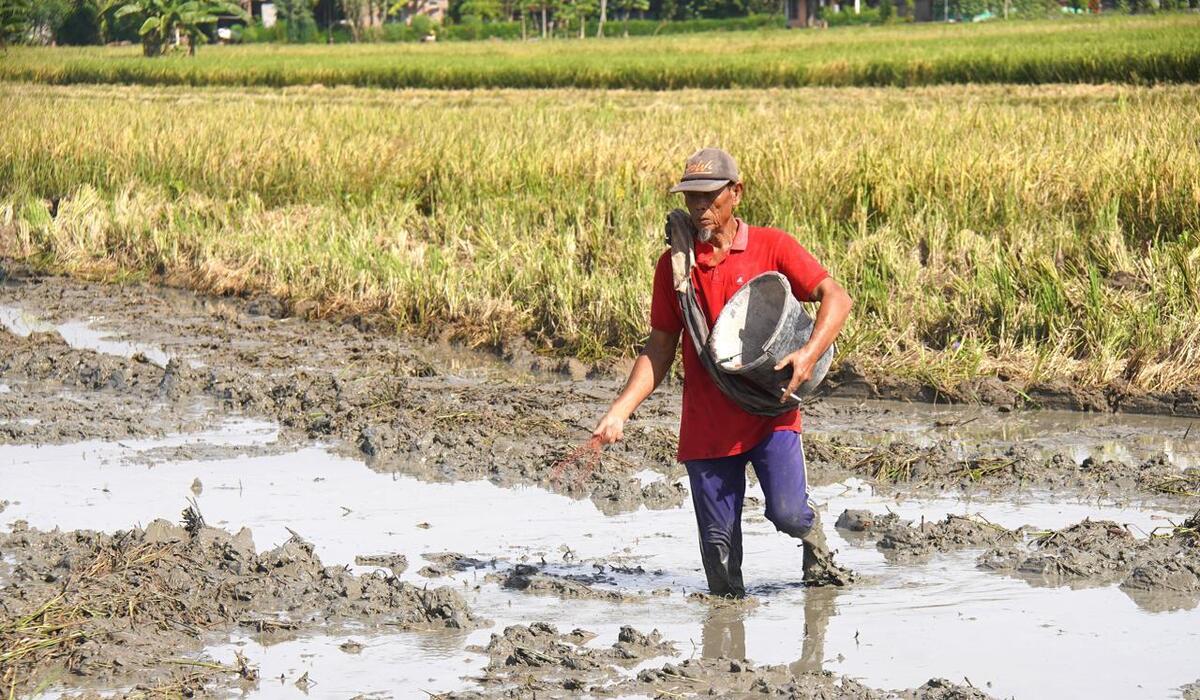
Amidst a global fertiliser crisis pressing food production in many nations, the Food and Disagriculture Organization (FAO) has noted that Indonesian farmers continue to produce, positioning Indonesia as one of the pillars of the world’s rice reserves. This assertion is contained in the official Food Outlook report for June 2026, released by the FAO in Rome, which ranks Indonesia as the largest rice producer in Southeast Asia and fourth globally.
In its analysis, the FAO assesses that stable prices at the producer or farmer level serve as the primary incentive encouraging farmers to continue prioritising paddy cultivation—a pattern the FAO noted in Indonesia, alongside the Republic of Korea, Pakistan, and the Philippines. Conversely, several major Asian producers are projected to experience production declines, including Cambodia, India, Myanmar, Nepal, Sri Lanka, and Thailand.
Based on the FAO report, Indonesian rice production is projected to reach 38.5 million tonnes in the 2025/2026 period and 38.6 million tonnes in 2026/2027. Indonesia’s position sits only below India (151.9 million tonnes), China (143.2 million tonnes), and Bangladesh (41.5 million tonnes), and is far above other ASEAN nations such as Vietnam (28.3 million tonnes), Thailand (23.3 million tonnes), Myanmar (16.8 million tonnes), and the Philippines (12.1 million tonnes).
“The FAO has once again placed Indonesia as the highest rice-producing country in Southeast Asia and fourth highest in the world after India, China, and Bangladesh,” stated the Minister of Agriculture and Head of the National Food Agency, Andi Amting Sulaiman.
Most notably, Indonesia recorded the highest production increase among all major global producers. FAO data shows Indonesian rice production is predicted to surge from 34.0 million tonnes (2024/2025) to 38.5 million tonnes (2025/2026), an increase of 4.5 million tonnes. This figure far exceeds the increases seen in India (+1.7 million tonnes), Bangladesh (+1.1 million tonnes), and China (+1.0 million tonne). Of the four largest producers in the world, only China and Indonesia are showing positive growth.
According to the report, the FAO also projects Indonesia’s ending rice stocks to rise from an average of 5.6 million tonnes to 7.5 million tonnes (2025/2026) and 7.8 million tonnes (2026/2027). The FAO noted that the thickening of Indonesia’s stocks is a factor supporting the stability of global rice reserves, which are expected to reach 213.8 million tonnes by the end of 2026/2027, the second-highest record in history.
The FAO’s report on production weakening in several countries is linked to two major pressures currently shadowing global farmers: the El Niño climate anomaly and the global fertiliser crisis. Since the conflict in the Middle East closed the Strait of Hormuz in late February 2026—a route handling up to one-third of global fertiliser trade—followed by China’s export restrictions on nitrogen fertilisers, international fertiliser prices have soared. Ship traffic in the Strait of Hormuz reportedly plummeted by more as much as 95 per cent, and global urea prices surged by 40 to 60 per cent in just a few weeks.
The impact is evident on the ground, particularly in ASEAN countries dependent on imported fertilisers. In Thailand, many farmers have chosen not to replant because costs are no longer covered by harvests. The Washington Post reported on the plight of Saithong Jamjai, a farmer in Suphan Buri, who decided not to plant again because the surge in fertiliser and fuel prices caused planting costs to swell.
The Chairman of the Thai Rice Farmers Association, Pramote Charoensilp, warned that farmers are trapped in a “scissor crisis,” where urea prices have hit 1,200 baht per bag while paddy prices remain at only 5,000 to 6,000 baht per tonne, prompting calls for government intervention. This pressure has sparked sharp criticism in parliament regarding inconsistent government messaging on fertiliser availability, as fertiliser stocks dwindle.
A similar situation is occurring in the Philippines. International media outlets reported that farmers in the Benguet highlands have allowed harvests to rot in the fields because the costs of harvesting, fertiliser, and transport exceed the selling price. Urea prices in the Philippines were reported to have surged to approximately Php2,100 per bag in June 2026, up from Php1,380 in January 2026.
Amidst this situation, Indonesia is moving in the opposite direction. “While farmers in neighbouring countries are struggling, delaying planting, and even pressuring their governments due to fertiliser scarcity and high costs, we have actually reduced fertiliser prices in Indonesia by 20 per cent. Not increased, but decreased. And we are ensuring that fertiliser is easily accessible to farmers, on time, and in the correct quantity, reaching the villages,” asserted Minister Amran.
The reduction in the Maximum Retail Price (HET) for subsidised fertiliser by 20 per cent has been in effect since 22 October 2025, the first such occurrence in the history of the Republic of Indonesia, covering all types of subsidised fertiliser. For instance, urea prices dropped from Rp2,250 to Rp1,800 per kilogram, and NPK from Rp2,300 to Rp1,840 per kilogram. This policy was implemented without increasing the burden on the state budget (APBN) through industrial efficiency and improved distribution management, while also increasing the volume of subsidised fertiliser by 700,000 tonnes to broaden farmer access.
Source: jawawa.id (https://jawawa.id/newsitem/amid-global-fertiliser-crisis-fao-says-indonesian-farmers-underpin-world-rice-reserves-1782190228)
Originally published by Media Indonesia (https://mediaindonesia.com/ekonomi/903352/di-tengah-krisis-pupuk-global-fao-sebut-petani-indonesia-penopang-cadangan-beras-dunia), translated from Indonesian