
Amid a Wave of Islamophobia, 100 Muslim Politicians Win in US Midterm Elections
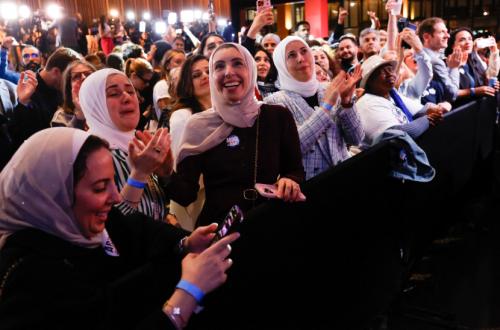
WASHINGTON — A wave of Islamophobia in US politics has not deterred Muslim Americans from seeking a place in positions of power. Instead, the US midterm elections on 3 November 2026 set a record for Muslim politicians winning office at various levels of government.
The Council on American-Islamic Relations (CAIR) and CAIR Action reported that at least 97 Muslim candidates had won elections at federal, state and local levels. They were spread across 21 states, including 38 victories in state legislative races.
The figure is a new record for CAIR. It represents an increase of about 18 per cent on the 82 Muslim candidates who won in the 2022 midterms.
In a report released on 5 November 2026, CAIR said 15 Muslim candidates were still leading in vote counts and another six were in close contests. The organisation expected the number of elected Muslim politicians to exceed 100 once all votes had been counted.
CAIR and CAIR Action tracked 168 Muslim candidates who stood in this year’s elections. Of these, 97 had confirmed victories and 50 had lost, while the remaining results were still pending.
The results also drew attention from Imam Shamsi Ali, a member of the Islamic Society of North America (ISNA) board of directors. In an article in Republika entitled ‘The Most Anticipated and Historic US Election’, Shamsi said the Muslim politicians’ victories should not be seen as a success for the Muslim community alone.
“For us, Muslims in America, we do not understand these victories narrowly as victories for the Muslim community alone. Rather, they are victories for democracy and the values that make America great. Many anti-Islam figures, hate-mongers and divisive politicians have now been defeated,” Shamsi Ali wrote on Wednesday (4 November 2026).
Shamsi described the victories as a turning point for a Muslim community that has long faced pressure from anti-Islam political groups. He cited Texas, a state with a rapidly growing Muslim community but also a political climate marked by anti-Islam sentiment.
In Shamsi’s view, the results showed that politics driven by hatred and anti-immigrant sentiment do not always lead to electoral victory. He also congratulated Abdul El-Sayed, who made history as the first Muslim senator in the US.
Several victories marked new milestones in American politics.
Abdul El-Sayed became the first Muslim elected to the US Senate. The Democratic politician won Michigan’s Senate seat.
El-Sayed’s victory was also a breakthrough for Muslim representation in the upper chamber of Congress. Muslim politicians have previously served in the House of Representatives, but no Muslim had been elected to the Senate.
Another figure who drew attention was Adam Hamawy. The trauma surgeon became the first Muslim elected to represent New Jersey in the US Congress.
Hamawy has extensive experience in humanitarian missions. He has worked as a surgeon in Gaza and in several other conflict zones. His work treating war victims has been an important part of his public record.
In New York, Aber Kawas made history as the first Muslim woman and the first Palestinian American elected to the New York State Legislature.
Several Muslim politicians already known nationally also retained their seats. They included Ilhan Omar and Rashida Tlaib in the House, as well as Andre Carson and Lateefah Simon.
In Minnesota, Keith Ellison was re-elected as the state’s attorney general.
The victories came amid growing anti-Muslim sentiment in the US. CAIR recorded 8,683 complaints relating to civil rights violations in 2025, the highest annual total in the organisation’s records.
In a pre-election survey released in October 2026, CAIR also found that 80 per cent of Muslim respondents believed anti-Muslim sentiment was increasing. A further 63 per cent said Muslims did not receive equal protection under federal civil rights laws compared with other religious groups.
However, the situation did not diminish Muslim political participation.
Palestine Mobilises Voters
Behind the record number of Muslim politicians elected, the issue of Palestine was one of the key factors shaping Muslim voters’ choices in these midterm elections.
This was reflected in an exit poll released by CAIR and CAIR Action on 4 November 2026.
The survey of 522 Muslim voters found that 80 per cent said the genocide in Gaza was a major factor in their choices. Seventy-six per cent ranked Gaza and the rights of the Palestinian people among the most important issues in the election.
The figures suggest that, for some Muslim American voters, Palestine is no longer solely a foreign policy issue. Developments in Gaza also influenced their decisions about domestic political representation.
Views on the US-Israeli war against Iran also affected voters’ choices. Seventy-six per cent of respondents said the war was a major factor in their decisions. As many as 72 per cent said their vote was a message intended to prevent the conflict from spreading across the Middle East.
Palestine was not the only consideration. Economic issues also had a significant influence: 80 per cent of respondents said the state of the economy was a leading factor in their political choices.
The survey also found that rising Islamophobia was driving greater political participation among Muslim Americans. Seventy per cent said anti-Muslim sentiment had made them more motivated to vote; of these, 55 per cent said Islamophobia had made them much more likely to do so.
Among respondents who voted, 80 per cent said they had chosen Democratic candidates, while six per cent voted Republican.
CAIR said the findings showed a connection between Gaza, the war in the Middle East, economic pressures and rising Islamophobia, and Muslim voters’ political choices.
Islamophobic Attacks Fail to Stop Victories
The victories of El-Sayed and Hamawy illustrate how Muslim identity and Palestine featured in the US political contest.
In the Michigan Senate race, El-Sayed faced political attacks seeking to link him to Islamic extremism. His rival, Mike Rogers, a former Republican congressman, tried to promote a narrative alleging that El-Sayed had ties to the Muslim Brotherhood. El-Sayed denied the allegations, and no supporting evidence was found, according to a Reuters report.
El-Sayed was also criticised for opposing US military aid to Israel and describing Israel’s actions in Gaza as genocide. He nevertheless won the contested Senate seat.
Hamawy also faced Islamophobic attacks during his campaign. CAIR New Jersey said the surgeon, who had worked in Gaza, won despite attacks on his character and personal relationships.
CAIR New Jersey Executive Director Selaedin Maksut said the Muslim community and its supporters had mobilised to elect a representative they believed would stand up for justice and hold Israel accountable for its actions in Gaza.
CAIR and CAIR Action described the Muslim candidates’ victories as voters’ rejection of the anti-Muslim attacks that marked the campaigns.
The organisations also urged the Muslim politicians who had been elected to serve all their constituents, protect civil rights and pursue justice at home and abroad.
With this record result, Muslim representation in the US is no longer concentrated only in areas with large Muslim populations. Muslim politicians now serve in a range of institutions, from Congress and state legislatures to courts, city governments and education boards.
For CAIR, the 2026 midterm results show that attacks on Muslim identity have failed to halt the community’s political participation. Instead, Muslim Americans are expanding their role in shaping the direction of US politics.
Source: jawawa.id (https://jawawa.id/newsitem/amid-a-wave-of-islamophobia-100-muslim-politicians-win-in-us-midterm-elections-1794016246)
Originally published by Republika (https://analisis.republika.co.id/berita/to3wsk393/di-tengah-gelombang-islamofobia-seratus-politikus-muslim-berjaya-dalam-pemilu-sela-as), translated from Indonesian