
Amid 60,000 SNBP No-Show Concerns, UNJ Claims 99% Registration Rate
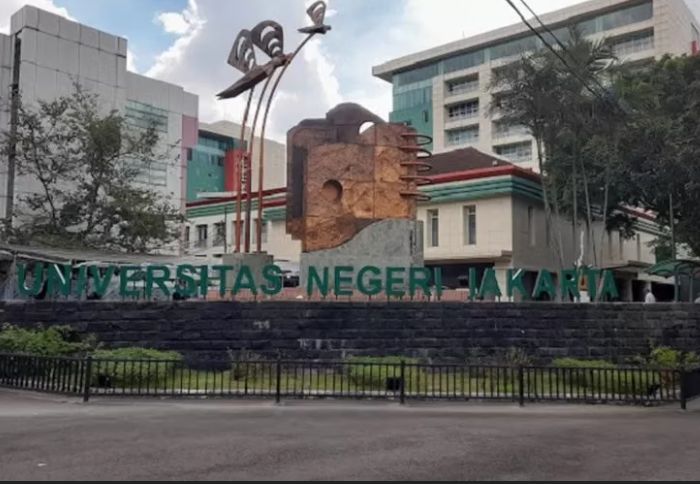
Amid public attention on widespread media reports regarding an alleged 60,000 participants of the 2026 Seleksi Nasional Berdasarkan Prestasi (SNBP) who did not re-register at various state universities (PTN) across Indonesia, Universitas Negeri Jakarta (UNJ) has recorded a very positive achievement. Based on 2026 SNBP new student admission data, the re-registration rate for prospective students accepted at UNJ reached 99 per cent. This demonstrates the high level of public trust in the quality of education, academic services, and the affordability of education costs offered by UNJ.
This achievement serves as a strong indicator that UNJ is increasingly trusted as a destination for quality higher education by prospective students from various regions in Indonesia. While a number of PTNs face the challenge of high numbers of participants not continuing the registration process after being declared successful in the selection, UNJ has successfully maintained the commitment of prospective students to continue their studies through to the final stage of admission.
Over the past four years, public interest in pursuing education at UNJ has continued to show a positive trend. The number of SNBP applicants increased from 29,293 in 2023 to 32,813 in 2024. Despite a slight decrease in 2025 to 31,388 applicants, the figure rose significantly again in 2026, reaching 34,852 applicants. This trend reflects the growing appeal of UNJ as a quality, inclusive, and relevant higher education institution that meets the needs of society.
The increase in the number of applicants is inseparable from various strategic achievements made by UNJ in recent years. The institutional transformation into a Perguruan Tinggi Negeri Badan Hukum (PTNBH), the strengthening of academic quality, increased research and innovation productivity, international ranking achievements, and the expansion of global cooperation networks have become important factors that further strengthen UNJ’s reputation as an excellent, adaptive, and competitive university at both national and international levels.
In the 2026 SNBP, a total of 1,910 prospective students were declared accepted at UNJ. Of this number, 1,897 prospective students completed the re-registration process, meaning only 13 people, or about 1 per cent, did not continue the registration process. This figure represents UNJ’s best achievement in the last four years.
For comparison, in 2023 the number of prospective students who did not re-register reached 207 people, or about 8 per cent of the total accepted. In 2024, there were 269 people, or about 7 per cent, while in 2025 there were 247 people, or about 8 per cent. The significant decrease in the non-registration rate in 2026 indicates the increasingly strong conviction of prospective students in their choice to pursue education at UNJ.
The high re-registration rate is also supported by a tuition fee policy oriented towards principles of fairness and affordability. UNJ sets the Single Tuition Fee (UKT) for undergraduate (S1/D4), master’s (S2), and doctoral (S3) programmes based on principles of fairness, the student’s economic capability, and inclusive access to education.
The UKT amount for each study programme is not set at a single nominal value but is divided into several tariff groups adjusted to the socio-economic conditions of the students. This scheme provides affirmative space for students from various economic backgrounds to have equal opportunities to access quality higher education.
The determination of UKT refers to the Rector’s Decree of UNJ Number 140/UN39/HK.02/2026 concerning UKT for Diploma Four and Undergraduate Programmes, and Rector’s Decree Number 148/UN39/HK.02/2026 concerning UKT for Master’s and Doctoral Programmes. Both regulations serve as the foundation to ensure that the UKT determination mechanism at UNJ is carried out transparently, accountably, and in accordance with applicable provisions.
As a commitment to public information disclosure, all information regarding the amount of UKT for each study programme can be accessed openly through the official UNJ admissions page.
The determination of UKT groups at UNJ is carried out through a process of verification and validation of the economic data of prospective students who have been declared successful in the selection. This data includes parental income, number of dependents, and other supporting aspects. UNJ implements a layered system to ensure objectivity, including administrative evaluation and, if necessary, additional clarification from the families of prospective students who have passed the entrance test. The results of this verification serve as the basis for determining the UKT group, from the lowest to the highest, so that the principles of fairness and transparency are maintained.
UNJ also provides a mechanism for submitting UKT adjustments or appeals for students who experience changes in economic conditions or feel that the UKT determination does not match their actual economic situation. The submission is made through an official procedure established by the university, accompanied by relevant supporting documents. Each submission will be reviewed by a verification team to ensure that the decision taken remains accountable, transparent, and aligned with the student’s real conditions. This mechanism is part of UNJ’s commitment to maintaining fair and sustainable access to education.
As a PTNBH, UNJ continues to strive to maintain a balance between improving the quality of educational services and the affordability of tuition fees. This commitment is one of the factors that strengthens public trust and makes UNJ a primary choice for prospective students who desire quality, globally competitive higher education that remains accessible.