
AMI Urges Government to Draft Museum Law and Revise Cultural Heritage Act
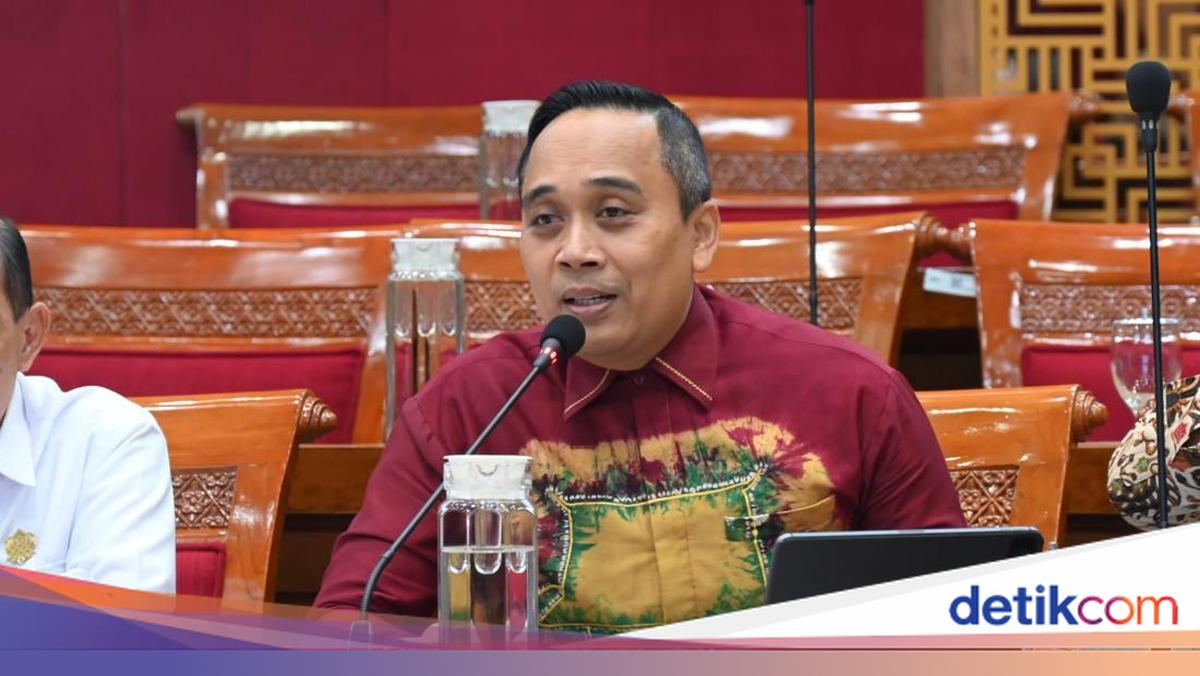
The essence of national development must be built upon culture. Museums are institutions that house, study, care for, and convey the riches of that civilisation to future generations. As such, museums hold a very strategic position, said Putu in a statement on Thursday. According to Putu, Indonesia currently has 516 museums, with 373 registered and approximately 289 having undergone standardisation and evaluation. The re-establishment of the Directorate of History and Museums following the formation of the Ministry of Culture in 2024 is considered a crucial momentum to strengthen national museum governance. However, he cautioned that the majority of museums in Indonesia are managed by private entities, foundations, and individuals, which have long faced various challenges, ranging from limited funding to a lack of supporting facilities and infrastructure. Putu explained that since the first Indonesian Museum Congress, museum stakeholders have aspired to create regulations specifically governing museums. He argued that museums are homes for artefacts and cultural heritage objects that serve as evidence of the nation’s historical journey. If we talk about a place to store artefacts, there is no other place besides a museum. The museum is their home, he stated. Furthermore, Putu believes museums need to be redefined within the modern Indonesian context. Museums are not merely storage spaces for historical objects or symbols of the past, but living institutions that play a role in building national character. Museums are not places to be isolated or abandoned. Museums are the noble achievements of a nation. Museums are the nation’s cornerstone, the highest home of culture, the eternal home of civilisation, a home of inspiration, a home of the noble narratives of the Nusantara, and a home of the nation’s glorious heritage, he said. Therefore, AMI is pushing for the revival of the national movement ‘Let’s Visit Museums First’. He believes museums should be the first destination when people visit a region so they can understand the history, noble values, artefacts, and local cultural identity before enjoying other tourist destinations. He also appreciated various initiatives encouraging the younger generation to engage more closely with museums, including the Museum Passport idea, which is expected to boost museum visit interest. On this occasion, Putu also highlighted the importance of equal support between government and private museums. Currently, he noted, government-owned museums can access state budget funds and Special Allocation Funds, whilst museums managed by private entities, foundations, and individuals still have limited access to various funding schemes. Therefore, he argued that a policy formulation is needed to allow all museums to gain more equal opportunities in institutional development, facilities and infrastructure, and revitalisation programmes. If this equality is realised, there will be no gap between government and private museums. All can move together to safeguard the nation’s cultural heritage, he said. In terms of regulation, Putu sees the biggest challenge for Indonesian museums today as the absence of a Museums Law. Indonesia already has Law Number 11 of 2010 on Cultural Heritage and Law Number 5 of 2017 on the Advancement of Culture, alongside various government and ministerial regulations related to museums. According to him, the position of museums in both laws is minimal. In the Cultural Heritage Law, museums are mentioned only briefly and are positioned more as storage spaces. Meanwhile, in the Law on the Advancement of Culture, museums have not been placed as strategic institutions with a central role in the protection and development of national culture. The home does not yet exist. We have regulations on cultural heritage and cultural advancement, but we do not yet have a Museums Law. Therefore, strengthening regulation is an urgent necessity, he said. Putu emphasised the importance of regulatory strengthening to support the repatriation of Indonesian artefacts and cultural objects currently held abroad. He argued that the existence of a Museums Law would strengthen Indonesia’s position in fighting for the return of the nation’s cultural heritage. He cautioned that several regulations and guidelines currently in force still permit the use of replicas or collection reproductions, while aspects of protecting original collections and the mechanism for loaning cultural heritage objects need to be strengthened. The nation’s cultural heritage and artefacts possess value that cannot be replaced with money. Therefore, the protection of collections must be a serious concern in future regulatory strengthening, he said. In addition to advocating for the creation of a Museums Law, AMI also proposed revisions to Law Number 11 of 2010 on Cultural Heritage and Law Number 5 of 2017 on the Advancement of Culture so that the position of museums as strategic cultural institutions is further strengthened. AMI also urged the formation of a body specifically handling museums, cultural heritage, and cultural advancement to strengthen national policy coordination. As a long-term vision, AMI also proposed the realisation of the concept of a ‘Land of a Thousand Museums’, the construction of museums at various cultural heritage sites, museums for heroes and national figures, Nusantara palace museums, and the design of a Grand Museum of Nusantara Civilisation as a symbol of Indonesia’s historical and cultural journey. Our hope is that Indonesia will not only be strong economically and politically, but also become a nation with a strong cultural identity. Because culture has the power to unite, inspire, and safeguard the sustainability of the nation’s civilisation, concluded Putu.