
America's Dominance in Space Nears End as China's Tiangong Becomes the New Power Base
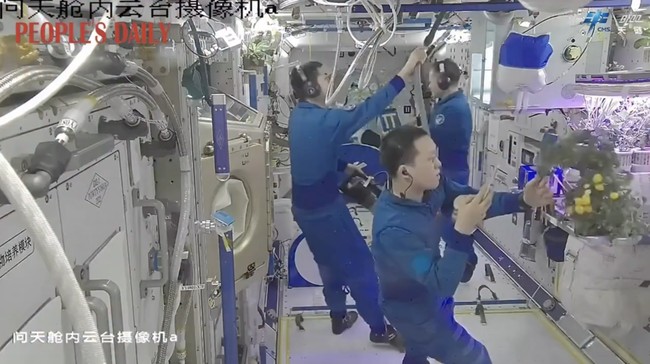
The competition in space exploration is entering a new chapter. Currently, the International Space Station (ISS) remains the largest orbital laboratory involving multiple nations, while Tiangong is a smaller, newer station fully controlled by China. However, this dynamic is shifting. If the ISS ends its operational life around 2030 and no commercial replacement is ready to host crews, Tiangong could become the only permanently crewed space station operating in Earth’s orbit. This scenario arises from two converging timelines: the planned retirement of the ISS and the yet-to-be-completed transition to commercial space stations in Low Earth Orbit (LEO). While many simplify Tiangong’s origin to China being excluded from the ISS programme, the reality is more complex. China was never an official ISS partner. The United States’ refusal to involve China predates 2011 but was hardened by the Wolf Amendment, which prohibits NASA and the White House Office of Science and Technology Policy from engaging in bilateral programmes with China or Chinese companies without specific legal authorisation. This legislation effectively made cooperation a legal and political impossibility, closing any realistic short-term path for China’s human spaceflight programme to join the ISS framework. Meanwhile, Tiangong is no longer a mere plan but a fully operational station. Following the launch of the core module Tianhe in 2021 and the Wentian and Mengtian laboratory modules in 2022, China has maintained a continuous human presence aboard the station. Despite its smaller size compared to the ISS, Tiangong features regular crew rotations, logistical support via Tianzhou cargo spacecraft, and the Shenzhou crew transport system. The station also proved its resilience by maintaining operations through serious emergency scheduling adjustments required for crew return vehicles during 2025 and 2026. Tiangong has thus evolved beyond a symbol of national achievement into a fully functional piece of space infrastructure.