
America Trembles as China's AI Push Intensifies
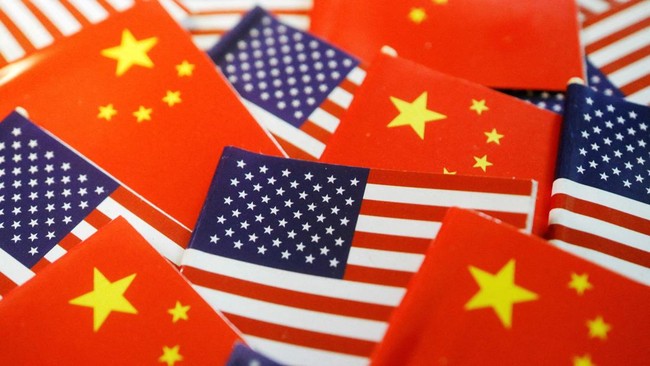
Chinese technology once shook Silicon Valley when it introduced the AI model R1 developed by DeepSeek at low cost, yet with performance comparable to advanced American AI models. At the time, the shares of America’s technology giants tumbled en masse, triggered by investor concerns over expensive AI models that had yet to deliver real profits.
Since the emergence of DeepSeek, Chinese technology has continued to develop rapidly, leaving the United States rattled. Recently, China made another splash with the launch of the ‘Kimi K3’ model, which recorded impressive results across a number of important benchmarks.
In several benchmarks, Kimi K3 was able to match frontier models from the United States, whose development costs are astronomical. The emergence of Kimi K3 sparked a fresh wave of panic that China is closing the gap with the United States in the AI race.
The United States continues to allege that advanced Chinese AI models are trained on the backbone of American frontier models such as Anthropic, OpenAI and Google.
Amid these tensions, there is a crucial difference in strategy between AI development in China and the United States. China embraces open-source and open-weight models, whilst the United States continues to insist on closed-source models.
The difference lies in the accessibility of the source code. Open-source models allow developers freely to view, modify and redistribute the available AI models. Closed-source models, by contrast, keep the programme code secret, protected by copyright, and modifiable only by their creators.
Open-weight sits in between. The final parameters (weights) of the trained AI model are published so that anyone can download and use them locally. Simply put, open-source hands over the entire ‘recipe’ of an AI model, whilst open-weight only provides the finished, ready-to-use product.
“Personally, I am surprised that China continues to allow high-quality models like these to be available open-source, given the potential risks,” wrote Dean Ball, a former senior AI adviser to President Donald Trump who now serves as head of strategy at OpenAI, on the X platform, according to a report by Business Insider, cited by AOL on Monday (20 July 2026).
He said the open-weight strategy would lead to full-blown “AI communism”, whilst open-source could hamper the pace of development, because such models reduce capital expenditure on AI.
However, what truly ignited heated discussion was the following statement:
“By my estimation, at some point the Trump administration will realise that their best strategy in this matter is to create significant regulatory risk around the use of Chinese open-weight models,” he wrote.
Ball argued that creating fear, uncertainty and doubt — known by practitioners as “FUD” — in the regulatory process would lead most American companies to avoid using those open-source models.
He later clarified that this was merely his prediction, not a recommendation, and affirmed his support for open-source models, so long as AI has not reached a point of being too dangerous.
Anthropic and OpenAI insist their models are too sophisticated to be opened up to the public, arguing that doing so would be dangerous because it would allow anyone to use their tools for any purpose with minimal oversight.
Closed-source gives its creators greater control, including over security, access and pricing. These laboratories have warned that Chinese open-weight models pose a threat both to national security and to their businesses.
David Sacks, a venture capitalist who served as the first AI and crypto czar of the Trump administration, said that “weaponising regulatory uncertainty is completely unacceptable.”
“We are at a critical inflection point in AI policy. Leading laboratories with closed-source systems that have formed a duopoly in AI model revenue want the government to eliminate their open-source competitors,” he wrote on X in response to Ball’s post.
The “duopoly” he referred to is OpenAI and Anthropic. “They have made their intentions clear. Now it is time for others in Silicon Valley — the large majority who still champion open competition — to do the same,” he concluded.