
America Divided: Many Cry Danger Except Trump
Tech giants are suddenly united in calling for a slowdown in the advancement of artificial intelligence (AI) to prioritise public safety. This movement began with a lengthy essay by Anthropic CEO Dario Amodei, which was subsequently supported by other tech elites, including OpenAI’s Sam Altman and Elon Musk of xAI.
Previously, former Anthropic AI researcher Jacob Coxon went viral on the internet by claiming that the massive acceleration of AI could lead to human extinction within the next decade.
Rising public concern regarding AI has also triggered a ‘division’ among United States officials. Two political factions, traditionally known to be at odds—progressive Senator Bernie Sanders of the Democratic Party and Steve Bannon, a hardline ally of President Donald Trump—have surprisingly joined forces to demand that the government tighten oversight of AI.
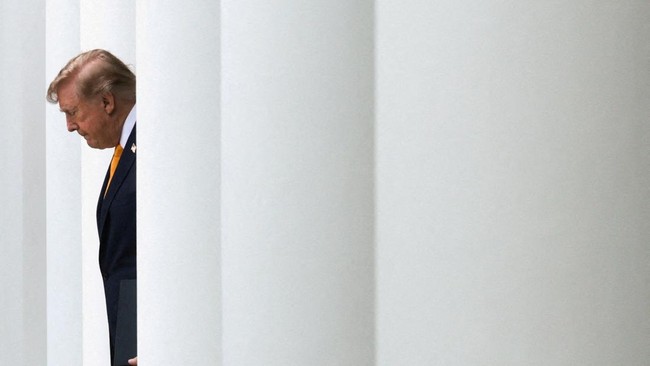
However, this pressure has hit a thick wall within the corridors of power. US President Donald Trump has chosen to stand firm, taking a stance contrary to his critics.
Trump Chooses to Accelerate AI Development
Rather than tightening regulations, Trump has openly dismissed the concerns of industry players and politicians regarding the potential dangers of AI. In public, his administration insists that the US already possesses adequate guardrails to tame such advanced technology without shackling innovation.
This White House stance has also received full support from the Speaker of the US House of Representatives, Republican Mike Johnson. According to Johnson, implementing a moratorium or a delay in AI development would cause the US to lose its edge and surrender its competitive advantage to China.
Johnson went as far as to firmly delegate risk mitigation to the internal market mechanisms of corporations. “They can regulate themselves. They do not need the government to tell them to slow down. If they want to slow down, they can,” Johnson told reporters, as cited by Reuters.
A similar view was expressed by several other major tech industry leaders, including Nvidia CEO Jensen Huang. The faction opposing the views of Amodei and others argues that overly strict government regulation would instead kill the competitiveness of US companies on the global stage against their rivals from China.
Sanders and Bannon Demand Emergency Brake
The opposition camp and various observers believe that the ‘hands-off’ approach adopted by Trump is extremely dangerous. In a forum in Washington, Bernie Sanders issued a stern warning that AI has the potential to eliminate tens of millions of jobs and destroy various professions in the near future.
Furthermore, Sanders highlighted shocking findings that AI has, for the first time, been misused to design new viruses that pose a risk to global biosecurity.
“This technology will escape human control with consequences that could potentially be catastrophic,” said Sanders, who even urged Trump to immediately negotiate an AI suspension treaty with Chinese President Xi Jinping.
A similar sentiment came from Steve Bannon. The former White House strategist criticised Trump’s reluctance to regulate the tech sector, which he believes is due to the strong grip of corporate lobbyists. Bannon assessed that Congress is too slow in formulating legislation, prompting him to call for swift executive action to curb the pace of AI expansion while completely cutting off the supply of US computer chips to China.
Government Alleges Election Politicisation
Amidst this intensifying debate, the White House has flatly rejected these concerns. US Attorney General Todd Blanche even accused the Democratic Party of deliberately politicising the AI issue to garner political sentiment ahead of the Congressional midterm elections this coming November.
While the fierce debate continues on Capitol Hill, tech giants are now facing increasing public pressure. In addition to existential threats, a wave of public opposition to mega-scale data centre projects, which consume vast amounts of public electricity, remains a significant obstacle to the industry’s expansion ambitions.