
America and Europe Could Become Enemies, War Could Break Out Here
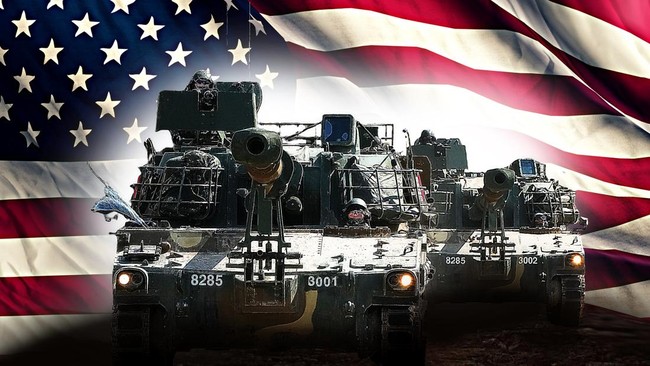
The Arctic region is reportedly becoming a new arena for competition between the United States and Europe, even though both remain within the same defence alliance, NATO.
This was stated in an opinion piece published by the Russian media outlet RT on 26 September 2026. The article, titled “The next war will be fought here: America and Europe will be enemies”, was written by Ksenia Smertina, a senior lecturer at the HSE Institute for Media and an expert at the Russian International Affairs Council.
In her analysis, Smertina noted that the struggle for influence in the North Pole region is no longer solely related to environmental issues, but is shifting towards competition over geopolitics, trade routes, security, and natural resources.
“The next war will take place here. America and Europe will become enemies,” Smertine wrote in her opinion piece, as quoted on Tuesday (29/9/2026).
According to Smertina, the increasing attention towards the Arctic is driven by the strategic interests of several nations regarding Greenland, new shipping routes, and the potential mineral wealth in the region.
She assessed that the United States has long been building a military presence in the northern region through airbases, radar systems, and the development of icebreaker fleets.
Meanwhile, the European Union is said to be attempting to strengthen its role through increased security cooperation, infrastructure investment, and relations with countries such as Canada.
“The Arctic has transformed into a zone of economic and geopolitical competition, including the struggle for ports, trade routes, and polar resources,” Smertina wrote.
In her article, Smertina also highlighted Greenland as one of the strategic flashpoints. The autonomous territory of Denmark holds a vital position due to its location between North America and Europe, as well as its potential for strategic mineral reserves.
According to the analysis, establishing influence in Greenland could provide significant advantages in both the defence sector and access to natural resources.
However, Smertina’s view is an analysis from the author’s perspective and does not represent a consensus within the international community. The relationship between the US and Europe continues within the framework of NATO, despite differing economic interests and policies on certain issues.
In addition to the US and Europe, the article also identified Russia and China as key players in the Arctic competition. Russia is known to have significant interests in the Northern Sea Route, while China is developing the “Polar Silk Road” concept to expand its economic activities in the region.
As ice melts due to climate change, the Arctic region is becoming increasingly accessible for shipping activities and resource exploration, making the area one of the world’s most closely watched geopolitical hotspots.