
America Admits It’s Losing to China, Scrambling to Close the Gap
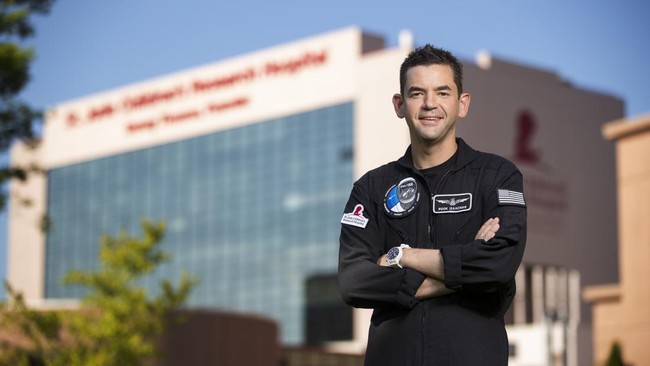
Jakarta, CNBC Indonesia - The race to explore outer space among nations is heating up. The United States’ main competitor this time is no longer the Soviet Union, but China, with their astronauts known as ‘taikonauts’. The head of the United States Space Agency (NASA), Jared Isaacman, forecast that China will launch a crewed mission to orbit the Moon as early as 2027. If this comes to pass, the United States would have to relinquish its status as the only country to have put humans on the Moon. He delivered this firm statement in his keynote address at the ASCEND conference in Washington, D.C., on 19 May. He warned space industry participants that the next historic milestone in space exploration is likely to be led by another country. ‘When the world again watches a crewed flight orbiting the Moon—likely around 2027—they will be taikonauts from China. In other words, the United States will no longer be the only power capable of sending humans to the Moon,’ Isaacman said. The prediction is among the most explicit statements issued by NASA’s leader so far regarding the progress of China’s space programme. The mission in question is expected to be similar to NASA’s Artemis II, which successfully launched in April 2025. It should be noted that to date Chinese authorities have not officially announced a precise mission timetable. However, various reports and space observers say the country is drawing up a structured roadmap with a long-term target of landing humans on the Moon before 2030. To date, all crewed flights that have reached the Moon’s vicinity, whether orbiting, circling, or landing on the Moon’s surface, have been NASA missions. Nine Apollo programme missions between 1968 and 1972 successfully carried American astronauts to the Moon’s surface. Now, NASA continues with Artemis II. Isaacman himself has frequently used this competition as a reason to overhaul the Moon exploration strategy. He says it is not merely a race of technology, but also an effort to maintain leadership and geopolitical influence in space. ‘Now we have a real geopolitical rival challenging American leadership in high-altitude space. We aim to land American citizens on the Moon again before the end of President Trump’s tenure, while our rivals aim to do so before 2030. The time gap is measured in months, not years. They could be faster, and history shows we are often late,’ he asserted. NASA has made fairly drastic schedule adjustments. Initially Artemis III, which would land humans on the Moon, was scheduled to launch in 2028. In the latest revision, the mission has entered testing in low Earth orbit in 2027, followed by the Moon landing of Artemis IV in 2028. In addition to shifting the schedule, NASA also changed its focus. The agency has decided to halt the development of the Lunar Gateway space station project to redirect resources to building a base on the Moon’s surface and to double the number of robotic landing missions. Isaacman said the speed of China’s space programme reminded him of the US spirit in the 1960s as it raced with the Soviet Union. This argument is also supported by members of the US Congress. The House Appropriations Committee recently approved a larger funding allocation for space exploration programmes in the 2027 fiscal year budget, to ensure NASA stays on track.