
Amdatara: Industry must contribute to solving environmental problems
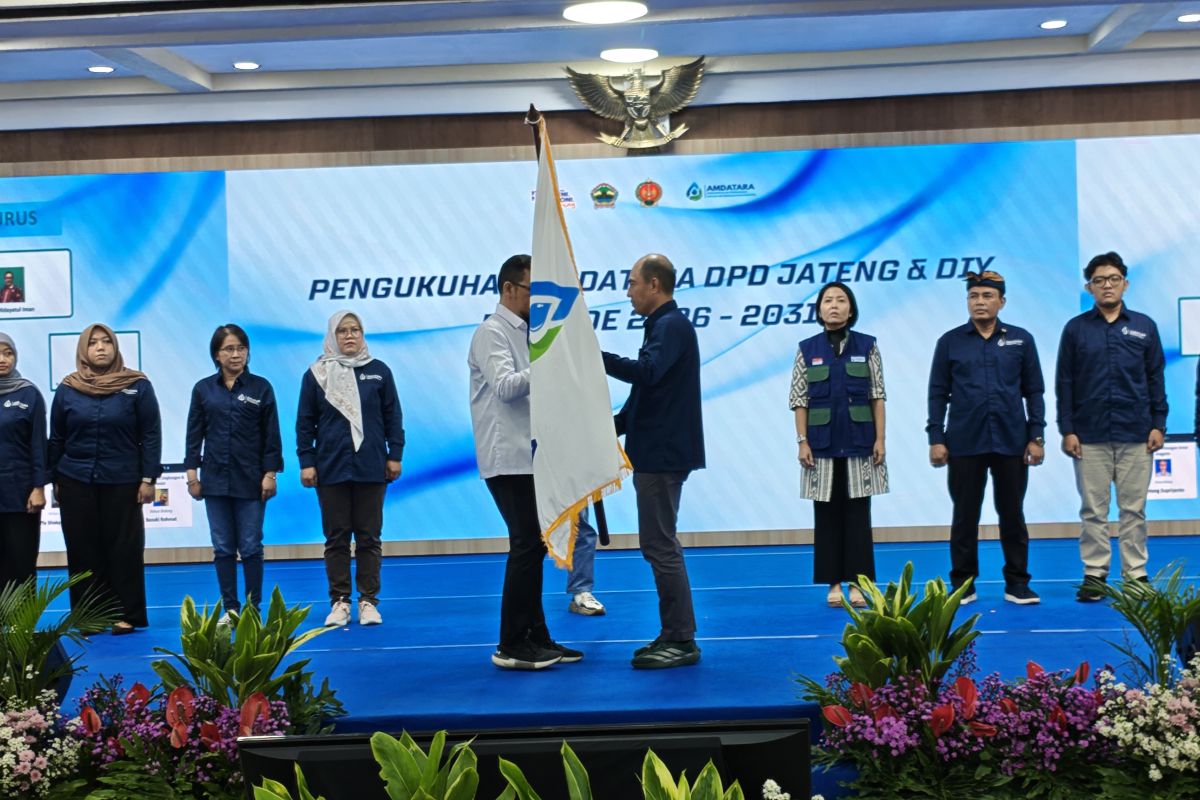
Semarang (ANTARA) - The Nusantara Bottled Drinking Water Enterprises Association (Amdatara) has affirmed that industry, particularly the bottled drinking water (AMDK) sector, must contribute to solving environmental problems.
Amdatara Chairman Karyanto Wibowo, speaking in Semarang on Thursday, explained that the greatest demands on AMDK industry players are not merely about economic contributions to upstream regions or water sources.
Beyond that, he said, industry players currently also face a major challenge to help resolve environmental problems that have arisen.
“Several environmental problems that occur, such as those related to water resources, then the waste issue and climate change, have become prominent issues and also form part of the government’s agenda,” he said during the inauguration of the Amdatara Regional Management Board (DPD) for the Central Java–DI Yogyakarta region for the 2026–2031 term at Gradhika Bakti Praja Building in Semarang.
He called on the AMDK industry to contribute, one way being by supporting the transformation towards green industry.
According to him, Central Java and DI Yogyakarta are strategic regions for Indonesia’s AMDK industry, as they are home to 131 companies, or around 20 per cent of all AMDK industry players nationwide.
“With economic growth in Central Java and DIY, we believe this DPD needs to ensure it can continue collaborating with the government and other stakeholders, so that this industry can continue to grow and develop,” he said.
Chairman of the Amdatara Central Java–DIY Regional Board Rama Zakaria added that innovation and networking had been undertaken by industry players as part of improvement efforts.
“We have already worked with waste banks, one of which is in Wonogiri which has 20,000 customers. We also have strategic partners such as members of the Watershed (DAS) Forum, as well as environmental conservation activists,” he said.
Members of the Amdatara Central Java–DIY Regional Board, such as Ades, Prima, Club and others, have already initiated efforts to support this transformation.
One example, he said, is an AMDK company in Semarang Regency that has utilised a rooftop solar power installation (PLTS) as its energy source.
Head of the Central Java Industry and Trade Office (Disperindag) July Emmylia acknowledged that the industrial sector is still frequently made a scapegoat for environmental damage.
For this reason, collaboration is needed to jointly demonstrate the economic development impact and environmental sustainability of industrial activities.
“By jointly committing to transform towards green industry, there will no longer be negative perceptions of industry. Because everything can stand in alignment and in harmony,” she said.
She continued that green industry transformation in the AMDK sector in Central Java is expected to preserve the carrying capacity of water resources through the application of water and energy efficiency, reduced carbon emissions, and the use of new renewable energy (EBT).