
Amdatara and Central Java Government Strengthen Natural Resource Management and Circular Economy
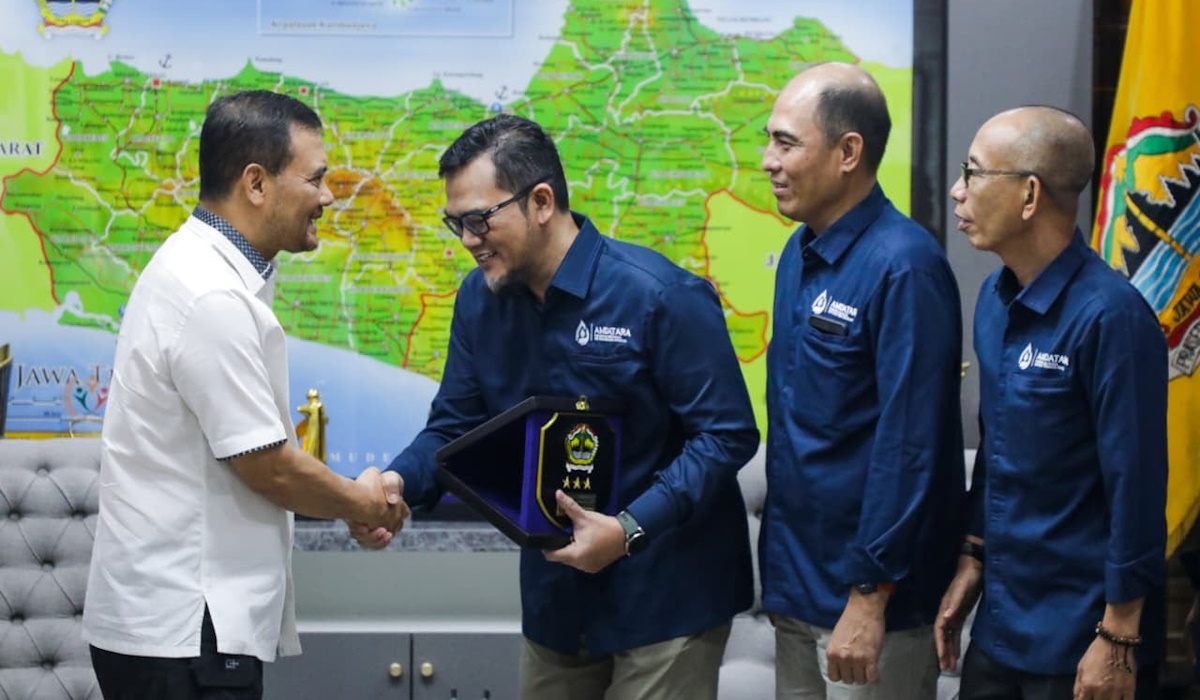
The Nusantara Bottled Water Entrepreneurs Association (Amdatlar) and the Central Java Provincial Government are strengthening their collaboration on sustainable water resource management and the development of a circular economy to support responsible industrial growth.
This commitment was highlighted during an audience between Amdatara Central Java–DIY and the Governor of Central Java, Ahmad Luthfi, at the Central Java Governor’s Office on Wednesday (1/7). Governor Ahmad Luthfi emphasised the importance of sustainable water resource management, compliance with groundwater utilisation regulations, and the strengthening of environmental conservation programmes and the circular economy by industrial players.
Responding to this, the General Chairman of Amdatara, Karyanto Wibowo, stated that the bottled water industry shares the same interests as the government and the community in maintaining the sustainability of water resources. “For us, water is not only the primary raw material but also a shared asset that must be preserved. Therefore, water conservation and environmental protection are inseparable parts of industrial sustainability,” Karyanto said in a statement.
He continued that the bottled water industry cannot grow without sustainable water sources, making sustainability a shared interest between the government, the community, and the business world. “We hope that even stronger collaboration can continue to be built to support the development of Central Java that is inclusive, competitive, and sustainable.”
Karyanto explained that, nationally, the bottled water industry comprises approximately 707 factories with a production capacity of up to 47 billion litres per year. The industry employs around 46,000 direct workers and creates millions of economic opportunities through supply chains, distribution, logistics, trade, and MSMEs.
Amdatara emphasised that all industry players are obliged to comply with regulations regarding water resource utilisation, environmental conservation, as well as monitoring and reporting obligations. Various member companies are also implementing conservation programmes through the protection of water catchment areas, land rehabilitation, the construction of infiltration wells, tree planting, and community education regarding the preservation of water resources.
Amdatara also conveyed several aspirations to the Central Java Provincial Government, including the importance of harmonising regulations between central and regional governments, data-driven and science-based water resource management, and support for sustainable investment for industries that comply with environmental provisions. The meeting also served as a platform to present the implementation plan for the Amdatara Central Java–DIY Regional Consultative Assembly (Musda).