
Ambassador reveals reasons why Iran accepts Pakistan as mediator in dialogue with US
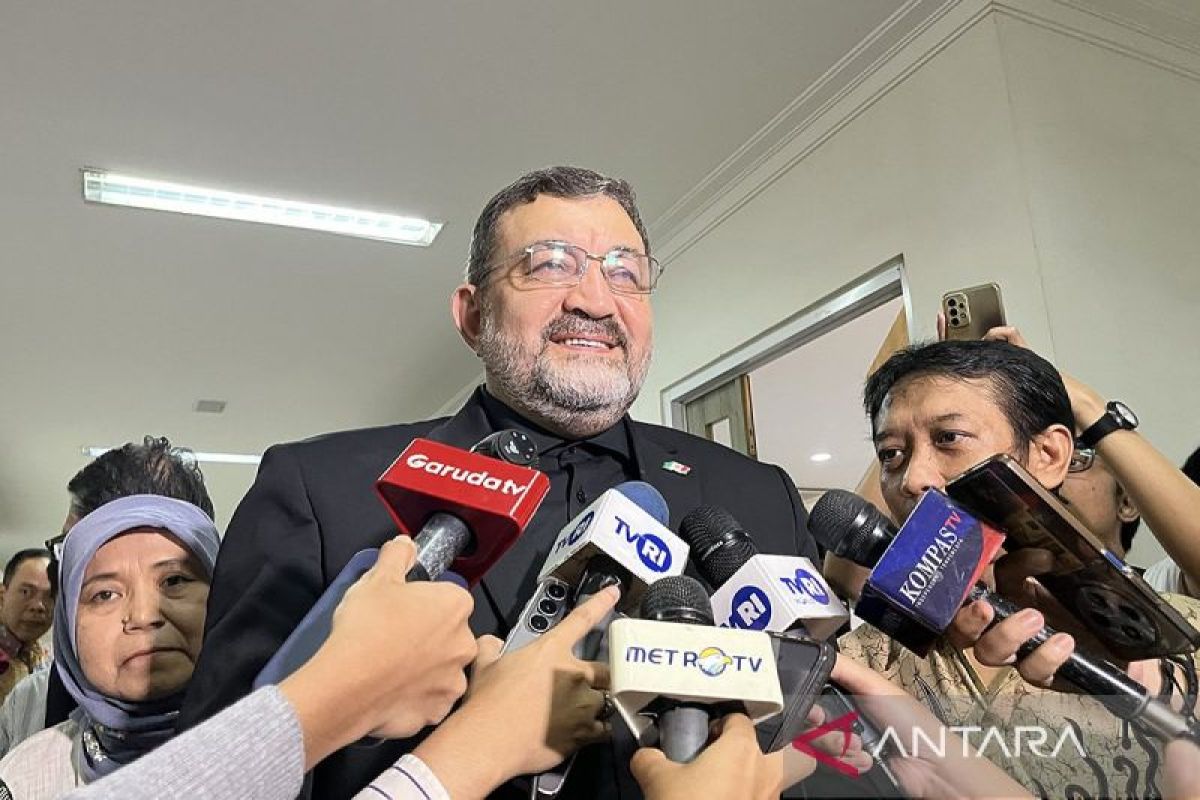
Pakistan is striving to convince us and our adversaries…
Jakarta (ANTARA) - Iran’s decision to accept Pakistan as a mediator in peace negotiations with the United States is based on Pakistan’s good faith and concrete steps to achieve a ceasefire in the region.
“Pakistan’s Prime Minister (Shehbaz Sharif) has made many efforts to secure a ceasefire in the Gulf region,” said the Ambassador of the Islamic Republic of Iran to Indonesia, Mohammad Boroujerdi, after the launch of a commemorative book for the late Supreme Leader Ayatollah Ali Khamenei in Jakarta on Saturday.
Ambassador Boroujerdi stated that in these efforts, Prime Minister Sharif engaged intensively in dialogue with the Iranian side and convinced Tehran to stop attacks and return to the negotiating table.
Ambassador Boroujerdi added that Pakistan did not forget to offer itself as the host for peace negotiations between the US and Iran in its mediation efforts.
“Pakistan is striving to convince us and our adversaries to then negotiate in Pakistan,” he said.
Therefore, Iran decided to accept Pakistan’s offer as a mediator for peace negotiations with the US amid numerous countries or world figures offering themselves as negotiators, including Indonesia.
The negotiations took place after Pakistan successfully helped guarantee a two-week ceasefire between Iran and the US, according to reports from the Anadolu News Agency.
The meeting was held at a military location with tight security and under the control of the Pakistani military. The negotiations have the potential to last more than one day.
The Iranian delegation for the negotiations includes, among others, Parliamentary Speaker Mohammad-Bagher Ghalibaf, Foreign Minister Abbas Araghchi, Secretary of the National Security Council Ali Akbar Ahmadian, and Central Bank Governor Abdolnaser Hemmati.
Meanwhile, the US delegation consists of Vice President J. D. Vance, special envoy Steve Witkoff, Donald Trump’s son-in-law Jared Kushner, as well as representatives from the State Department, Pentagon, and US National Security Council.