
Amazon Reveals Data Centres Consumed 2.5 Billion Gallons of Water in 2025
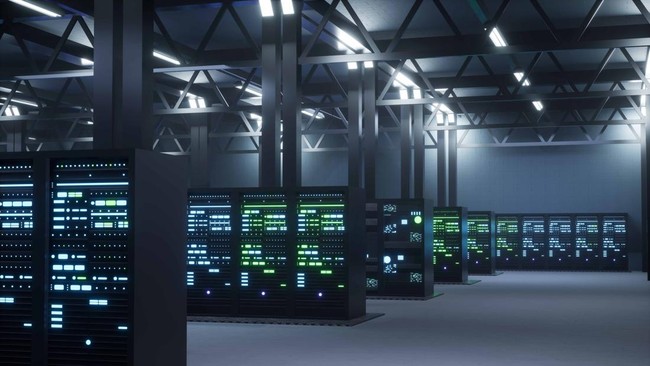
Amazon has for the first time revealed the total water consumption of its data centres globally. In a report released Thursday local time, the company stated its data centre operations drew approximately 2.5 billion gallons of water throughout 2025.
The figure covers Amazon’s entire data centre network across various countries. Despite its expanding data centre footprint, Amazon claims it reduced water usage by 2% at facilities it owns and operates directly compared to 2024.
According to the company’s sustainability report cited by Bloomberg, Amazon’s water use efficiency reached 0.12 litres per kilowatt-hour of electricity in 2025, improving from 0.15 litres per kilowatt-hour the previous year. Amazon said this figure is more than seven times more efficient than the industry average, which it calculates at 0.84 litres per kilowatt-hour.
For comparison, Amazon cited Environmental Protection Agency (EPA) data stating that US residents use about 3.3 trillion gallons of water annually for watering lawns and gardens. That amount is more than 1,300 times the water consumption of Amazon’s data centres last year.
Kerry Person, Vice President of Amazon Web Services overseeing data centre operations, dismissed the notion that the data centre industry consumes vast amounts of water resources. “If you look at current reporting, the data centre industry appears to consume all the water in the world,” Person said. “When you actually look at the data and examine the details, nothing could be further from the truth than that assumption.”
Amazon explained that for approximately nine out of every ten hours of data centre operations, servers are cooled solely using outside air. When outdoor temperatures exceed about 85 degrees Fahrenheit or roughly 29.4 degrees Celsius, the system switches to evaporative cooling. In this system, air is passed through water-saturated filters so that heat and humidity are reduced before entering the server rooms. Amazon said it has raised the temperature threshold for activating water-based cooling, thereby reducing water usage by about 50% at comparable facilities.
However, Amazon’s method of calculating water use efficiency differs from most other companies in the industry. The company includes not only water lost through evaporation during the cooling process, but also liquid discharged into wastewater systems. This approach makes Amazon’s water usage figures appear higher compared to competitors who only count evaporative water loss, making direct comparisons between companies difficult. For context, Microsoft’s water use efficiency was recorded at 0.27 litres per kilowatt-hour in its last reported fiscal year.
Nevertheless, Amazon’s report does not yet include water consumption from colocation facilities or third-party data centres that the company leases. In 2024, such facilities accounted for about one-fifth of Amazon’s computing capacity. The report also does not account for indirect water usage to produce the electricity consumed by the data centres.
Amazon is targeting to return more water to the environment than it uses in its operations by 2030. The company claims it has already achieved about 75% of that target through more than 50 announced projects, which are estimated to be capable of restoring more than 5.8 billion gallons of water per year once fully operational.
This disclosure comes amid mounting pressure over data centre construction in the United States, particularly as artificial intelligence development accelerates. Amazon employees and Seattle city officials are pushing for stricter regulations on data centre development. Researchers and community advocacy groups are also demanding greater transparency from cloud service providers regarding resource usage. The greatest concerns are emerging in the western US, where regions face water stress due to drought while data centre expansion continues.
Currently, besides Amazon, only Google and Meta routinely publish water consumption data detailed down to the level of individual data centre facilities.